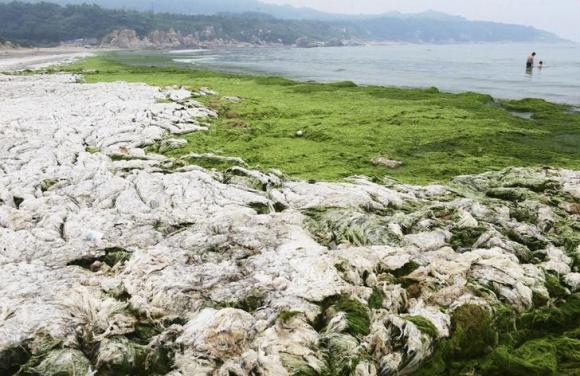
Evolving Ocean Algae May Resist Climate Change
Photo credit: Reuters/China Daily
When faced with acidification, rising ocean temperatures and other stressors, some ocean organisms like algae may be tougher than we thought.
Genetic changes in marine animals like tuna, cod and sharks, usually don’t factor into the scientific projections for the effects of climate change because they happen so slowly. But microscopic algae has a different timetable. They can produce more than 500 generations in one year!
That means genetic changes can occur in a much shorter time, and allow them to adapt to their environment much easier than larger animals.
The plankton that was studied – Emiliania huxleyi phytoplankton – is the one usually seen in satellite photos. It is a main food source for many marine animals, and absorbs carbon dioxide as it grows.
This study was conducted in a lab and scientists warn it is not a good predictor of how ocean animals will be affected by climate change. They argue that animals with long lives won’t adapt so easily and may not survive.
But one things for certain, the Emiliania huxleyi phytoplankton have a fighting chance!
Get more details on the study from Reuters.