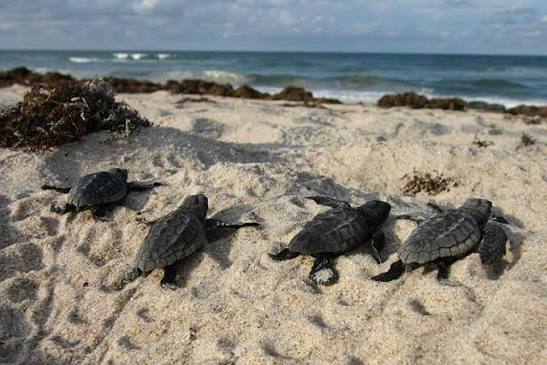
Florida’s Sea Turtles Are Having Their Best Nesting Season on Record
Florida’s 2026 sea turtle nesting season is on pace to set records across multiple species, according to data compiled by the state’s Fish and Wildlife Research Institute. As of late June, researchers had documented 94,667 loggerhead nests statewide, the highest total recorded by that point in the season in at least five years, alongside 2,152 leatherback nests, also a potential state record if the count holds through the end of the season.
The season opened strong and has stayed that way. By April 30, loggerhead nests had already reached 1,450, nearly double the 796 counted at the same point in 2025 and well above the 469 recorded in 2024. Leatherback nests were similarly ahead of pace, with Kemp’s ridley turtles, the world’s most endangered sea turtle species, also showing a small but meaningful increase over the prior year.
The numbers are strong enough to stand out even against Florida’s own recent record years. Sea turtle nesting season runs from March through October and accounts for roughly 90% of all sea turtle nesting in the United States, according to Visit Florida. Just one year earlier, 2025 had itself been a record-setting season for several species, with green turtles reaching 66,476 nests and leatherbacks hitting 2,012, before Hurricanes Debby, Helene and Milton reshaped beaches and destroyed nesting habitat along parts of the coast in the fall. That 2026 is now outperforming a season that ended in storm damage is one reason researchers are treating the numbers as a genuine sign of resilience rather than a simple rebound.
The gains are showing up at the local level as well as statewide. Volusia County recorded its highest nest count for this point in the season on record, reaching 695 nests by June 11 compared with 444 at the same point in the county’s previous record year of 2023. Duval County’s Beaches Sea Turtle Patrol logged a record-breaking 117 nests by late July, and Cape Hatteras National Seashore, well north of Florida’s usual nesting strongholds, recorded its highest leatherback total since monitoring there began in the 1980s. Researchers also confirmed Florida’s first documented olive ridley turtle nest this season, a species rarely seen nesting in U.S. waters at all.
Scientists caution against reading too much into any single year. Sea turtles are cyclical nesters, meaning individual females typically skip one or more years between nesting seasons, which makes year-over-year comparisons useful mainly as a rolling trend rather than a straight line. Even with that caveat, officials at Florida’s Fish and Wildlife Conservation Commission have expressed genuine optimism as the season heads toward its final months, crediting the sustained increases to years of work by biologists, interns, volunteers and permit holders who walk beaches at dawn each morning to document new nests.
The stakes behind the count remain high. An estimated 1 in 1,000 sea turtle hatchlings survives to adulthood, and all of the species nesting on Florida’s beaches are listed as threatened or endangered. Wildlife officials continue to ask beachgoers to avoid marked nesting areas, minimize artificial lighting near the shore that can disorient hatchlings, and fill in holes and flatten sandcastles before leaving the beach, since obstacles that seem minor by day can be fatal to a hatchling making its first crawl to the water at night.