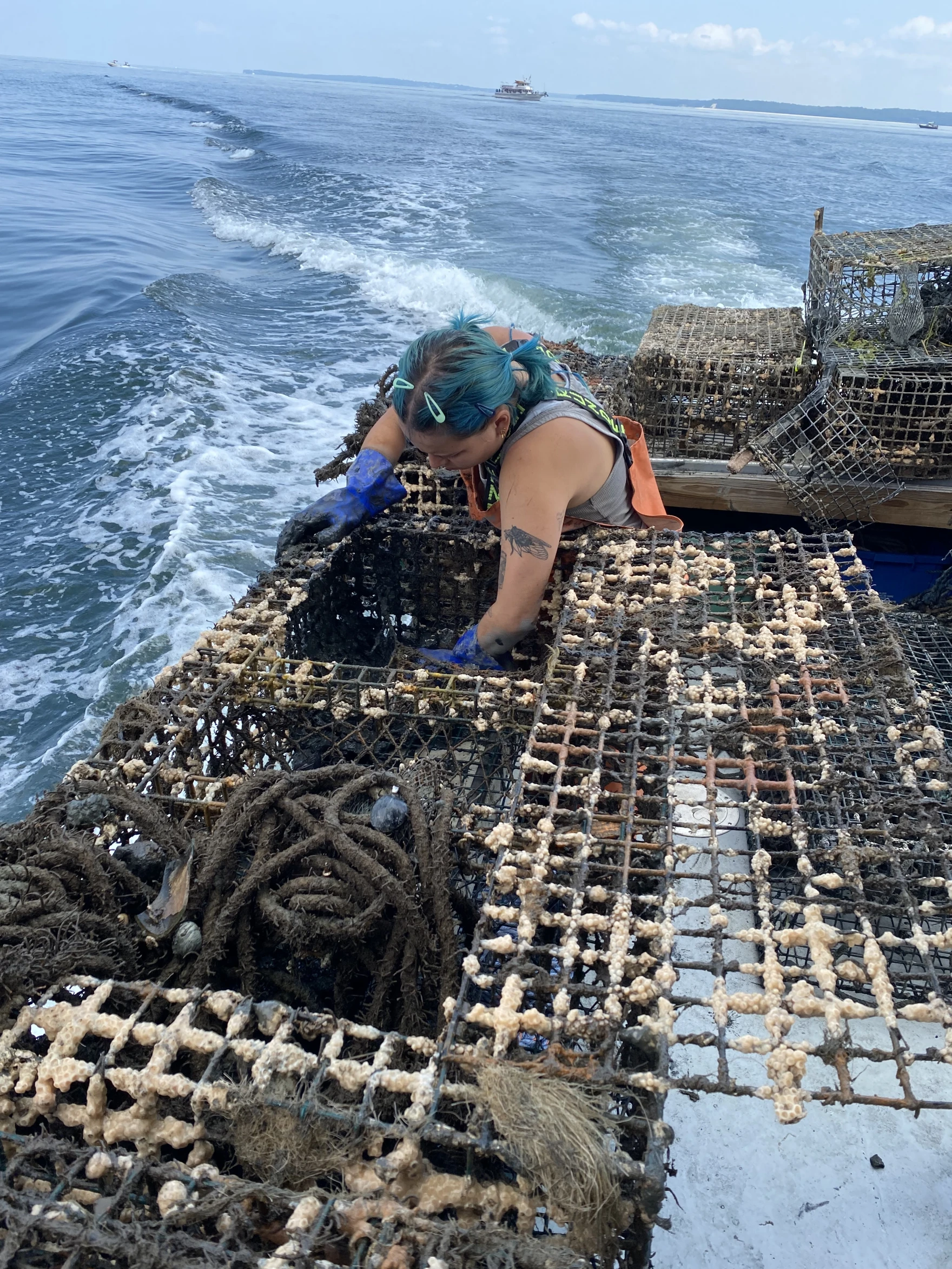
More Than 4,000 Abandoned Lobster Traps Have Been Pulled From Long Island Sound and They Were Still Catching Animals
Thousands of old lobster traps have been sitting at the bottom of Long Island Sound for years.
The fishermen who once used them are long gone. Many of the traps have been abandoned or lost. But underwater, some of that fishing gear never really stopped fishing.
Now, a coalition led in part by The Maritime Aquarium at Norwalk has reached a major milestone in an effort to get that gear out of the water.
The Lobster Trap Recovery and Assessment Partnership, known as L-TRAP, has recovered more than 4,000 lost and abandoned traps from Long Island Sound since the project began in 2022. Together, those traps account for more than 200,000 pounds of marine debris removed from the ecosystem.
And researchers aren’t simply pulling up empty cages.
The recovery effort has documented tens of thousands of marine animals inside the traps, representing 86 different species.
The problem is known as ghost fishing.
When fishing gear is lost or abandoned, it doesn’t necessarily stop doing what it was designed to do. A trap sitting unattended on the seafloor can continue attracting and capturing animals even though nobody is coming back to retrieve the catch.
An animal can enter a trap and become stuck. If it eventually dies, other animals may be attracted to the trap, potentially beginning the cycle all over again.
That can turn a single piece of forgotten fishing equipment into a problem that lasts far longer than anyone intended.
The L-TRAP project is trying to break that cycle one trap at a time.
Cleaning Up Decades of Fishing History
Long Island Sound once supported a substantial lobster fishery, but the population crashed dramatically around the end of the 1990s.
Scientists have examined several potential factors behind the decline, including warming water, disease and pollution. The fishery never returned to what it once was, but much of the equipment associated with those earlier years remained scattered across the seafloor.
Finding it isn’t easy.
The coalition brings together researchers from The Maritime Aquarium, Cornell Cooperative Extension of Suffolk County, Save the Sound, Project Oceanology and Remote Ecologist, along with commercial fishermen from Connecticut and New York.
That last group has proven particularly important.
Commercial captains have spent years learning the bottom of Long Island Sound, and their knowledge can help researchers identify areas where fishing gear may have been lost or abandoned.
Now technology is giving the team another tool.
During a September recovery trip, crews began testing side-scan sonar that can produce detailed images of the seafloor. Instead of relying entirely on memory and local knowledge to determine where traps might be hiding, researchers may eventually be able to use sonar to locate them in less familiar areas.
Once the traps come up, the project becomes more than a cleanup operation.
Researchers document what they find inside, giving scientists information about the ecological effects of abandoned fishing gear and the species interacting with it.
The effort is also an example of an aquarium’s conservation work extending far beyond the animals visitors see inside its building.
Scientists from The Maritime Aquarium aren’t simply talking about protecting Long Island Sound. They’re going onto the water alongside fishermen and other conservation groups, hauling pieces of the region’s fishing history off the bottom and studying what those pieces have been doing to the ecosystem.
There is still plenty left to find.
Researchers believe tens of thousands of abandoned traps could remain in Long Island Sound, meaning 4,000 recovered traps represent a milestone rather than a finish line.
The effort is already preparing to expand significantly. More than 230 recovery trips are planned for 2027, with the new sonar technology potentially helping crews reach areas they haven’t been able to search effectively before.
Long Island Sound won’t be cleared of abandoned fishing gear overnight.
But 200,000 pounds of debris is no longer sitting on the bottom.
More than 4,000 traps are no longer capable of ghost fishing.
And scientists, conservation organizations and the fishing community are working together to make sure that number keeps growing.
Sources: WSHU , Maritime Aquarium