
NASA Has Some New Research You’ll Want To Know
By: Sarah Sharkey
Featured Image Credit: www.nasa.gov
So just how polluted is our earth?
In the past, it has been difficult for atmospheric scientists to discover exactly how much pollution makes it up to the most remote corners of the earth. However, with the help of The Atmospheric Tomography (Atom), scientists will soon be able to survey the atmosphere over the ocean.
Which means this new data will allow scientists to assess how the environment has changed as a result of the pollution that we create.
The Atom will be the first airborne mission to survey the atmosphere over the oceans. Its journey will begin at the North Pole and head south over the Pacific Ocean towards New Zealand and to the tip of South America and then north over the Atlantic Ocean to Greenland.
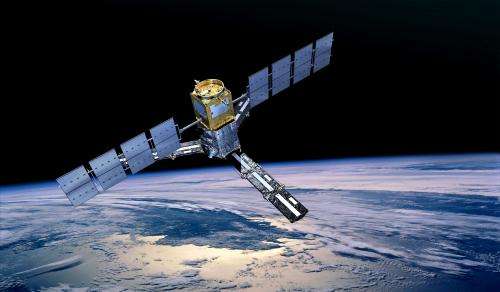
NASA’s Atom. Image Credit: http://phys.org/news/2014-11-years-soil-moisture-ocean-salinity.html
This lengthy journey will collect a massive amount of valuable data that will be used to make future climate condition predictions into the 21st century. Another big plus is that the data will improve computer models that monitor climate change over the next few decades.
This mission is extremely important in the quest to understand the role the ocean plays in pollution distribution according to Michael Prather, an atmospheric scientist at the University of California Irvine.
“The oceans are where a lot of chemical reactions take place, and some of the least well understood parts are hard to get to because they are so remote. With ATom we’re going to measure a wide range of chemically distinct parts of the atmosphere over the most remote areas of the ocean that have not been measured before,” Prather stated about the mission.
The first flight is set to take place on July 28 as a “test” trip over the tropics between California and the equator. Then on July 31, the mission will launch a worldwide trip that will last 26 days. This is the first of four deployments that are a part of this over all mission to collect important chemical and atmospheric data from the oceans. These deployments will occur over the next three years in various seasons to get a more accurate reading on atmospheric conditions throughout the year.
So why do we care?
By understanding how pollution affects the oceans and atmosphere, we can better manage a healthy planet. Reduce the guesswork – make positive change.

