Sea Turtles Just Nested on the U.S. West Coast for the First Time Ever and Now an Aquarium Is Protecting Their Eggs
A sea turtle crawling onto a beach to lay eggs isn’t particularly unusual in Florida.
In Southern California, it’s never been documented before.
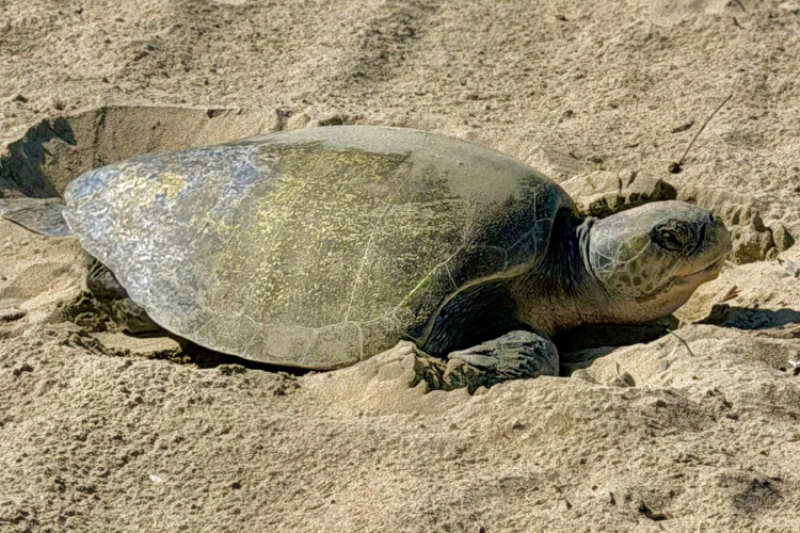
That changed this month when not one, but two olive ridley sea turtles came ashore in Orange County and laid eggs, marking the first recorded sea turtle nests anywhere along the U.S. West Coast.
Now those historic eggs have been moved to the Aquarium of the Pacific, where animal care experts will watch over them after dangerous surf threatened to wash the nests away.
The first turtle appeared near Seal Beach on the afternoon of Sept. 16.
A beachgoer spotted the animal digging into the sand and alerted local lifeguards. The discovery quickly attracted the attention of wildlife experts because sea turtles simply aren’t known for nesting on California beaches.
Then, three days later, it happened again.
A second olive ridley came ashore roughly eight miles away near the Huntington Beach Pier and laid another nest.
Suddenly, California had two.
Researchers initially protected the nests where the turtles had left them, installing fencing and monitoring the sites while the eggs incubated beneath the sand.
Then the weather changed the plan.
Powerful surf associated with tropical storm activity off Mexico was forecast to hit the Southern California coast. With erosion, flooding and waves potentially threatening both nests, wildlife officials faced an unusual decision.
Leaving the eggs alone might mean losing them.
So on Sept. 25, a team of biologists carefully removed approximately 200 eggs from the sand and transported them to the Aquarium of the Pacific in Long Beach.
The aquarium now has one of the most unusual nurseries in its history.
The Next 45 to 60 Days Could Make History Again
Olive ridleys are the smallest sea turtles found in the Pacific Ocean and are famous for one of nature’s most spectacular nesting behaviors.
In parts of the world, thousands of females can come ashore together during synchronized nesting events known as arribadas.
California isn’t one of those places.
Olive ridleys are occasionally seen in waters off the West Coast, but their major nesting beaches are much farther south, particularly in Mexico and Central America.
That’s what makes the Orange County nests so remarkable.
According to NOAA Fisheries, these are not simply the first documented olive ridley nests in California.
They’re the first documented natural nests from any sea turtle species on the U.S. West Coast.
Scientists aren’t yet treating two nests as evidence that California has suddenly become a new major nesting area. Researchers will need much more information before understanding why the turtles came ashore there or whether similar events could become more common.
For now, the priority is keeping the eggs alive.
Aquarium of the Pacific animal care staff will oversee them during an expected incubation period of approximately 45 to 60 days.
Moving sea turtle eggs is delicate work.
Once development begins, changing an egg’s orientation can potentially harm the embryo. Wildlife professionals therefore have to carefully preserve the position of the eggs while transferring them.
The aquarium is working alongside a much larger group that includes NOAA Fisheries, the U.S. Fish and Wildlife Service, California Department of Fish and Wildlife, local governments and other organizations.
If everything goes according to plan, the story won’t end inside an aquarium.
It will end back on the beach.
Officials plan to return successfully hatched turtles to the same beaches where their mothers nested, allowing the hatchlings to crawl across the sand and enter the Pacific naturally.
That could produce another remarkable sight for Southern California.
Tiny sea turtles heading toward the ocean on beaches where no documented sea turtle hatchlings have ever made that journey before.
There are still plenty of unknowns.
Not every sea turtle egg successfully develops or hatches, even under ideal conditions. Scientists also don’t yet know what these two nests might mean for the future of sea turtles along California’s coast.
But the fact that the nests exist at all has already rewritten part of the region’s natural history.
Two turtles traveled north.
They crawled onto beaches surrounded by one of the most populated stretches of coastline in America.
They dug into the sand.
And they left behind roughly 200 chances for something that has never been documented there before.
Now an aquarium full of marine animal experts is waiting to see what happens next.
Sources: NOAA Fisheries