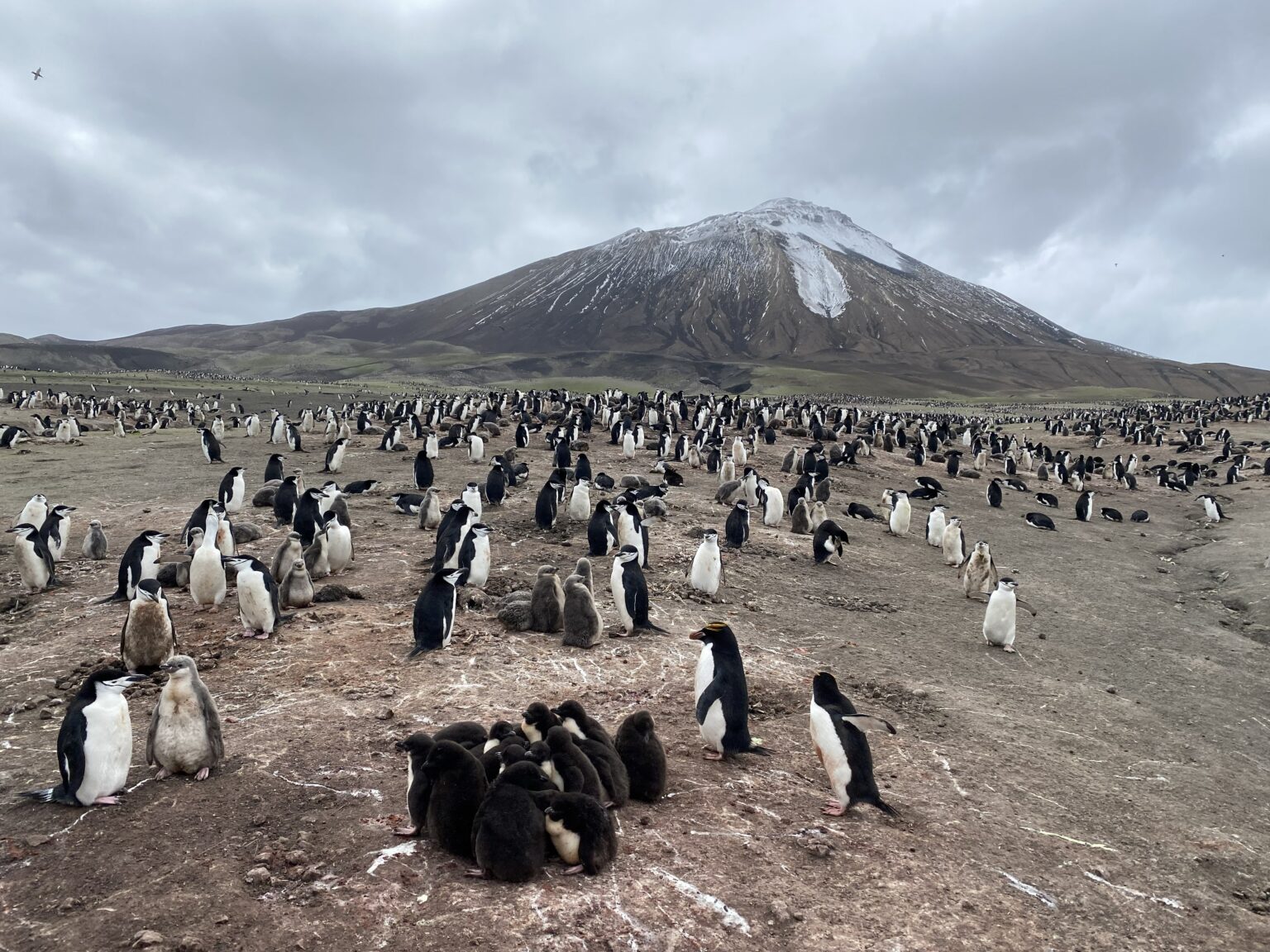
The World’s Largest Penguin Colony Just Lost Its Title After More Than Half a Million Chinstraps Disappeared
For years, Zavodovski Island held a remarkable record. The uninhabited volcanic island in the Southern Ocean was home to the largest penguin colony on Earth.
It isn’t anymore.
A new study in the journal Current Biology, led by scientists at the British Antarctic Survey, found that chinstrap penguin nests on the island fell 63% between 2011 and 2025. That adds up to more than half a million chinstrap penguins lost. The title of world’s largest colony now belongs to Cape Adare in Antarctica’s Ross Sea.
How do you count that many penguins?
Mostly from above. Researchers combined drone surveys, aerial photos taken from a Royal Air Force aircraft based in the Falkland Islands, satellite images and satellite tracking of individual penguins to build a picture of how the colony has changed.
Following the food
The likely culprit is food. Chinstraps depend on Antarctic krill, and as the Southern Ocean has warmed, krill have shifted south into the Weddell Sea. The penguins can’t easily follow, because sea ice and a shortage of nesting islands stand in the way.
“The krill have moved southward into the Weddell Sea,” said lead author Norman Ratcliffe, a penguin ecologist at the British Antarctic Survey.
The team checked other possible explanations and ruled them out, including a 2016 volcanic eruption on the island, competition for nesting space and krill fishing.
The macaronis are doing fine
Not every penguin on Zavodovski is struggling. The island’s macaroni penguins grew 28% between 2011 and 2016 and have held steady since.
Why it matters
The South Sandwich Islands, which include Zavodovski, hold about 30% of the world’s chinstrap penguins. Declines across Antarctica could push the species into the “Endangered” category on the IUCN Red List.
Co-author Peter Fretwell, a remote sensing scientist at the British Antarctic Survey, called it an example of “a warming climate impacting even the most remote parts of our planet.”
Long-term counts like this one are how scientists catch trouble early, and how they’ll know when conservation efforts are working.
Sources: Scientific Frontline, CNN