
Two of the World’s Most Endangered Sea Turtles Are Back at Sea
Featured Image: NOAA
By: Eva Gruber
Kemp’s Ridley sea turtles are one of the rarest and most critically endangered turtle species in the world. The Kemp’s Ridley sea turtle population is so low that every individual is worth the maximum effort to save it.
This past week, two Kemp’s Ridley sea turtles, J.P. and Amelia, were released back into the Mississippi Sound of the Gulf of Mexico. The turtles had been serving a short rehab stint at the Institute for Marine Mammal Studies (IMMS) in Gulfport, Mississippi.
Every year since the Deepwater Horizon oil spill in 2010, IMMS has rehabilitated hundreds of Kemp’s Ridleys. This is incredible taking into account that before the spill, their numbers were only in the single digits.
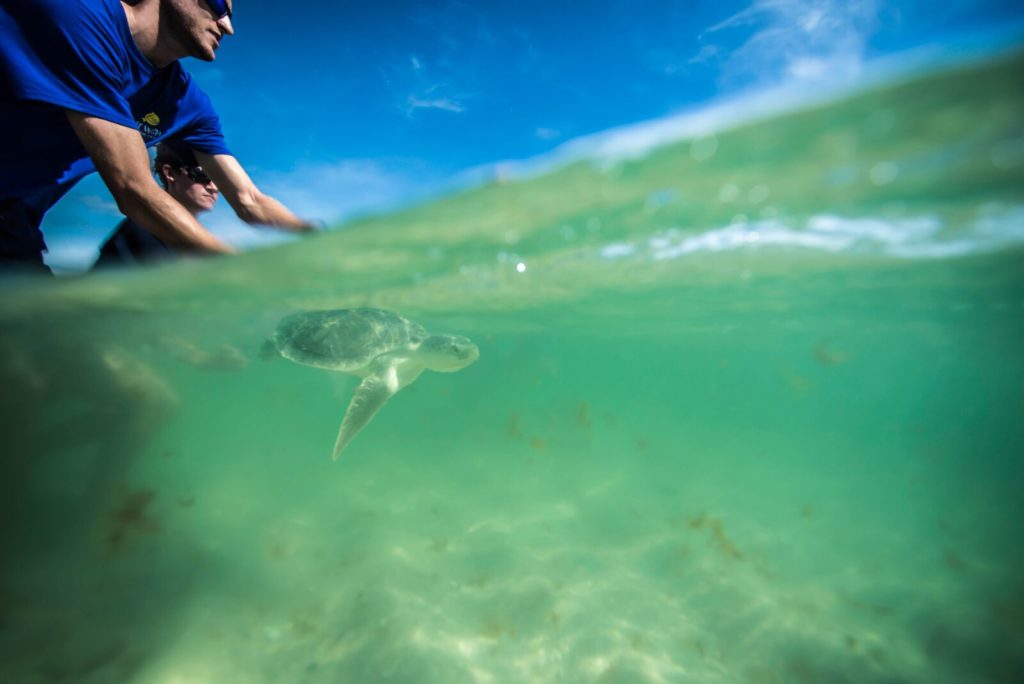
Image Credit: South Walton Turtle Watch
If you take a visit to the Gulf of Mexico you wouldn’t think this is the case, as they are one of the most common species in the area. But, the Gulf of Mexico is the turtle’s biggest natural habitat.
These turtles tend to stick to warmer, shallower waters of the Atlantic around the Gulf of Mexico. Although they have been seen venturing as far north as New Jersey, and even crossing the Atlantic to the coast of Ireland.
When breeding season rolls around in the spring, almost all of the females of the species returns to a single beach to lay eggs – Rancho Nuevo in the state of Tamaulipas, Mexico.
Around the 1950s, there were an estimated 89,000 females nesting at the site. By 1987, the number shrank to only around 7,000. Today, it is estimated that only around 1,000 breeding females surviving.
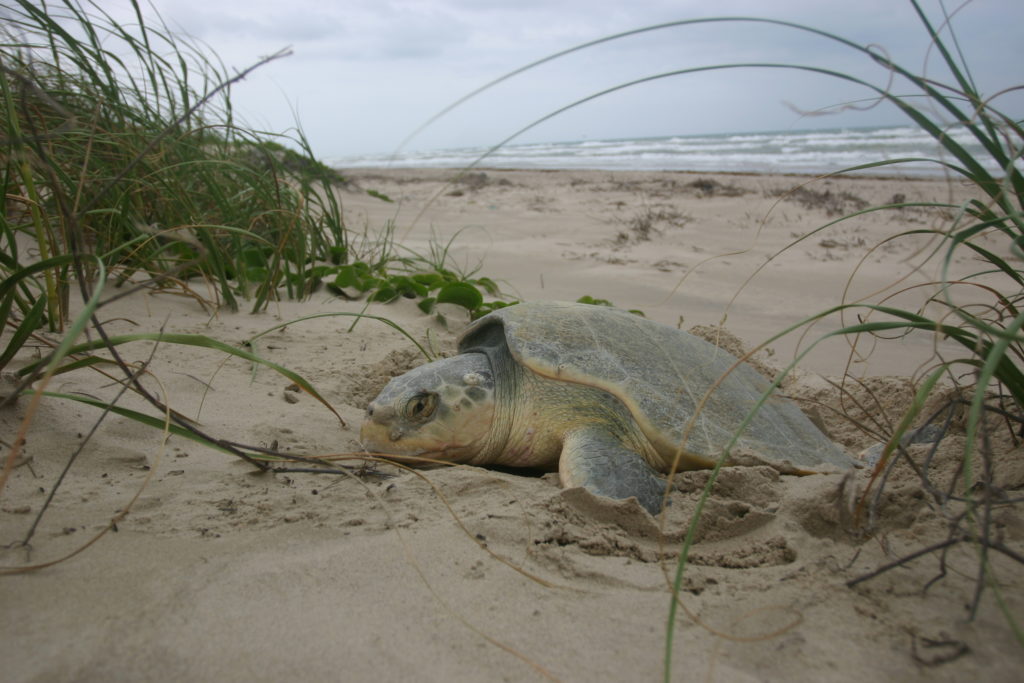
Image Credit: National Park Service
The BP Deepwater Horizon oil spill in April of 2010 killed hundreds of Kemp’s Ridley sea turtles, and was the biggest single catastrophic loss to this species in history. The effects of this tragedy are still on-going.
When Kemp’s Ridley sea turtles are reported beached on the Mississippi coast, they are picked up by the IMMS and taken for a veterinary examination. Through blood tests, and a check for infections or broken bones, the turtle’s health can be determined.
If it is healthy, then it is released back into the Gulf. Some of the most common injuries that the IMMS sees are cold shock, propeller damage, or being caught by fishing gear – this was the case with J.P. and Amelia, who spent a month at the IMMS under the careful care of the expert staff members there.
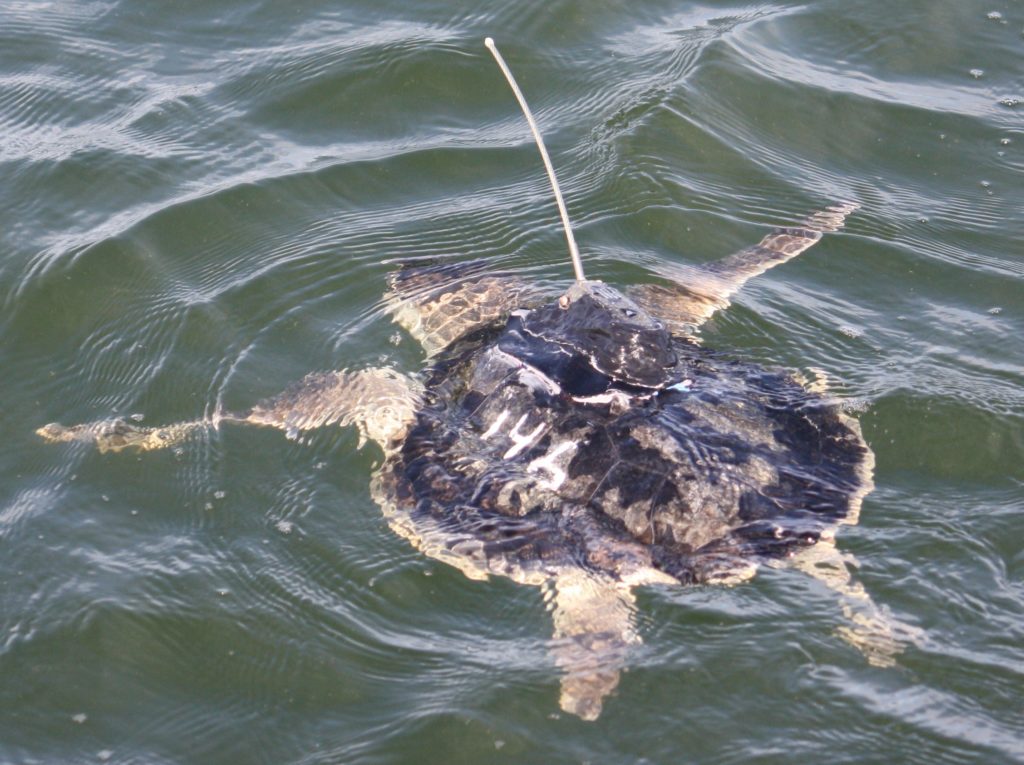
Image Credit: The Institute for Marine Mammal Studies
J.P. and Amelia are equipped with GPS transmitters on the tops of their shells so that their movements can be tracked. This will give scientists can gain a better understanding of the species – where they go, what habitat they are using, and how they might be using it.
Support the Institute for Marine Mammal Studies and the important work they do protecting our oceans and wildlife. They offer visitors tours, animal adoptions, accept donations, as well as keep a running list of useful and necessary items to help keep their center running.




