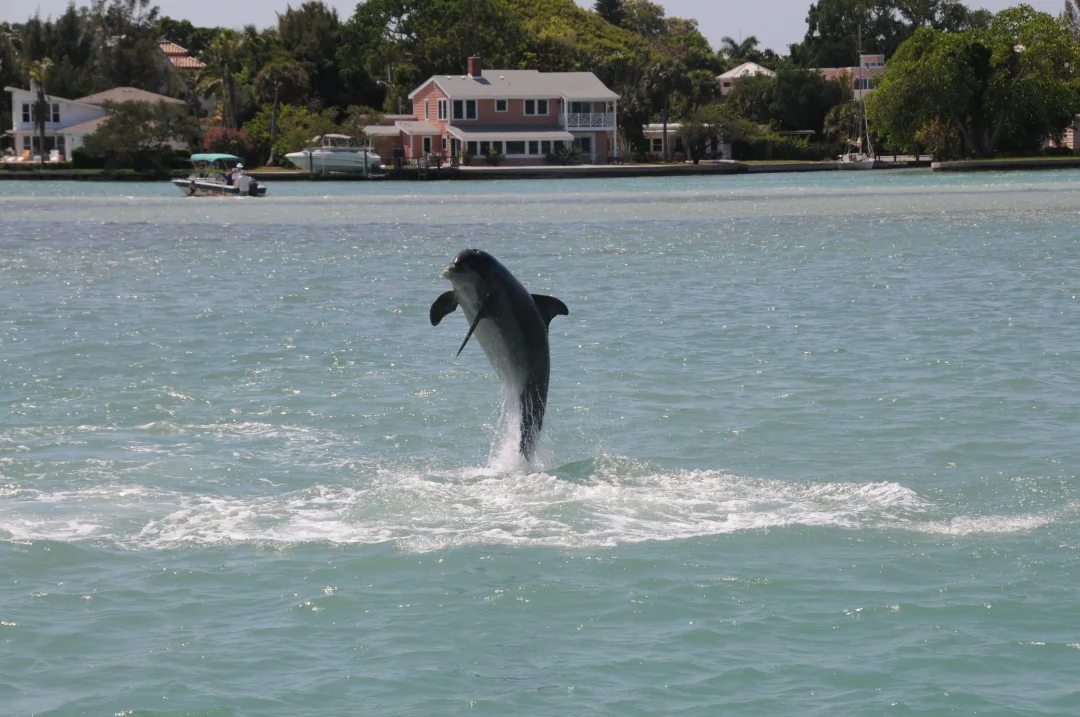
Nearly 18 Years After She Was Rescued, a Dolphin Named Ginger Is Now a Grandmother in the Wild
Wildlife rescue stories usually end with the release.
An animal disappears back into the ocean, the rescue team celebrates and everyone hopes for the best.
For a bottlenose dolphin named Ginger, scientists actually got to see what happened next.
Nearly 18 years after Ginger was rescued from a life-threatening entanglement near Siesta Key, Florida, researchers are still watching her swim through Sarasota Bay.
She survived.
She had calves.
And now, she’s a grandmother.
It’s the kind of ending wildlife rescuers rarely get to witness.
Ginger was born in 2005 and was already known to researchers with the Sarasota Dolphin Research Program when her life suddenly changed three years later.
In December 2008, researchers found the young dolphin severely entangled in fishing line.
The situation was serious enough that a large rescue effort was organized involving multiple wildlife organizations and agencies. Ginger was captured, the fishing gear was removed and veterinarians treated the injuries it had caused.
Then she was released back into Sarasota Bay.
At that point, nobody could guarantee what would happen.
Surviving a rescue is one thing. Returning to a normal life in the wild is another.
But Ginger did exactly that.
Because Sarasota Bay is home to one of the longest-running studies of wild dolphins anywhere in the world, researchers were able to continue identifying and monitoring her after the rescue.
Year after year, Ginger kept showing up.
Eventually, she wasn’t alone.
She became a mother.
And this year, researchers documented the next chapter.
One of Ginger’s daughters now has a calf of her own.
The dolphin that once needed humans to help save her life has successfully produced another generation in the wild.
One Rescue Can Echo for Decades
Ginger’s story highlights something that’s easy to miss when watching an animal return to the ocean.
A successful rescue doesn’t necessarily save only one life.
For a young animal with decades of life potentially ahead of it, rehabilitation can restore everything that comes afterward.
Years of feeding.
Years of social relationships.
Years of raising offspring.
And eventually, if everything goes right, another generation.
Researchers have been able to follow Ginger’s story because individual bottlenose dolphins can often be identified through the unique shapes, notches and scars on their dorsal fins.
Scientists photograph those fins and compare them with identification catalogs, allowing known animals to be recognized repeatedly over many years.
In Sarasota Bay, that work has created an extraordinary record.
The Sarasota Dolphin Research Program has been studying the area’s resident bottlenose dolphins since 1970. The long-running project has allowed researchers to follow individual animals throughout their lives and, in some cases, track multiple generations of the same family.
That means Ginger isn’t simply “a dolphin that was rescued once.”
She’s an individual whose life researchers have watched unfold for nearly two decades after humans intervened.
That long-term perspective also helps scientists understand whether rehabilitation actually worked.
Seeing a released animal alive several weeks later is encouraging.
Finding that animal years later is even better.
Watching her reproduce successfully and then eventually become a grandmother provides an entirely different measure of what recovery can look like.
Ginger’s rescue also carries an important reminder about the problem that nearly killed her.
Fishing line and other marine debris can become dangerous when animals swim into it. Line can wrap around fins, flippers and other parts of the body, tightening over time and causing deep injuries.
For dolphins and other marine animals, something as ordinary as discarded fishing gear can become life-threatening.
Fortunately for Ginger, people noticed.
A rescue team responded.
And researchers kept watching.
Almost 18 years later, that work has produced something wildlife rescuers don’t always get to see.
Not simply an animal that survived.
A life that continued.
A daughter that grew up.
And now, a brand-new calf swimming through Sarasota Bay.
Sometimes the real success of a wildlife rescue doesn’t become clear until years after everyone goes home.
Sources: sarasota magazine