The World’s Rarest Porpoise Just Got a Digital Lifeline — With Help From SeaWorld
Did you know there are fewer than 10 vaquita left on Earth? Scientists just made sure this species will never be forgotten — even in the worst-case scenario — by turning an entire skeleton into pixels.
The vaquita is the smallest cetacean on the planet, found only in the shallow waters of Mexico’s northern Gulf of California. At around 5 feet long and marked by distinctive dark rings around its eyes, it’s sometimes called “the panda of the sea.” Its population has collapsed almost entirely due to accidental entanglement in illegal gillnets used to catch totoaba, another endangered fish prized on international black markets.
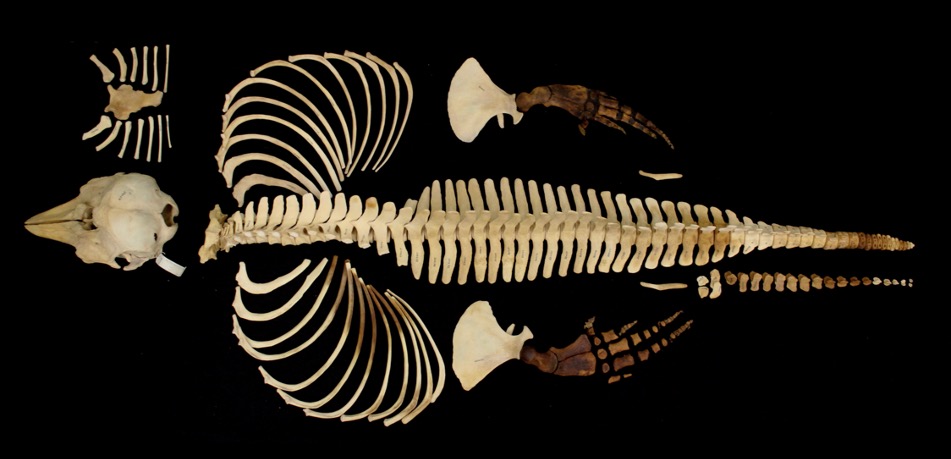
Here’s the good news in an otherwise heavy story. Researchers at Florida Atlantic University, working with the San Diego Natural History Museum, SeaWorld California, and NOAA Fisheries, used medical CT scanning, high-resolution micro-CT imaging, and detailed photography to digitize the complete skeleton of a female vaquita that had been carefully preserved since 1966. The result is one of the most detailed digital anatomical records ever created for the species.
“Having access to high-resolution micro-CT systems, alongside the expertise to process and reconstruct large, complex datasets, was essential to transforming raw scan data into usable 3D models,” the research team explained. That kind of integrated setup is what made it possible to preserve and share a specimen like this in a level of detail that simply wasn’t achievable until recently.
And it’s not locked away in a lab. The team made every scan, photo, and downloadable 3D model freely available through the open-access repository MorphoSource — meaning scientists, museums, and schools anywhere in the world can now study, measure, and even 3D-print a vaquita skeleton without ever touching the fragile original.
Why it matters: With no successful captive breeding program possible for this species, digital preservation has become one of the only tools left to make sure the vaquita’s biology isn’t lost entirely — while conservationists continue fighting to protect the handful still swimming in the wild. It’s also a powerful education tool, giving people around the world a way to actually see and understand a species most will never encounter in person.
Sometimes protecting a species means fighting for its future. Sometimes it means making absolutely sure its story survives, no matter what.
Sources: Florida Atlantic University’s newsdesk