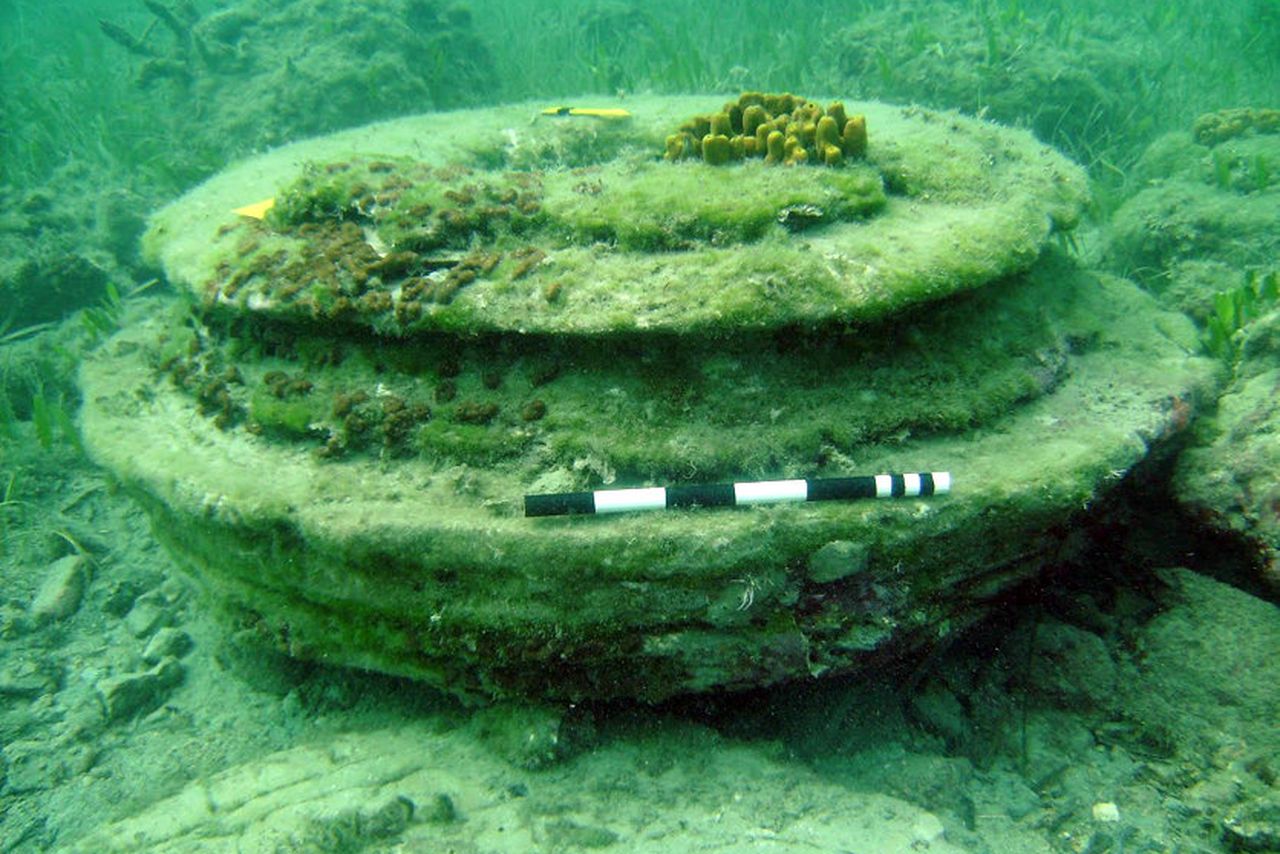
The Sunken Ancient City (that was actually built by microbes)
Featured Image Credit: The Verge
By Adam Trautwig
It’s not uncommon for microbes to get a bum rap. But for a group of archaea and bacteria the spotlight has finally arrived (even if it is a few million years late).
In 2014, a group of snorkelers and divers discovered what they thought looked like the remains of an ancient city. Interest was ignited on a larger scale when images of the “city” were uploaded to Google Earth. The structures bear a remarkable resemblance to ancient stonework. Specifically, they appear oddly similar to work common in the Hellenic period.
The “ruins” were found in the shallow subtidal waters off the coast of Zakynthos Island in Greece.

A team led by Julian Andrews from the University of East Anglia examined the site and published their findings in the journal Marine and Petroleum Geology.
In this study, published late last month, the scientists concluded that instead of remnants of an ancient city, the structures were most likely cementation of marine sediments made by microbes between 2.5 and 5 million years ago. These phenomena were probably produced 25 feet below the sea floor in sediment that had become anoxic. As the seafloor was eroded over time, the cemented marine sediment was left behind.
Researchers began to suspect the structures were not actually the ruins of a forgotten civilization when they failed to find further evidence of archaeological significance. In a rare stab at humor, the scientists mused, “columns and pavements in the sea, not always antiquities will be.”
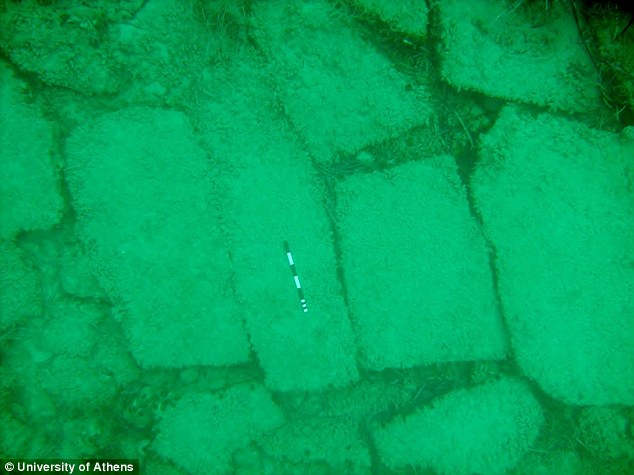
An “underwater road”
These findings were verified with the use of stable isotopes. This method allowed the researchers to determine the likely source of the material.
Typically structures like those found off of Zakynthos Island are formed in much deeper waters – oftentimes as deep as hundred to thousands of meters below the surface. The source is hydrocarbon seeps, which slowly vent chemicals that specialist microbes were able to utilize for energy.
This is not the first time, however, that natural phenomena have been mistaken for ancient man-made cities. The Yonaguni Monument made headlines after its discovery in 1987 by ecotourists. Despite the “pyramid-like” form to the rocks it too has since been attributed to the regions natural tectonic activity and strong under water currents.
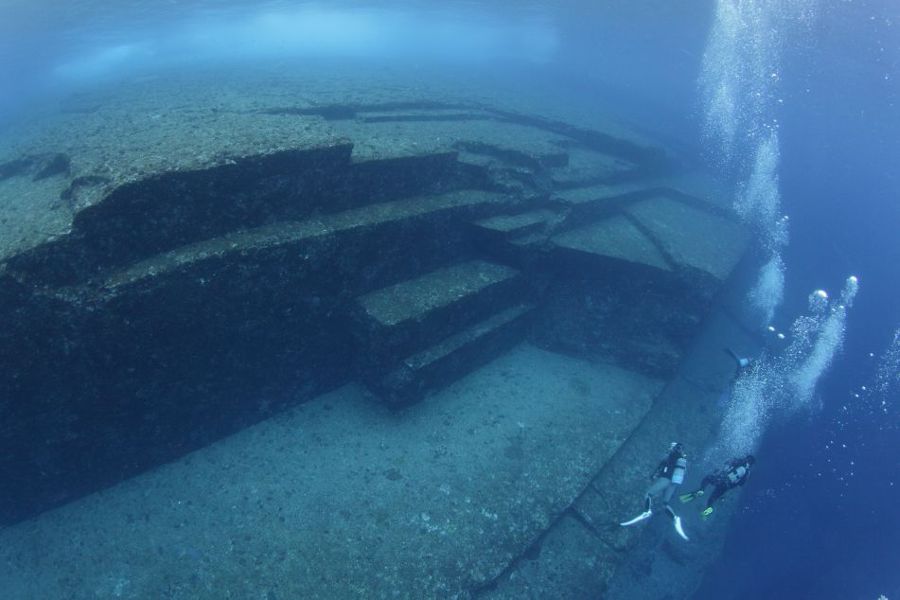
The Yonaguni Monument
Although these results may be disappointing for those in search of Atlantis, we can take solace in the fact that over the history of human endeavors, our species has built skyscrapers of stone and excavated facades into cliffs. We’ve stood on the moon and explored the Mariana Trench.
Perhaps, the loss of one “underwater city” is not too great a loss. And, it is almost cooler that organisms outside of our own species were able to create something so similar to those made by us humans.
To read the study published by Julian Andrews about the underwater discovery search “Exhumed hydrocarbon-seep authigenic carbonates from Zakynthos Island (Greece): Concretions not archaeological remains.”
To find out more about the Yonaguni monument try “Japan’s ancient underwater ‘pyramid’ mystifies scholars.”
To enjoy more of the effervescent charms of the author follow @1SolitaryTrout on Twitter.