
Elephant Seals Are Sneaky And Greedy But That’s Why We Love Them
Featured Image Credit: http://elelur.com/mammals/elephant-seal.html
By Eva Gruber
Elephant seals are by far some of the most amazing marine mammals on the planet. Most people know these animals for the absurd appearance of a full bull elephant seal, but given some of their coolest natural history facts, you’ll definitely see them in a new light.
There are two species of elephant seal: the northern and the southern. The northern elephant seal (Mirounga angustirostris) can be found in the United States, with breeding grounds in California and Baja California, although during migration they range as far north as Alaska. The southern elephant seal (Mirounga leonina) calls the sub-Antarctic and Antarctic home.
Elephant Seals are Incredible Divers
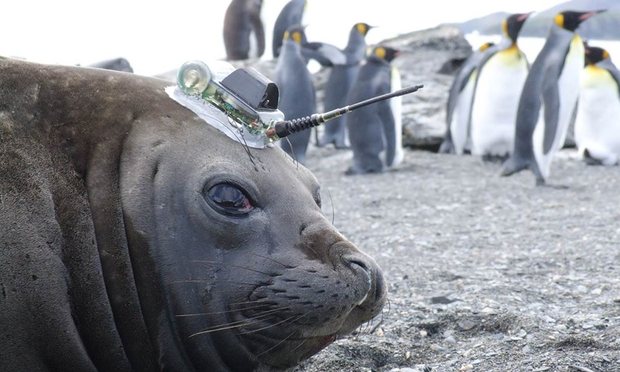
The average diving depth of these animals is 300 to 600 meters (980 to 1,970 ft) – which is impressive in itself. That means they are diving regularly down to depths where there is absolutely no light (hence the enormous eyes). And with the deepest recorded dive of a southern elephant seal being down to 2,388 meters (7,835 ft), you better believe they can hold their breath for long periods of time – 20-30 minutes on average, and a record of 100 minutes. That’s the longest breath hold of any non-cetacean animal.
They have remarkable adaptations that enable this behavior such as a large volume of blood for body size, as well as high oxygen-carrying capacity. The diving behavior and physiology of elephant seals is a topic of intense study, and with better tagging technology developing over time, we are getting astounding information as to exactly what these animals are capable of. Look at a dive table for a tagged elephant seal, and you’ll see it diving to jaw-dropping depths over and over, all day long, every day, for months.
Also: climate change is having an effect on their diving behavior.
Super Weaners
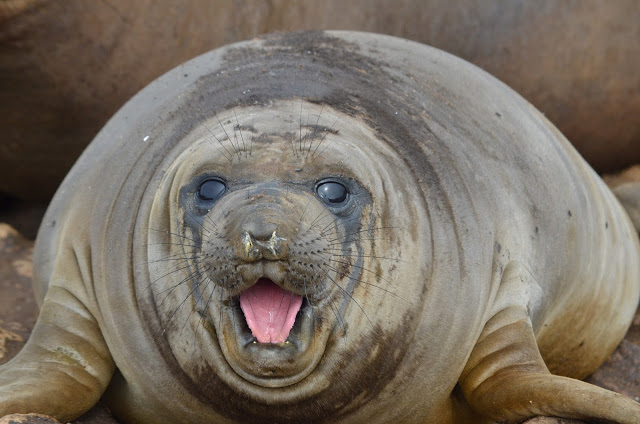
Sometimes, an elephant seal that is pupped gets to nurse from two different mothers – that’s twice the milk! Often, this second “mother” is receptive as she lost her pup for some reason and is willing to suckle another pup. These are some seriously lucky pups, and they will grow to a ridiculous size in a very short amount of time. Often, they are so fat that they have trouble moving and must lose weight before they can get to the water for their first swim. After all, elephant seal milk is 50% fat – for perspective, human milk is only 4% fat. Pups who have been weaned off as the time comes for their mothers to leave land for the ocean’s waters again are called “weaners”, and the lucky double-mother-suckers are called “super weaners” – yes, by scientists.
Sexual Dimorphism

Elephant seals are the most sexually dimorphic mammals – males can get to be up to 15 ft long and weigh up to 4,500 lbs. Females can grow up to 10 ft long and weight 1,500 lbs – that makes them the biggest pinnipeds on the planet. The difference between the two is not only physiological but behavioral. Males and females time their haul outs for molting at completely different times of the year, and the two sexes will overlap in space and time only for the breeding season.
This extreme dimorphism gives rise to their mating system, which is highly polygynous (one male, several females). They also differ vastly in their feeding behavior and locations – post-breeding, northern elephant seal males will head north and feed on benthic organisms, while females will head north-westward and feed on organisms in the water column.
The Beachmaster and the Sneaky Males
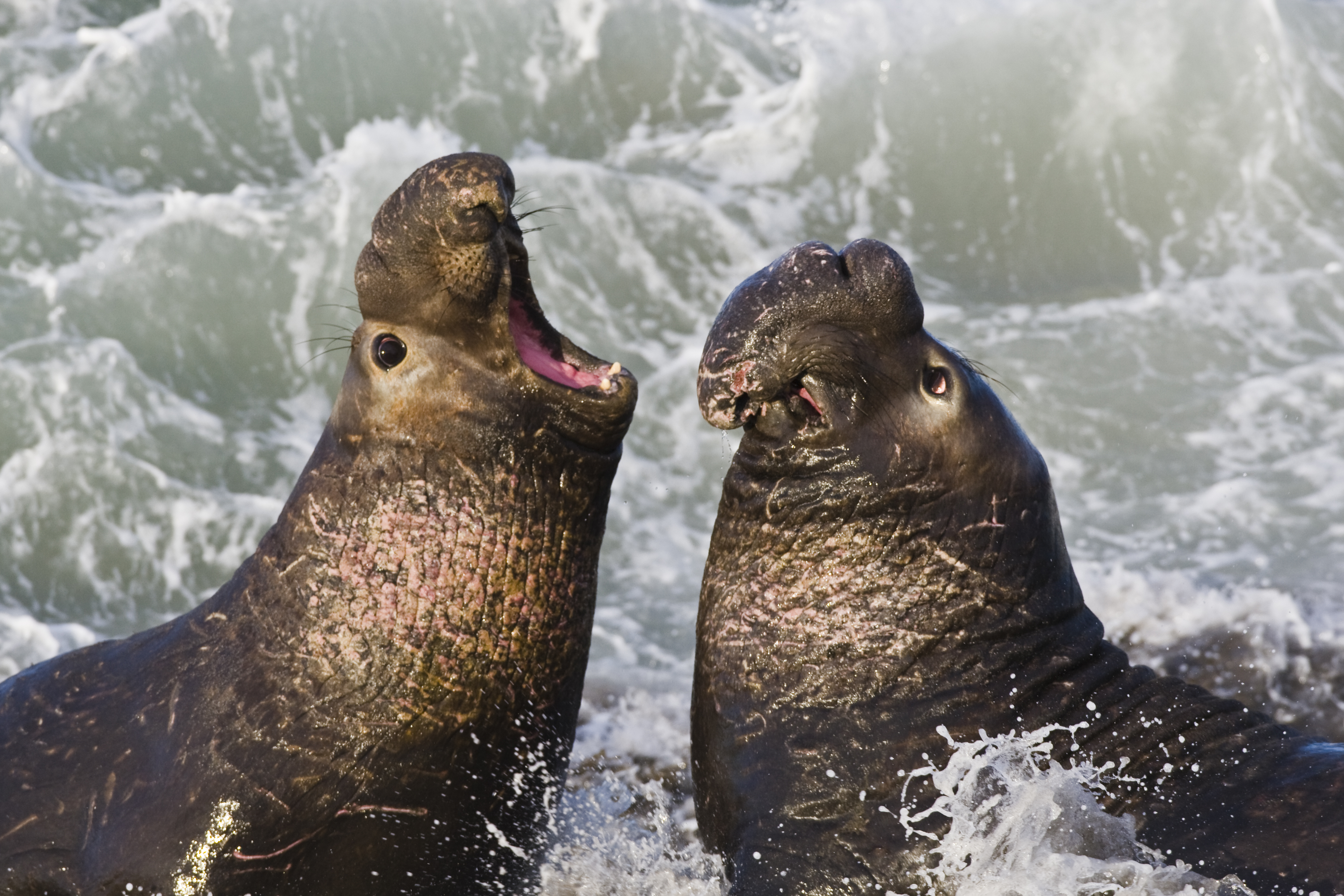
Males are incredibly aggressive and territorial to other males during the breeding season. A dominant male, or “beachmaster” will claim a stretch of beach along with a harem of 30-100 females – depending on his size and strength – who he has exclusive rights to mate with, and who he exerts considerable energy to maintain as “his”. Any other male encroaching on his territory will be challenged to an intense and bloody battle.
Life is tough for a non-dominant male elephant seal raging with hormones during the breeding season. A different strategy remains: sometimes smaller, subordinate males will sneak into a harem while the male is preoccupied, relying on their small size and lack of a full proboscis to not stick out amidst a herd of females. During these sneaky visits, subordinate males can successfully mate with females, all under the beachmaster’s nose who is none-the-wiser.
It’s a Long, Long Migration

Northern elephant seals go on land twice a year – once to breed and mate, and once to molt. Following breeding, the animals disperse for two months before they come back to land to molt. Once they are done molting, they will depart land again for their “long” migration of up to seven months. It is during this time that females will travel up to 11,000 miles, and males up to 13,000 miles in the open ocean.
Sea-lubbers

Elephant seals are marine mammals through and through, spending 9 to 10 months out of the year at sea – that’s 80% of their lives – up to 5,000 miles offshore and nowhere near any land. In fact, during this time they may spend up to 90% of the time underwater! While they are easy to find at their haul-out sites on land, they are almost never seen at sea because they spend so much time underwater.
Perfect Beach Body

Due to the fact that elephant seals spend so much of their lives in and under cold oceans, they evolved very thick layers of blubber to keep warm. At their peak, post “long” migration during which they continuously feed, up to 40% of their body mass is pure fat. For perspective, the average healthy man is around 20% fat.
Looking at a cross-section of their body, you would be stunned to see how small their body cavity actually is. Thanks to this large amount of energy-rich blubber, elephant seals are targeted by apex predators such as great white sharks. In fact, around the Farallon Islands 26 miles west of San Francisco, the annual concentration of white sharks is due solely to the presence of elephant seals and other blubbery pinnipeds.
Elephant Seal Conservation
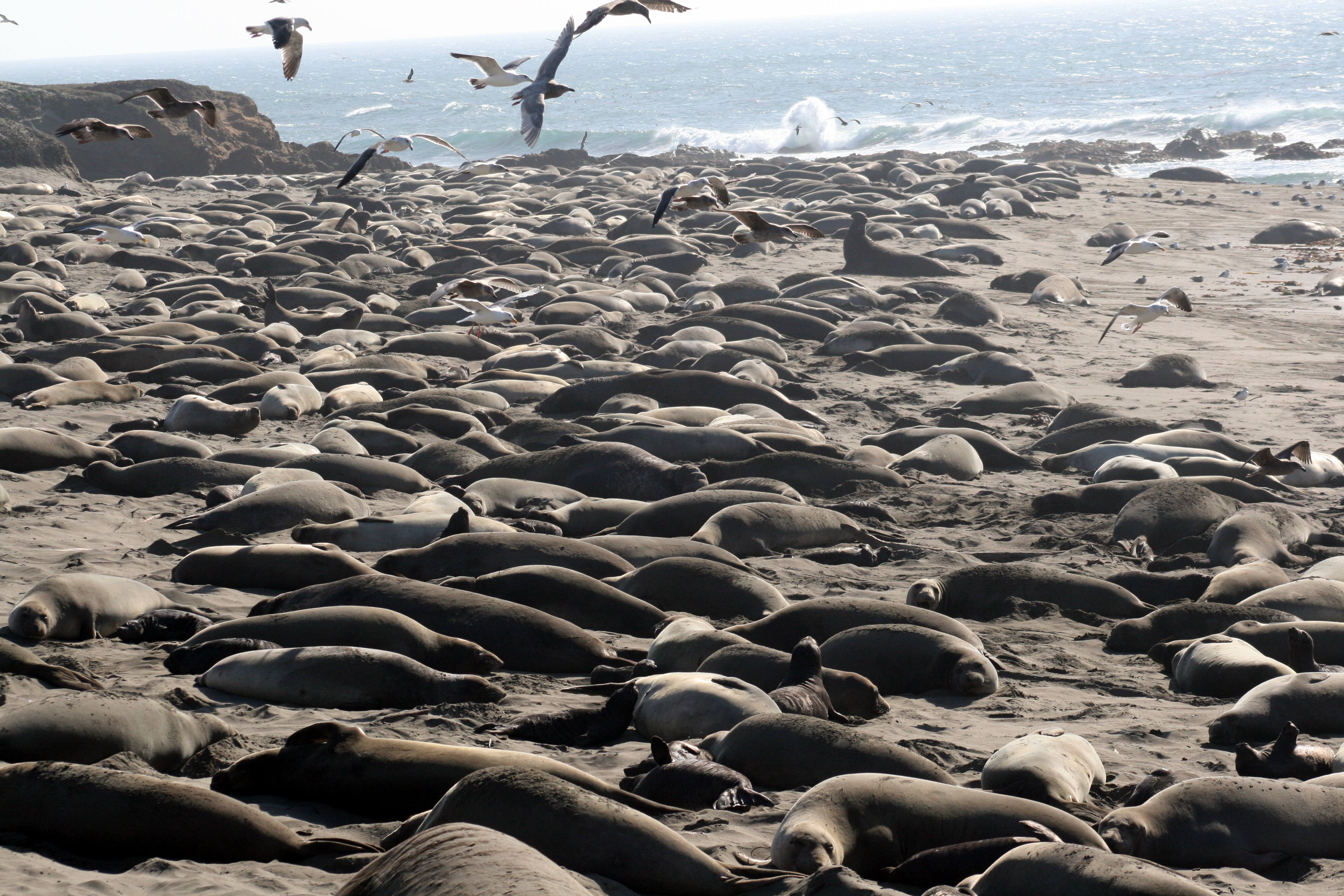
While they are numerous now, both species were once almost hunted to extinction in the 19th Century. This was because of human exploitation, who hunted the animals for their blubber which was melted down and used for various purposes. The northern population was down to 100-1,000 individuals before Mexico and the US agreed to protect them. Since then, they have made a truly remarkable comeback but threats like climate change looming on the horizon of these magnificent marine mammals.
Seriously – how cool are elephant seals?




