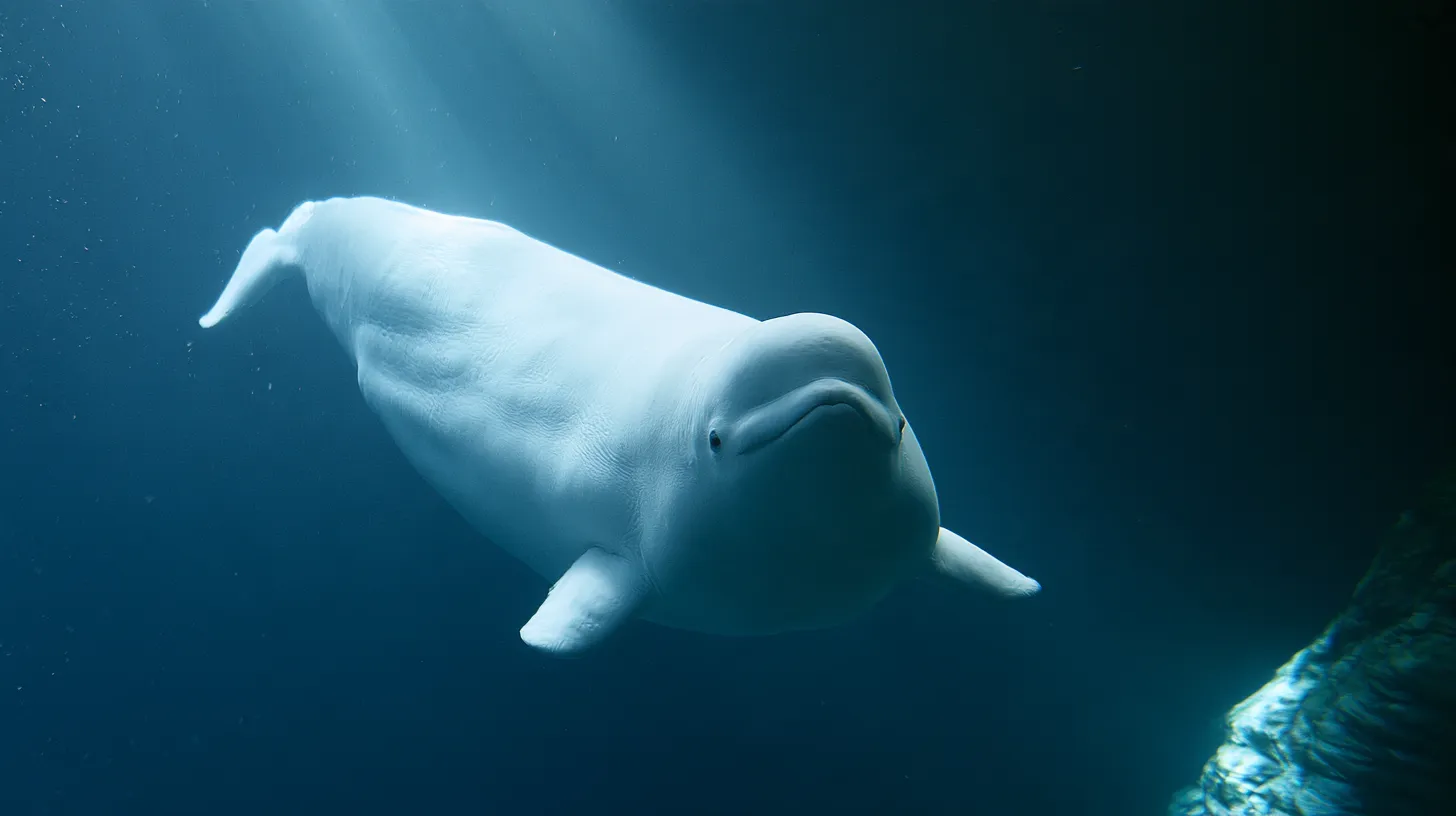
Federal Officials Warned Marineland Belugas Were “Health-Compromised” Before Rescue
Newly reported federal documents provide a clearer picture of the emergency facing dozens of belugas at Marineland before accredited aquariums stepped in to save them.
CHICAGO. Before the first rescued belugas arrived at Shedd Aquarium this summer, federal officials already knew the whales they were preparing to receive could be in serious medical trouble.
“The whales are health-compromised,” the National Oceanic and Atmospheric Administration wrote in a June 25 letter concerning the emergency relocation of animals from Marineland, the shuttered marine park in Ontario, according to documents obtained by CBS News Chicago. Marineland had also warned that without relocation it would stop providing medical care and euthanize the animals.
Those details provide important new context for one of the largest marine mammal rescue operations ever undertaken and for the deaths of several belugas in the weeks that followed. Far from a routine transfer between aquariums, the operation was an emergency effort to save dozens of whales from a closed facility that said it could no longer care for them.
Shedd Aquarium was among the institutions that agreed to help. Georgia Aquarium, SeaWorld and Oceanogràfic in Valencia, Spain, also accepted animals as part of the international rescue. Moving dozens of belugas required an enormous logistical effort involving veterinarians, animal-care specialists, specialized transportation and government agencies on both sides of the border.
The federal documents reported by CBS offer a clearer picture of why that effort was necessary. Before the whales ever boarded a truck or airplane, officials were dealing with a population of animals already described as medically compromised and facing an uncertain future.
A Medical Emergency Already Underway
Marineland closed to the public in 2024 after years of financial difficulties and concerns about conditions at the park. Dozens of belugas remained behind, leaving Canadian authorities and animal-care institutions searching for a long-term solution.
By June, the situation had become urgent. According to the NOAA letter obtained by CBS, Marineland had indicated that it would no longer be able to provide the animals with medical care if they could not be relocated and that euthanasia would follow.
For the aquariums that eventually accepted the whales, that meant taking responsibility for animals whose complete medical histories and underlying conditions could not necessarily be known before they arrived. NOAA’s description of the whales as “health-compromised” indicates that concerns about their condition existed well before any of the animals reached their new homes.
That distinction has become increasingly important as veterinarians learn more about the animals they rescued.
Shedd received its first group of Marineland belugas on July 21, including a whale named Osiris. Another group arrived Aug. 13 and included Peekachu and Rain. All three later died.
The deaths were devastating for the teams that had worked to save them, but subsequent medical examinations have begun to reveal how serious some of their underlying health problems were.
What Veterinarians Are Finding
Preliminary findings released by Shedd show that Peekachu and Rain suffered from chronic gastrointestinal disease that veterinarians believe had been developing for an extended period, potentially months or years. Peekachu had significant gastrointestinal inflammation, while Rain’s was described as severe.
Veterinarians also discovered foreign material in both animals. Peekachu had bird feathers, sticks and large porous rocks in her stomach. Rain had small flecks of material that may have been paint. Shedd has said the material found in Peekachu could not have been ingested at its facility and therefore predated her arrival in Chicago.
Shedd has not concluded that those objects caused the whales’ deaths, nor has it established what caused their chronic gastrointestinal disease. Testing and pathology work remain underway. But the findings are consistent with a broader picture now emerging from the rescue: some of the whales arriving from Marineland had serious medical problems that existed before rescuers could reach them.
The federal documents make clear that this was not entirely unexpected. Months before necropsies revealed chronic disease in individual animals, federal regulators were already describing the Marineland population as medically compromised.
What Else Will the Whales Tell Us?
The findings also raise important questions about the health of the entire group rescued from Marineland.
If Peekachu and Rain had been suffering from chronic gastrointestinal disease for months or years, veterinarians will want to understand whether similar conditions exist in other animals from the facility. The unusual material found in their stomachs raises additional questions about what the whales may have been exposed to before their rescue.
Those questions are especially significant given Marineland’s recent history. Twenty whales, including 19 belugas and one killer whale, died at the park between 2019 and the rescue effort, according to provincial government data and official statements previously reported by NBC Chicago.
The evidence available so far does not establish what caused the illnesses found in the rescued animals or whether conditions at Marineland were responsible. Those conclusions will require veterinary evidence, and the examinations remain underway. But each new finding is helping veterinarians reconstruct the medical condition of animals whose health was already considered compromised before they left Canada.
For the surviving whales, that information could prove enormously valuable. Understanding what happened to Peekachu, Rain and Osiris may help veterinarians identify problems earlier in the other rescued animals and determine what treatment and monitoring they need.
The Rescue Continues
Getting the whales out of Marineland was an extraordinary undertaking, but transportation was only the beginning of the work.
The institutions that accepted them inherited responsibility for animals coming out of an emergency. They also inherited whatever medical problems those animals had accumulated before their rescue. Shedd’s teams are now monitoring the surviving belugas closely, tracking their eating, hydration, behavior and gastrointestinal health while continuing diagnostic work.
There is still much that veterinarians don’t know. More pathology results are expected, and the health of each rescued whale will have to be evaluated individually.
What the federal documents establish is how serious the situation was before the rescue began. These whales were health-compromised. Their longtime home was closed. Continued medical care was in jeopardy. Euthanasia had been put on the table if somewhere else could not be found for them.
Shedd, SeaWorld, Georgia Aquarium, Oceanogràfic and the other people involved in the operation gave them that somewhere else.
For the whales that survived Marineland, the rescue is still underway.