Four Different Sea Turtle Species Stranded in Texas on the Same Day and Researchers Are Trying to Figure Out Why
Something unusual is happening along the upper Texas coast.
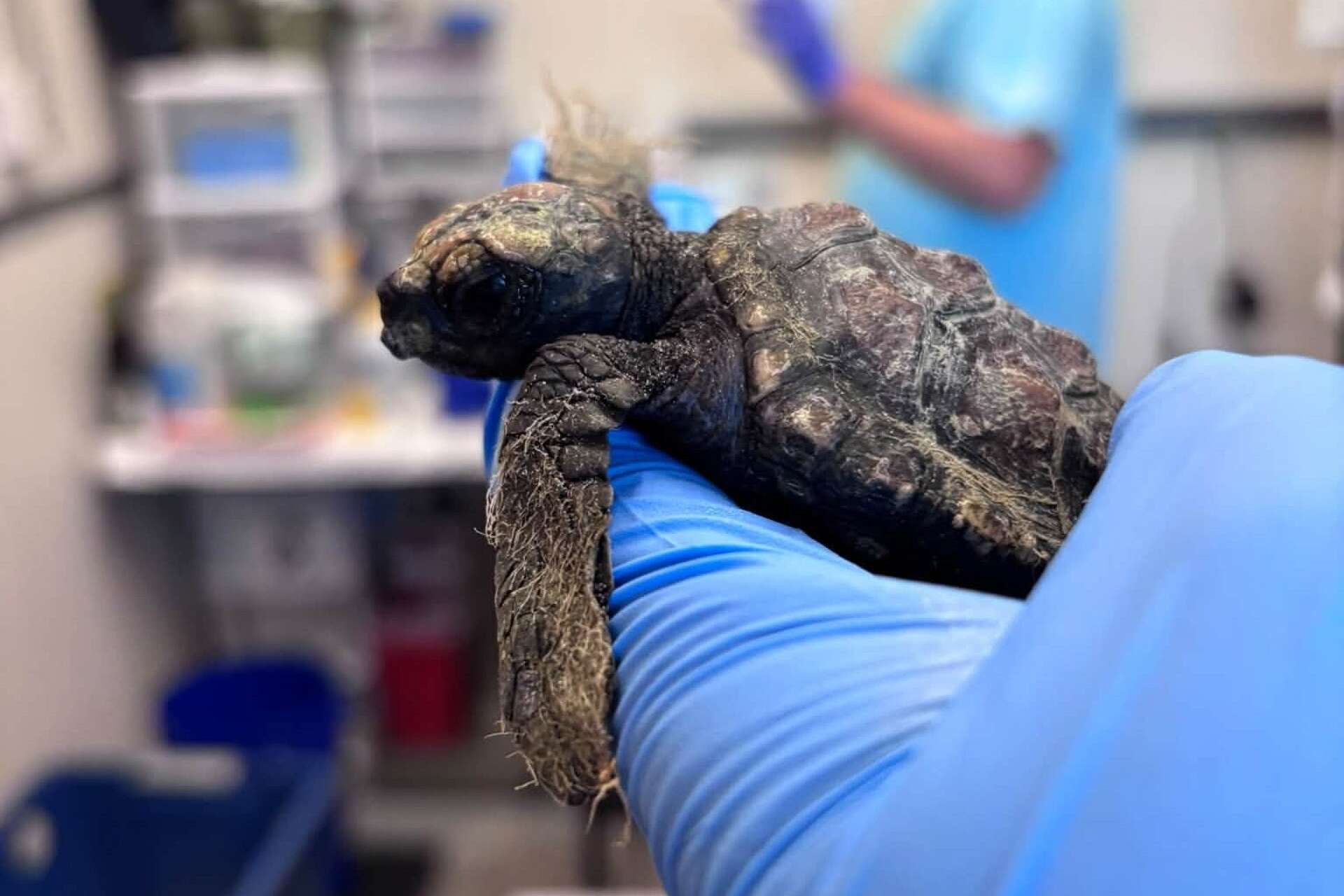
Over the weekend, the Gulf Center for Sea Turtle Research at Texas A&M University at Galveston experienced what it described as an alarming influx of stranded sea turtles. By Saturday, the situation had produced something researchers at the center had never encountered before.
Four different species of sea turtle arrived for care in a single day.
The patients included a Kemp’s ridley, loggerhead, green and hawksbill sea turtle, bringing together four of the five sea turtle species known to inhabit the Gulf of Mexico.
Now, researchers and veterinary teams are caring for the animals while also trying to understand what caused so many different turtles to strand within such a short period of time.
The timing has raised an obvious question.
Texas is currently dealing with a red tide event along portions of the coast near Galveston.
The Texas Parks and Wildlife Department began receiving reports of the bloom on Sept. 8 and has since documented fish kills while collecting water samples and monitoring affected areas around Galveston Island and the Bolivar Peninsula. Red tide occurs when certain microscopic algae reach unusually high concentrations in the water and produce toxins that can affect marine life.
But researchers are being careful not to jump to conclusions.
The sea turtle strandings occurred while the red tide event was underway, but the Gulf Center has not determined whether the bloom is responsible for what happened to the turtles.
For now, the animals themselves are the priority.
Veterinary experts from the Houston Zoo are working with the Texas A&M team to monitor and treat the stranded turtles. The partnership is part of a much larger sea turtle response network along the Texas coast involving researchers, wildlife agencies, veterinarians and volunteers.
Four Species in One Day
Sea turtle strandings aren’t unusual along the Gulf Coast.
Individual turtles can end up in trouble for a long list of reasons, including illness, fishing gear interactions, boat strikes, cold temperatures and other injuries. Texas A&M’s Gulf Center operates year-round to respond when those animals are found.
What made Saturday different was the variety.
Kemp’s ridley turtles are particularly important to conservationists. They are among the most endangered sea turtles in the world and have a strong connection to the Gulf of Mexico.
Green sea turtles are also regularly found along the Texas coast, where juveniles use shallow coastal habitats to feed.
Loggerheads are powerful turtles named for their disproportionately large heads and strong jaws, which allow them to crush hard-shelled prey.
Then there are hawksbills.
Hawksbill sea turtles are more closely associated with tropical coral reef environments and are considerably less common along the upper Texas coast. Having representatives of all four species arrive at the center on the same day made the event especially unusual.
It also gives veterinarians four very different patients to evaluate while scientists watch what is happening in the surrounding environment.
The Houston Zoo has worked with sea turtle conservation partners along the upper Texas coast for decades. Its veterinary staff provide medical care for injured and stranded turtles, while teams also participate in beach patrols and other efforts to locate animals in distress. The zoo says its veterinary team provides lifesaving medical support for an average of around 100 sea turtles each year.
The partnership has already produced some remarkable outcomes in 2026.
Earlier this year, the Texas A&M center and Houston Zoo helped return 100 sea turtles to the Gulf following a major cold-stunning event. Houston Zoo veterinarians also recently cared for Rhossi, the endangered Kemp’s ridley that traveled thousands of miles across the Atlantic after washing ashore in Wales before finally making his way back toward the Gulf.
The latest group presents a different challenge.
Researchers now have to care for the turtles while continuing to watch the unusual conditions developing offshore.
Texas wildlife officials say red tide is not normally present in the state’s coastal waters, which is why an active bloom triggers additional monitoring and public updates. As of the latest reports, officials were continuing to investigate fish kills and collect samples around affected portions of the coast.
Whether that ultimately has anything to do with the sudden influx of sea turtles remains an open question.
For now, four different species that happened to run into trouble on the same stretch of Texas coastline have ended up in the same place.
And a team of researcher
Sources: Houston Chronicle