Recent Shark Incident Prompts Cape Cod Commissioner To Propose Culling Program
Featured Image Credit: Brian Skerry
By: Kira Krall
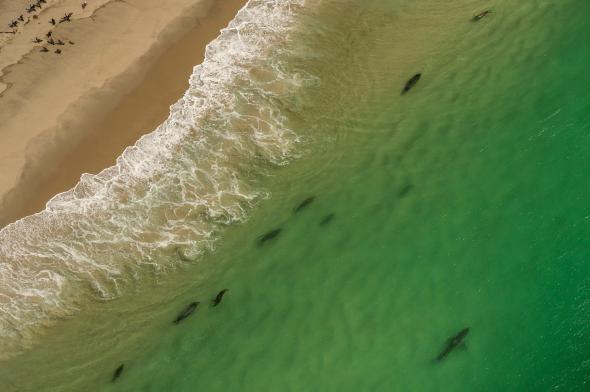
This past week, commissioner Ron Beaty proposed a Cape Cod shark culling program in response to a shark feeding on a seal in a popular swimming spot. The action caused an understandable panic among surfers and swimmers who fled to the shore. Great white sharks have long been known to frequent the Cape Cod area. In the past few years, OCEARCH and other shark research organizations have discovered an abundance of juvenile sharks, leading them to believe it’s a North Atlantic great white nursery.
Shark culling programs attach baited hooks to floating drums, set with the intention of catching “dangerous” species of shark like great whites and tiger sharks over a certain length. If they’re still alive on the hook, patrollers shoot the shark and dump the body back into the ocean.
Just like other shark cull programs around the world, the likely goal of Beaty’s proposed cull was to increase swimmer confidence and prevent tourism losses. However, the backlash from the public, media, and marine scientists caused Beaty to indefinitely postpone the cull.

A great white shark lunges at a baited hook attached to a floating drum. The Western Australia program deployed drum lines 1 kilometer (0.6 miles) offshore. Image Credit: stabmag.com
Western Australia is infamous for its frequent culls geared toward removing great white sharks from the population. The area’s 2014 cull pulled in 172 sharks, 82 of which were destroyed or found dead on the hook. Of those 172 sharks, a whopping zero were the targeted great whites.
Shark culls threaten ecosystem health but also present a more immediate danger. Setting baited hooks and disposing of shark carcasses so close to swimming beaches could attract more and larger sharks to the area, the exact opposite of the cull’s intention. Culls are also very expensive, with the bulk of the 2014 Australian shark cull’s $1.28 million cost attributed to paying contractors.

A sign explaining the Marconi Beach closure on August 24th, 2017. The Massachusetts beach closed because of increased great white sharks in the area and a shark biting a surfer’s board. Image Credit: Craig F. Walker/The Boston Globe via AP
Shark culling programs around the world are only effective when it comes to bycatch. Other shark species, fish, turtles, and marine mammals have fallen victim to shark management methods like shark nets and drumlines.