Ocean Floor Reveals New Information on Supernovas
Photo credit: Daily Mail, Nature Communications
Dust found at the bottom of the ocean – which may be from a supernova – could help scientists discover the amount of heavy elements a massive explosion creates.
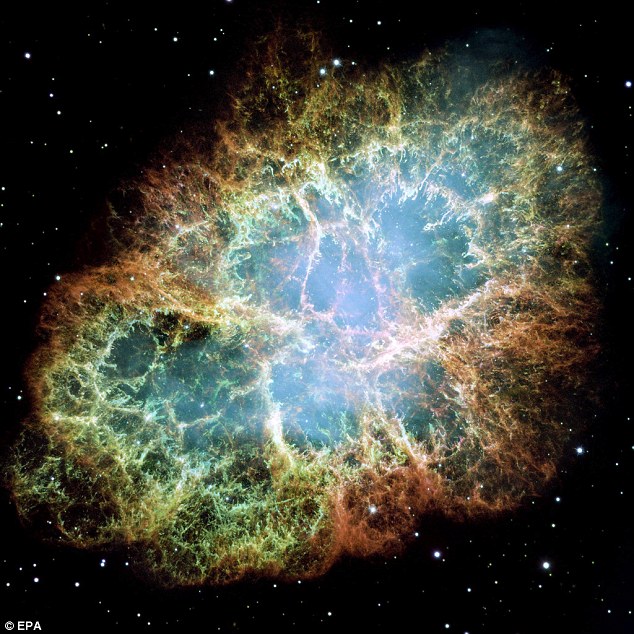
Scientists believe the dust settled after a star’s supernova explosion 1,000 years ago – the Crab Nebula.
The ten centimeter sample for the Pacific Ocean floor held 25 million years of history. It contained a lot less plutonium-244 than they expected to find, but uranium and thorium were found.
Scientists say the presence of these elements indicate that an explosive event occurred very close to Earth around the time our planet was formed.
“Small amounts of debris from these distant explosions fall on the earth as it travels through the galaxy,” said lead researcher Dr Anton Wallner, from the Research School of Physics and Engineering. “We’ve analyzed galactic dust from the last 25 million years that has settled on the ocean and found there is much less of the heavy elements such as plutonium and uranium than we expected.”
Photo credit: Daily Mail
Current theories on supernova state that iron, potassium and iodine – materials essential for human life – were created and distributed through space, while also creating heavier elements like lead, silver and gold.
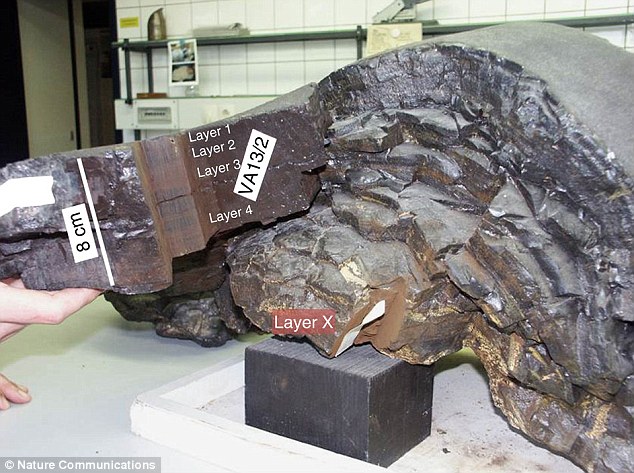
Photo credit: Daily Mail, Nature Communications
“Any plutonium-244 that existed when the earth formed from intergalactic gas and dust over four billion years ago has long since decayed,” Dr Wallner said. “So any plutonium-244 that we find on earth must have been created in explosive events that have occurred more recently, in the last few hundred million years.”
“We found 100 times less plutonium-244 than we expected. It seems that these heaviest elements may not be formed in standard supernovae after all. It may require rarer and more explosive events such as the merging of two neutron stars to make them.”
“Radioactive elements in our planet such as uranium and thorium provide much of the heat that drives continental movement, perhaps other planets don’t have the same heat engine inside them,” he said.