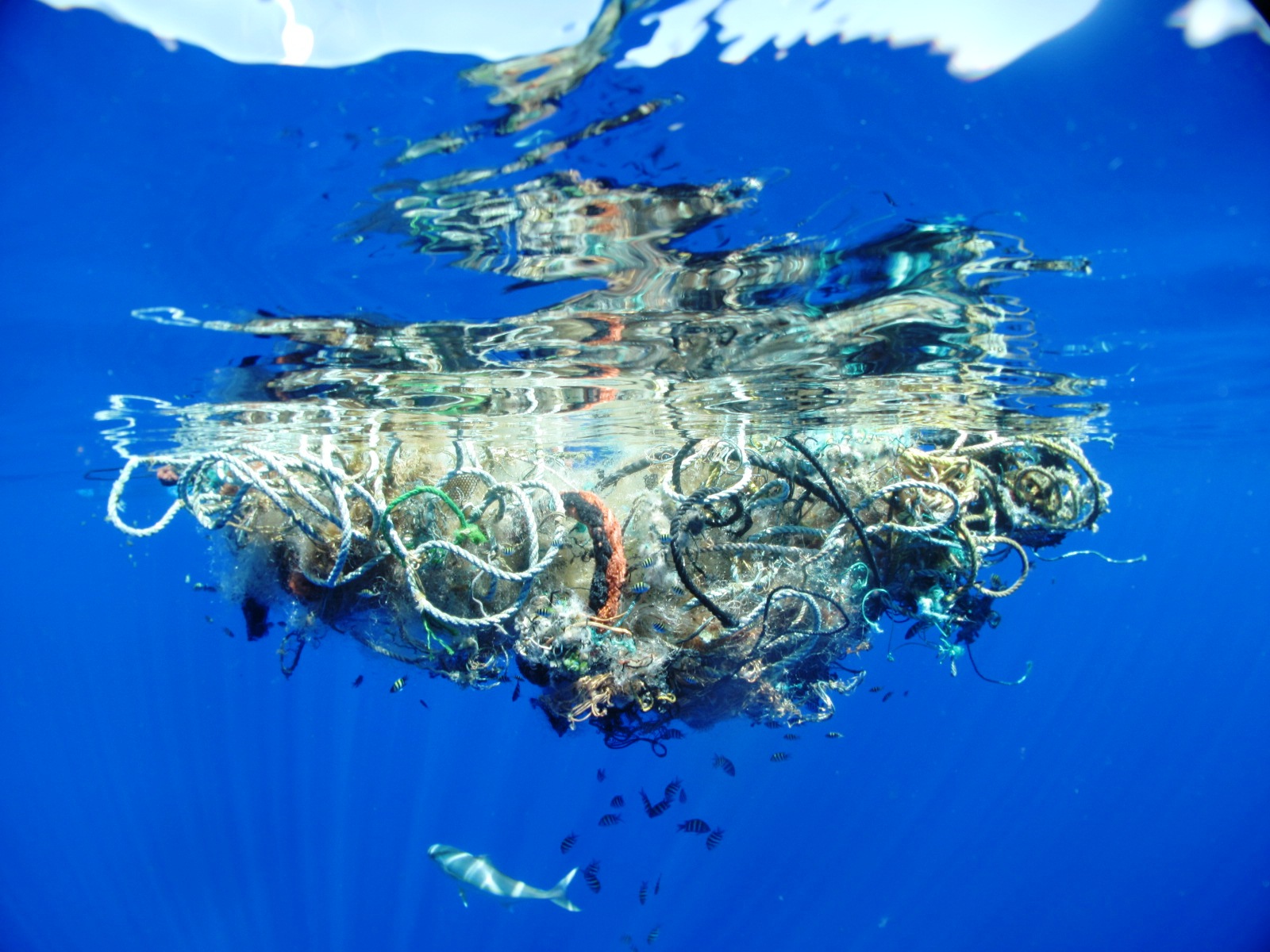
This Is How The Ocean’s Giant Garbage Mill Works
By: Amanda Kelley
With the estimated 269,000 tons of plastic waste floating around the world’s oceans, it’s no surprise that there is a possibility of it all coming back to haunt us.
While it is known that the movement of ocean gyres and the global ocean conveyor belt causes waste to “collect” in massive patches across the globe, it wasn’t discovered until recently that the trash could escape from these trash continents.

The 5 major gyres of Earth’s oceans: the rotating of the planet, the movement of deep sea currents, and wind patterns all contribute to these “whirlpool” like currents that suck trash into their centers. Image Source: http://www.orma.com/wp-content/uploads/ocean-gyres.jpg
The trash accumulates in these gyres year after year, and this accumulation is what was first discovered in 1999 by a sailor in the Pacific. Now, nearly 20 years later, the giant patches are still growing, and are even beginning to launch plastics back out towards coastlines as they spin around.
A team of French researchers have found that these giant plastic islands are not static. Computer algorithms that model ocean currents recently revealed the existence of “exit doors” that lead away from the surface patches of plastic. The models simulated the trajectories of several million particles, resulting in the discovery of currents several hundred kilometers wide, which escape from the heart of the gyre and head eastwards instead.
This projects the path of plastics in the Pacific towards the West coast of the Americas, and these results are backed-up in real time as Chilean researches have confirmed an increase in the amount of waste collected on their coastlines.
Although there is not currently an immediate solution to the plastic oceans issue, the best we can do for now is to ensure that the situation doesn’t get any worse by preventing more trash from entering the seas.
Read more from our source here.