Normally Solitary Octopuses Take A Risk In A Big City Made Entirely Of Shells
Featured Image Credit: Peter Godfrey-Smith
By: Kira Krall
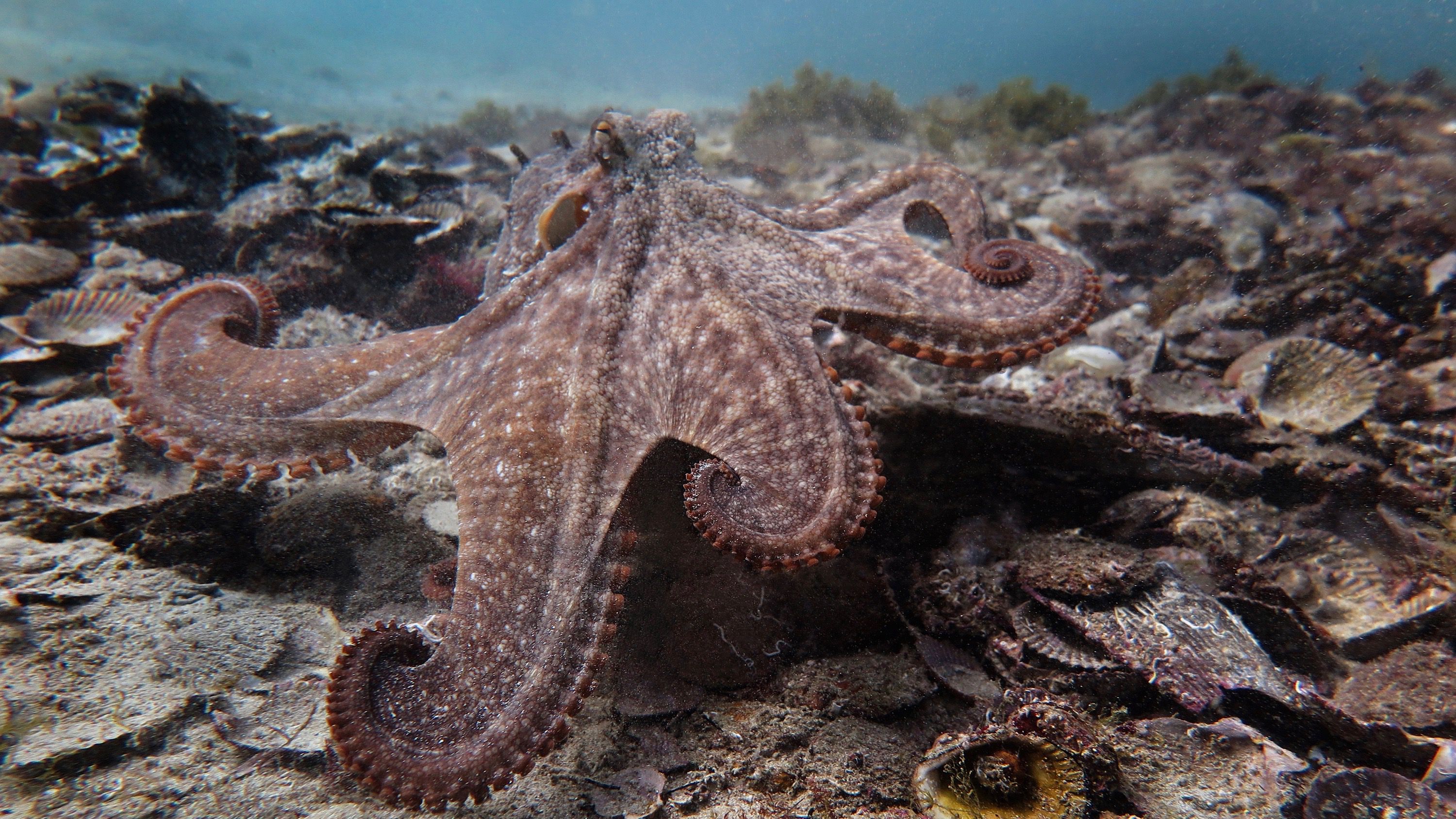
Octopi of any species are more likely to be solitary than not. That’s why scientists dismissed a 2009 report of an octopus city dubbed “Octlantis” by the divers that originally saw it. Then, another report came in 2016 at a different site in Jarvis Bay. This population of Octopus tetricus, or “gloomy octopus”, had traded up for life in the city.
Building dens in such close proximity to another octopus is extremely out of character. Gloomy octopuses are normally so solitary, even their mating habits have adapted. A male will send a sperm packet into the water column toward a female that hooks into her skin. These independent invertebrates don’t even have to touch to create little octi-babies.
Living in cities has no doubt altered the behavior of gloomy octopuses and a group of marine biologists decided to investigate. David Scheel out of Alaska Pacific University and his team recorded the behavior of this “Octopolis” population for months. They found 10-15 unique residents in the city. Three pairs of neighbors mated in close quarters, defying the hands-off mating style of rural octopuses.

Octopus neighbors. This Octoplois site was made out of natural substrates like shell and sand, while the Octlantis site was built on a large piece of discarded scrap metal. Image Credit: dailymail.co.uk
The Octopolis population also went against the octopus status quo when they left the safety of their dens to engage in their unique social behaviors. Even those octopuses that didn’t want to leave their shell-y fortress were sometimes forced out by their neighbors. The existing residents continued to flex their muscles by attempting to exclude any outsiders from joining the neighborhood.
Gloomy octopus dens in both cities were made out of shell built upon the previous generation’s infrastructure. Octopuses only live about three years depending on when they mate, so the octopus cities rose from the ground in no time. No one’s quite sure why these populations decided to live all clumped together in the first place. One broad theory is that some resource like food or habitat is in great supply at these particular locations. Once the conditions attracted the octopuses, they developed new big city behaviors.
Read more from our source here.