
America’s Largest Marine National Monument Reaches A Milestone
Featured Image Credit: NOAA, Papahānaumokuākea Marine National Monument
By: Natasha Lehr
Earlier this month the Papahānaumokuākea Marine National Monument celebrated its ten year anniversary. The Monument is located in the Northwestern Hawaiian Islands region, and is the largest marine protected area in the United States (maybe soon the world).
The Monument was established by President George W. Bush on June 15, 2006 as the Northwestern Hawaiian Islands Marine National Monument.
A year later the Monument was renamed Papahānaumokuākea Marine National Monument to recognize the culture of the Hawaiian people. The name commemorates the union of the Hawaiian creators Papahānaumoku and Wākea, representing the meeting place of mother earth and father sky.

Image Credit: Source
The Monument encompasses 140,000 square miles, which makes it larger than area of all the U.S. National Parks combined. It includes ten islands and atolls, as well as extensive coral reef systems.
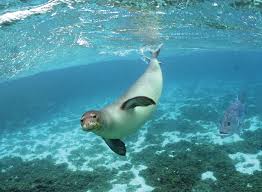
The pristine protected area is home to a diverse ecosystem of over 7,000 marine species, one quarter of which are endemic to the region. Among the many species that can be found in the waters or on shore are the threatened green turtle, endangered Hawaiian monk seal, and endangered Laysan duck.
that Photo Credit: Source
In 2010, the area was proclaimed as a UNESCO World Heritage Site for its natural and cultural values. The islands are scattered with sacred ceremonial sites, along with post-Western sites from the commercial whaling industry and the Battle of Midway.
It also provides a vital breeding habitat for numerous species of seabirds and turtles. This listing helps to further protect both the land and water from destruction or development.

Photo Credit: NOAA/Greg McFall
With its expansive area, the Monument is managed in partnership with the Department of Commerce, the Departments of the Interior, and the State of Hawaii. Parts of the Monument are administered by the National Oceanic and Atmospheric Administration (NOAA) and the U.S. Fish and Wildlife Service (FWS).
This allows for the research of the biodiversity within the Monument. Expeditions have already discovered new coral species and ship wrecks within the Monument. The status of the Monument ensures that the unique ecology of the waters and land are protected through conservation, management, and ongoing research for future generations to enjoy.
Source: NOAA & Wikipedia

