Scientists Just Discovered a New Penguin Species That Was Hiding in Plain Sight
You’d think we would have all the penguins figured out by now.
They’re big, conspicuous birds. They live in colonies that can contain thousands of animals. Scientists have been studying them for generations.
Apparently, they can still surprise us.
Researchers say a population of gentoo penguins living on one of the most remote island chains on Earth is actually a species of its own, making it the first new penguin species formally described in more than a century.
The newly described bird is called the southeastern gentoo penguin, or Pygoscelis kerguelensis.
And the funny part is that scientists didn’t exactly discover these penguins wandering around some unexplored island.
We already knew they were there.
What we didn’t realize was just how different they were.
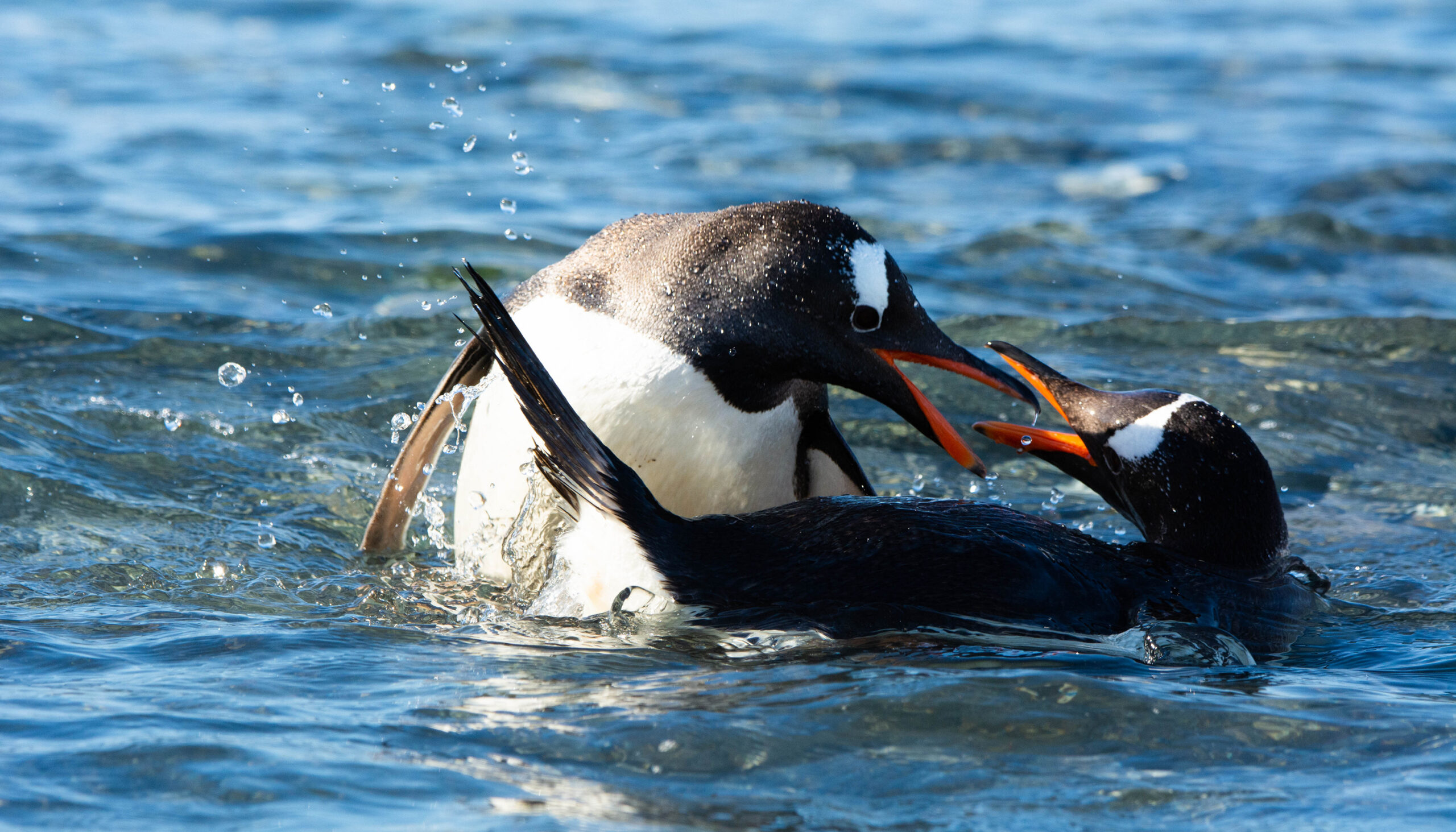
Gentoo penguins have traditionally been grouped together as one widespread species living across Antarctica and islands throughout the Southern Ocean. To most people, they certainly look like one species. They share the familiar black-and-white body, bright orange-red bill and white markings across the head that make gentoos easy to recognize.
But appearances can be deceiving.
An international team of researchers examined genetics, body measurements, ecology and evolutionary history across gentoo populations throughout the Southern Ocean.
The deeper they looked, the clearer the picture became.
What we’ve been calling one gentoo penguin is better understood as four distinct species.
One of them had never been formally described before.
Meet the Southeastern Gentoo
The new species lives on the Kerguelen Islands, a collection of remote islands in the southern Indian Ocean sometimes called the Desolation Islands.
The name makes sense.
Kerguelen sits roughly 2,000 miles from the nearest permanently inhabited landmass, surrounded by an enormous stretch of cold Southern Ocean.
That isolation appears to have helped create something unique.
Over hundreds of thousands of years, different gentoo populations became separated by geography and by major ocean boundaries such as the Antarctic Polar Front.
The Antarctic Polar Front forms where cold Antarctic waters meet warmer waters farther north. For marine animals, that boundary can function almost like an invisible wall.
Penguins living on opposite sides of it faced different environments and gradually adapted to them.
Researchers found differences involving genes associated with metabolism, thermoregulation, oxygen transport and skeletal development.
They also found physical differences.
Birds from different regions vary in measurements including their bills, flippers and other parts of the body, even if those differences aren’t immediately obvious when you’re watching a group of penguins waddle around.
Put all that evidence together and researchers argue that the gentoo family tree needs a rewrite.
Instead of one species, the study proposes four: the northern gentoo, southern gentoo, eastern gentoo and newly described southeastern gentoo.
That means one of the world’s most recognizable groups of penguins may have been hiding considerably more diversity than we realized.
There’s another reason this matters beyond adding a new name to a wildlife guide.
For years, scientists looking at gentoo penguins as a single species could see a relatively successful bird.
Some gentoo populations, particularly those around the Antarctic Peninsula, have been expanding as environmental conditions change.
But that doesn’t mean every gentoo population is doing well.
Once scientists begin looking at them as separate species, the picture changes.
A population thriving in Antarctica can no longer hide declines occurring among a different species thousands of miles away.
Researchers say three of the four proposed species could lose substantial amounts of suitable habitat as ocean conditions continue changing, while the southern gentoo may actually expand its range.
Other threats differ between populations too.
Some colonies have been hit hard by avian influenza. Others live in areas where scientists have far less information about current population trends.
Recognizing them as separate species could eventually allow conservation groups to evaluate those risks individually rather than assuming that success in one part of the Southern Ocean means gentoos everywhere are doing fine.
That’s one of the fascinating things about discovering a species this way.
Nothing suddenly appeared.
The southeastern gentoo was already swimming, hunting, breeding and raising chicks on the Kerguelen Islands long before scientists gave it a new scientific name.
Museum specimens of the birds have existed for more than a century. One specimen designated in the new species description was collected on Kerguelen Island all the way back in 1897.
The discovery came from realizing that animals we thought we understood were telling a more complicated evolutionary story.
That’s increasingly happening as scientists combine traditional fieldwork and museum collections with modern genetic technology.
Two animals can look nearly identical while carrying enough genetic, ecological and evolutionary differences to represent separate branches of life.
In this case, those branches were penguins.
So the next time somebody says we’ve already discovered everything interesting on Earth, there’s now a pretty good counterargument waddling around an island in the middle of the Southern Ocean.
We didn’t find penguins for the first time.
We finally realized we had been looking at a different one all along.
Sources: UC Berkely News