Scientists Just Filmed Dolphins Using Shells to Catch Fish
Dolphins have once again given scientists a reason to reconsider just how clever they really are.
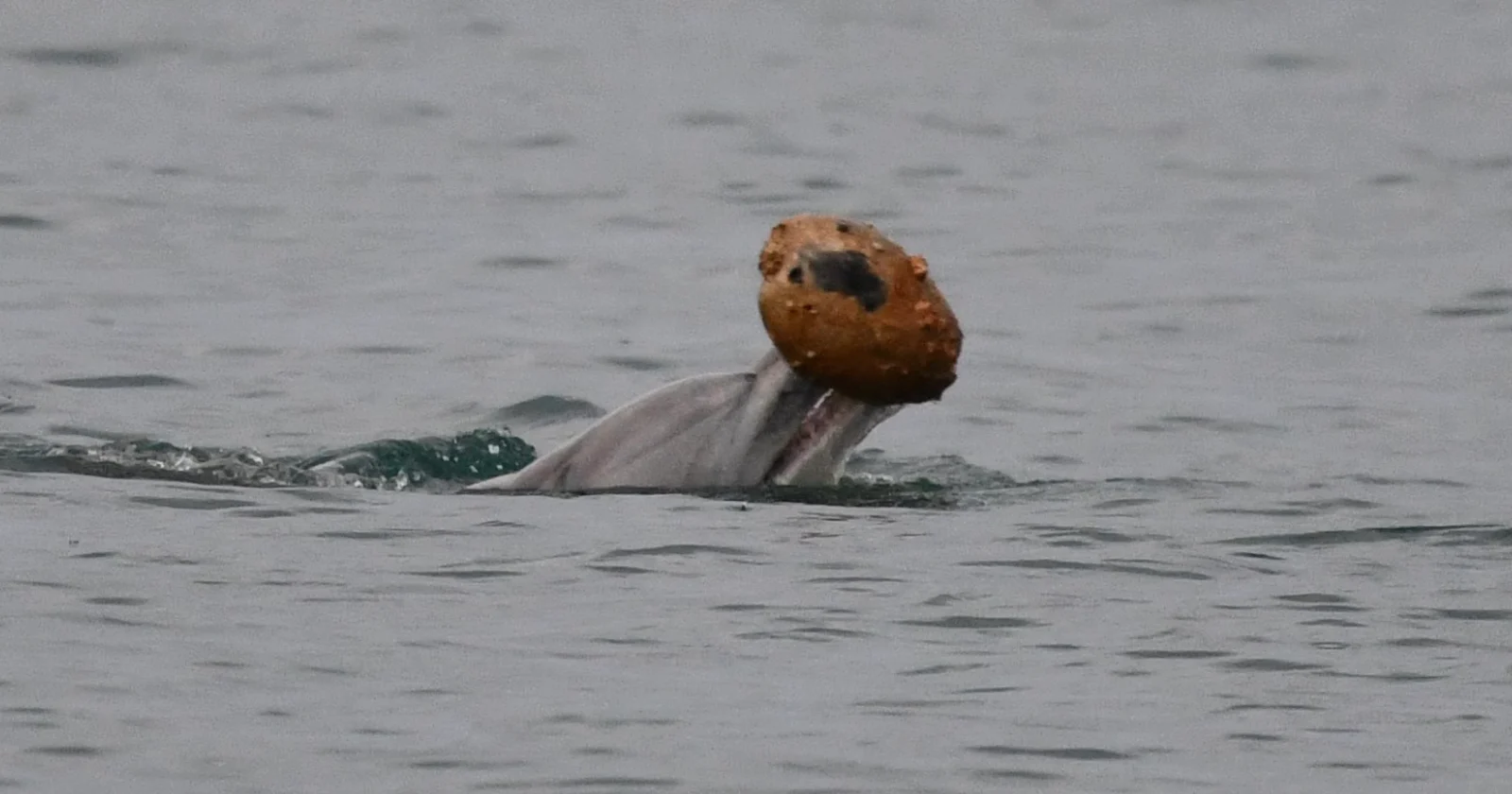
Researchers off the coast of Queensland, Australia, have captured footage of bottlenose dolphins using empty shells to catch fish, providing the first video evidence of the behavior in this part of the country. Even more intriguing, scientists believe young dolphins may be learning how to do it by watching their mothers.
The hunting technique is known as “shelling,” and it is remarkably clever.
A dolphin searches the seafloor for a large empty shell where a fish may be hiding. Once it finds one, the dolphin picks up the shell with its beak, carries it toward the surface and shakes the contents into its mouth.
Essentially, the shell becomes a reusable fishing tool.
Researchers from the University of the Sunshine Coast captured the behavior while studying bottlenose dolphins off Queensland’s coast. While shelling has previously been documented among dolphins elsewhere in Australia, the new footage provides scientists with an opportunity to study how the behavior is being used and potentially passed between animals in another dolphin population.
That last part may be the most interesting.
Scientists have observed calves accompanying their mothers during the behavior, raising the possibility that young dolphins learn the technique socially rather than simply figuring it out independently. If that is the case, shelling would join a growing list of behaviors that researchers believe form part of dolphin culture.
Dolphins are already known for having different hunting traditions depending on where they live. Some populations herd fish onto beaches and briefly strand themselves to catch them. Others stir up rings of mud around schools of fish, causing the startled fish to leap from the water directly into waiting mouths.
In Shark Bay in Western Australia, dolphins have even been documented wearing marine sponges over their beaks while searching the seafloor for prey, apparently protecting themselves from rocks and sharp objects as they forage.
Shelling adds another tool to the box.
Rather than chasing a fish out of its hiding place, a dolphin can simply pick up the entire hiding place and take the meal with it.
Dolphins Aren’t Just Smart. They Learn From Each Other.
What makes behaviors like shelling particularly important to scientists is that intelligence alone does not explain them.
If individual dolphins were independently inventing the same technique, researchers would expect the behavior to appear more randomly throughout a population. Instead, specialized hunting strategies are often concentrated within particular social groups and geographic areas.
That suggests knowledge is being shared.
Dolphin calves spend years alongside their mothers, giving them an unusually long period to observe how an experienced adult finds food, navigates its environment and interacts with other dolphins. Researchers have found evidence that some specialized feeding behaviors can be passed from mothers to their offspring, while others may spread between unrelated dolphins through social interaction.
That ability to learn from one another means two populations of the same dolphin species can effectively develop different ways of doing things.
In other words, dolphins can have traditions.
The new Queensland observations add another piece to that picture. Researchers will need more footage and long-term observations to determine exactly how the shelling behavior spreads through the population, but watching mothers and calves perform or observe the technique offers an intriguing clue.
It also makes an empty shell on the bottom of the ocean suddenly look a lot more interesting.
To us, it’s something you might pick up on a beach.
To a hungry dolphin, it might be a fishing rod, a takeout container and a dinner plate all at once.
Sources: Australian Geographic