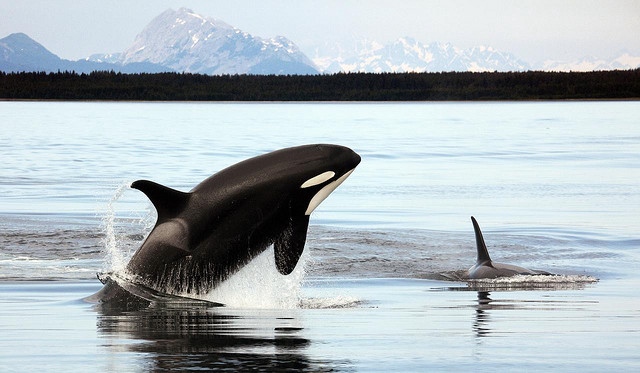
Who Would Shoot An Orca?
Photo: Christopher Michel, Creative Commons
By Mike Madsen
Killer Whales, or orca, are actually the largest member of the dolphin family, and their range is found from Antarctic waters to the waters of the Arctic. At one time, pre-1970’s, orca were thought to be nuisance animals by fisherman and the general public and were actually shot and killed on sight. Now, after SeaWorld and other marine parks have brought us the wonder, majesty and beauty of orca it is hard to believe that was the case, but it was indeed the practice of fisherman to kill them whenever they encountered them. The only people to consistently care for orca has been the Salish people, who have had orca as icons and myth figures throughout their history.
Of course, mankind has had an irrational prejudice against predators since before recorded history, wiping out whole species when it suited us. Orcinus orca are just one more in a long line of species accorded this unreasonable bias. Little did we know at the time that they were certainly not the ravenous contenders for salmon like we thought they were; instead, our own greed for harvesting the coveted fish was likely the downfall of many of the salmon runs whose decline was blamed on so called “Killer whales.”
Luckily mankind is capable of rational decisions as well, and after being shown the realities and wonders of orca by SeaWorld and other entities, we have a good idea of how incredible these animals really are. Amazing hunters and communicators, they are able to adapt to varying circumstances and eat a surprising variety of foods.
An incredibly complex and competitive carnivore, as we know now, orca do not just eat fish; orca will also eat seals, other species of dolphins and larger whales as well. In some rare cases orca have even been known to practice cannibalism. Various orca pods are migratory and some are more localized in nature, largely depending on the culture of their pod, food available and ocean conditions in the area they frequent. Scientists have found that different pods specialize in different kinds of prey depending on what is most abundant in their local area.
Not a prolific species, orca have typically gone up and down in the population numbers but have been declining due to various factors for some years. Many things are thought to be the cause of this including lack of prey fish, pollution and surface impacts with boats, among many other factors. There are things we can do to make sure we are helping to preserve this important, keystone predator.
Orcas are sensitive to noise and disturbance from boats. Also, recent data indicates whale and dolphin behavior is significantly changed by whale watching tours and it looks as though their reproduction rates are affected as well. If you whale watch, make sure you do so from a responsible whale watching vessel. Never hassle them or pursue them. Whale and boat collisions seems to be happening on a more frequent basis as time goes on and this 2 billion dollar industry gains in popularity. Also, you can watch them from land if you wish with the help of the Whale Trail. The best way to watch orca is to visit a SeaWorld park where you can get close to them with the help of underwater viewing areas. Choose to eat sustainably-harvested salmon and other seafood to help protect wild fish populations. Also, do your part to dispose of unused medicine and chemicals properly. Never dump into household toilets and sinks or outside where they can get into ditches or storm drains. See if your community has a household hazardous waste collection facility that will take your old or unused chemicals.
Sources:
http://www2.epa.gov/salish-sea/southern-resident-killer-whales
http://whalemuseum.org/
http://www.canadiangeographic.ca/wildlife-nature/?path=english/species/orca/3
http://www.canadiangeographic.ca/wildlife-nature/articles/pdfs/orca-the-whale-called-killer.pdf