Single and Ready to Mingle with a Male 1/40,000th Thier Size
Featured Image via Tumblr
By: Eva Gruber
What if your mate was up to 40,000 times larger than you?
Well, then you’re probably a male blanket octopus, one of the most unique cephalopods in the oceans.
A male blanket octopus was spotted alive in the wild for the first time off the northern coast of Australia only in 2003, and we are still discovering the mysteries of these fascinating octopuses.
Residing in pelagic tropical and subtropical ocean waters around the world, there are actually four different species described in the genus Tremoctopus.
Let’s get to know them a little better.
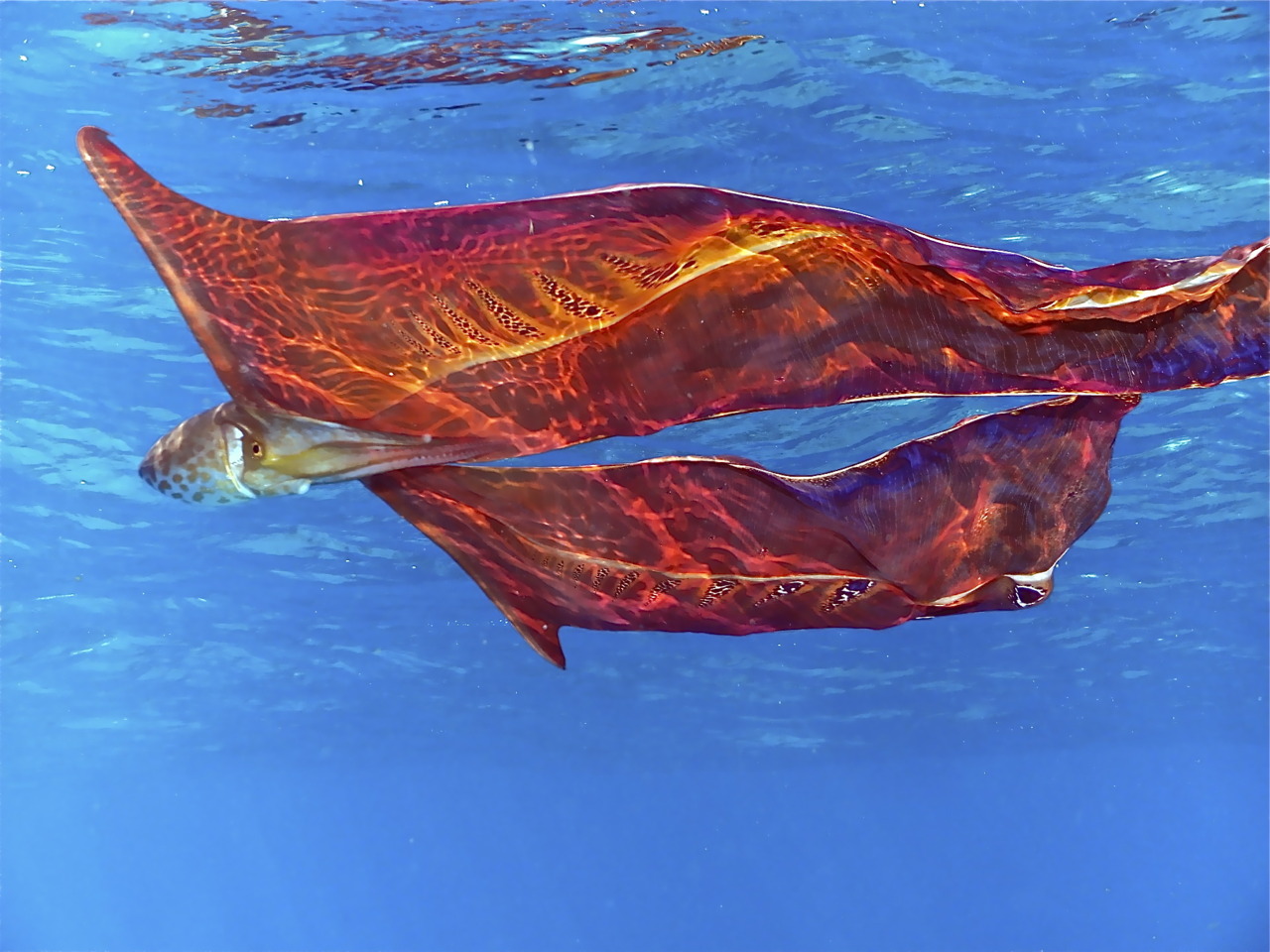
The tentacles of a blanket octopus are connected by a cloak of patterned webbing, resembling a scarf or blanket. Their striking appearance is also what gives them their name.
These cephalopods have a pretty unusual defense strategy – immune to Portuguese man-o’-war venom, the blanket octopus has a habit of ripping stinging tentacles off the colonial organism. When they feel threatened, they will wave these stolen tentacles in its two upper arms as a deterrent.
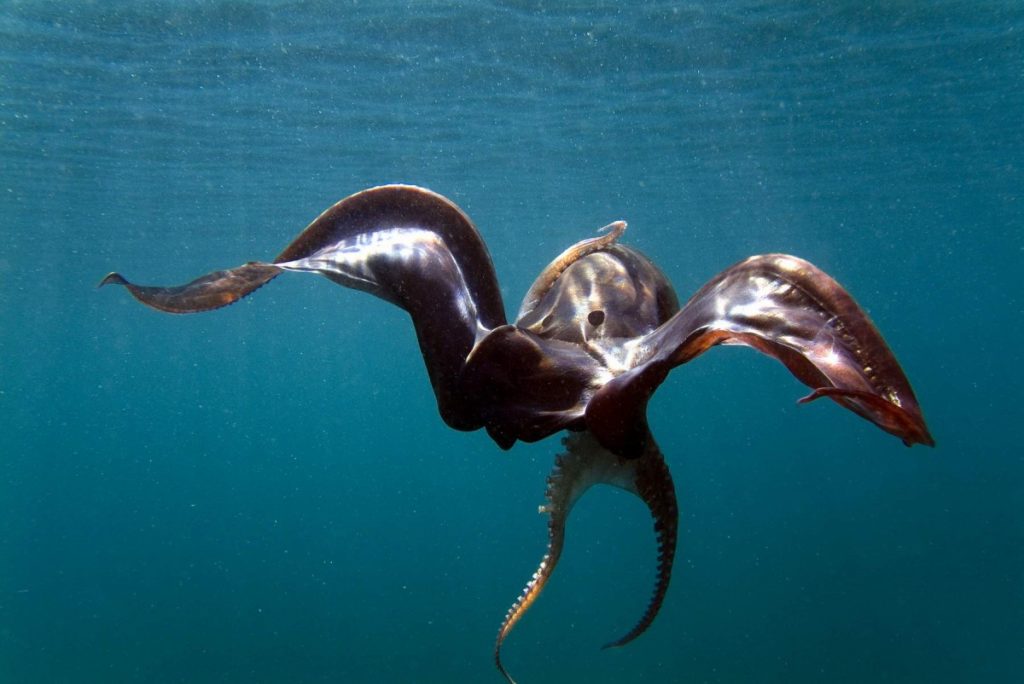
Image Credit: Source
But perhaps their most unusual feature is their mating system. Tremoctopus violaceous has the greatest sexual dimorphism of any non-microscopic animal. While female blanket octopuses (which are said to resemble a floating pink blanket) can reach up to two meters in length, the males only grow to about the size of a walnut.
So how do the creatures mate with such a disparity in size? The male comes in at 1/40,000th of the weight of the female!
Well, the pelagic zone, where these octopuses reside, is a rather desolate place. The chances of finding a mate are few and far between. Therefore, upon finding a female, the male puts all of his energy into an attempt to mate with her as he is unlikely to ever find another one.
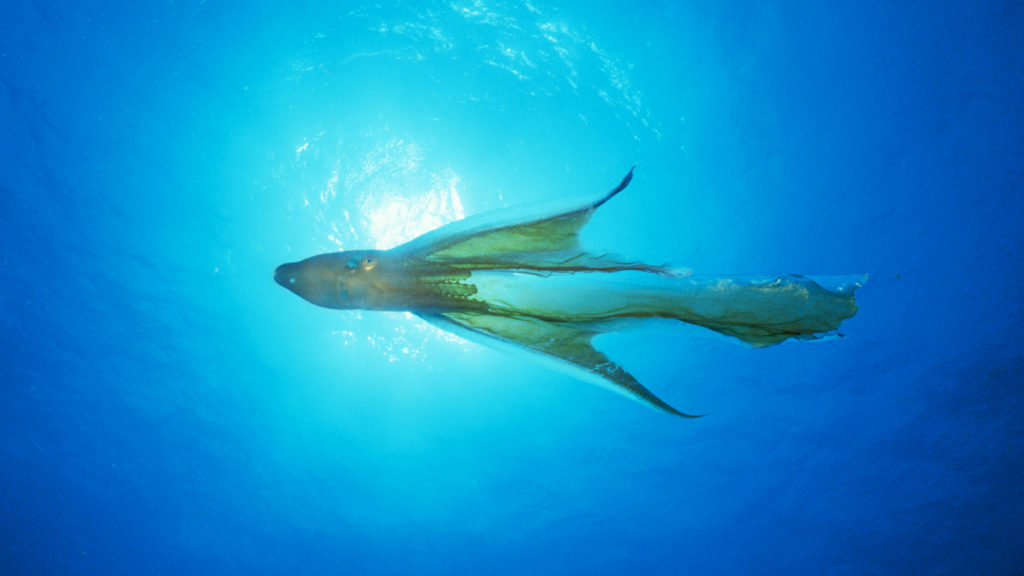
Female blanket octopus
Image Credit: Stephen Frink/Getty Images
The male has a special modified arm called a hectocotylus. He fills his heterocotylus with sperm, tears it off, and presents it to the prospective female. If the female is receptive, she accepts his heterocotylus. After the act, the male expires and drifts off, likely to certain death.
The female stores his specialized tentacle inside her mantle until she is ready to lay eggs, upon which she “squeezes the tentacle like a tube of toothpaste,” according to Tom Tregenza, evolutionary biologist at the University of Leeds and co-author of the first paper describing the blanket octopuses’ mating system.
In fact, the only reason that scientists knew the two mismatched sexes were the same species was because females were found with the males’ tentacles inside of them. Following fertilization, the female carries her eggs, numbering about 100,000, on a special calcareous secretion secured at the base of her dorsal arms until they hatch.
Until 2003, the males had never even been seen alive in the wild. Dead males had been collected in plankton nets before, but it took many years before a live one could be observed. Here is a rare picture of a live male.
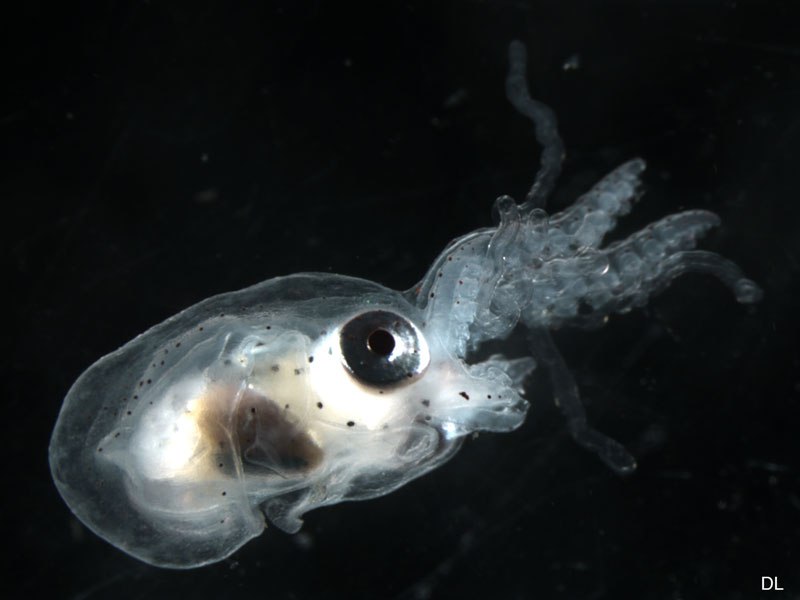
Image Credit: Dhugal Lindsay/JAMSTEC/CMarZ
So, how might this mating system have evolved, which seems so alien to us human animals?
Extreme sexual dimorphism is actually quite common in marine animals (as well as in parasites). In these species, females might be extremely hard to find due to the environment in which they reside. The males’ chances of finding a mate and reproducing rely only on pure chance.
In such cases, growing to a larger size doesn’t confer any special advantages in finding a female to mate with, nor does a male have to worry about fighting over her with other males. So for the male, the best tactic is to become sexually mature as quickly as possible without having a lengthy growing and maturing phase.
On the other hand, size does matter for the female – larger females are able to produce more eggs. And in the time that it would take for a single male to grow to the size of a female, many generations of males can be produced – increasing the chance for the species to persist.