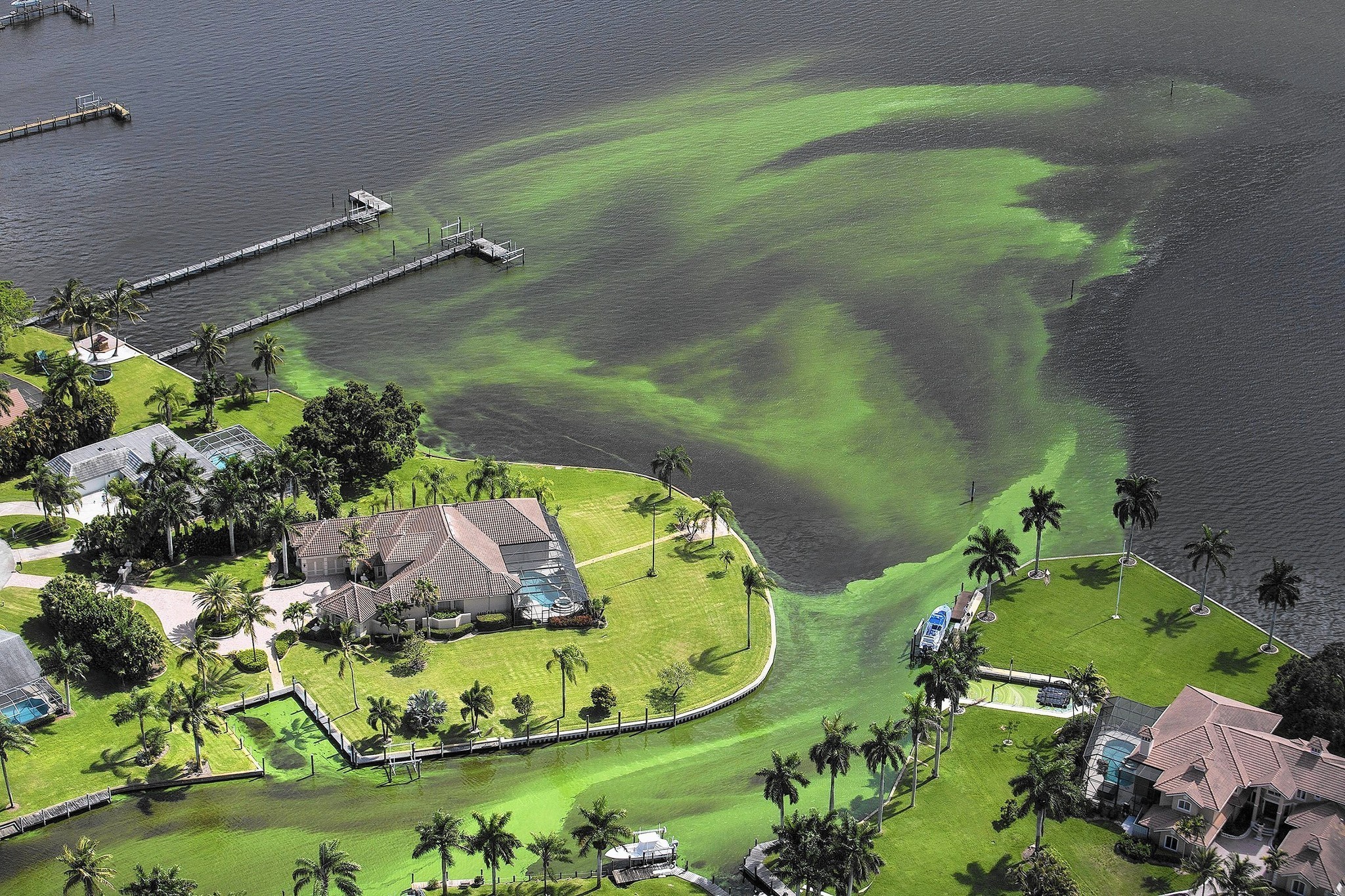
Toxic Green Slime Has South Florida In A State Of Emergency
By: Kira Krall
Lake Okeechobee is a large water body in south Florida. In order to prevent disastrous flooding in towns and agricultural fields, the Army Corp of Engineers built the Herbert Hoover Dike around the lake.
Once the Lake O water levels become too high, the Corp slowly releases water into surrounding rivers and streams. That water eventually makes its way into the waters of the Gulf of Mexico and Atlantic Ocean.
Sounds like a good arrangement, right? Wrong. This only works if the water in Lake Okeechobee is uncontaminated, healthy water. But since the lake is surrounded by mostly sugar farms that dump their refuse, pesticides, and fertilizers into the waters, that’s a huge problem for a couple of reasons.
Florida’s drinking water comes from our underground aquifer system. Groundwater filters through Florida’s limestone rock and pools into underground caves that we access using pumps and wells. All of that pollution from south Florida’s agricultural fields is slowly seeping its way into our water sources.
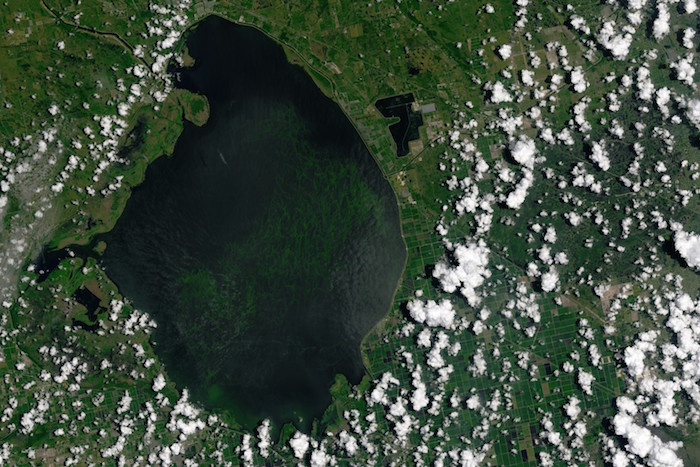
The massive cyanobacteria bloom is visible in the above satellite of Lake Okeechobee. The water was tested this past June and it contained 20 times the amount of toxins that the World Health Organization considers “hazardous.” Image Source: http://www.circleofblue.org/2016/north-america/toxic-algae-flourish-everglades-solution-eludes-florida/
Lake O discharge is also causing toxic algae blooms on both coasts of Florida. Cyanobacteria blooms, to be exact. This blue-green algae feeds off of the nitrogen and phosphorus in the water and thrives in the lower salinity levels. Lower salinity also causes mass die-offs of oyster beds. The algae blooms block any light from reaching seagrass beds that water-dwelling creatures like manatees depend on.
Cyanobacteria begins to die when the nutrients are gone and bacteria feasts on the dead algae. As bacterial activity increases, bacteria consume a substantial amount of oxygen. Oxygen that fish need to breathe. Fish can suffocate and die if oxygen levels become too low.
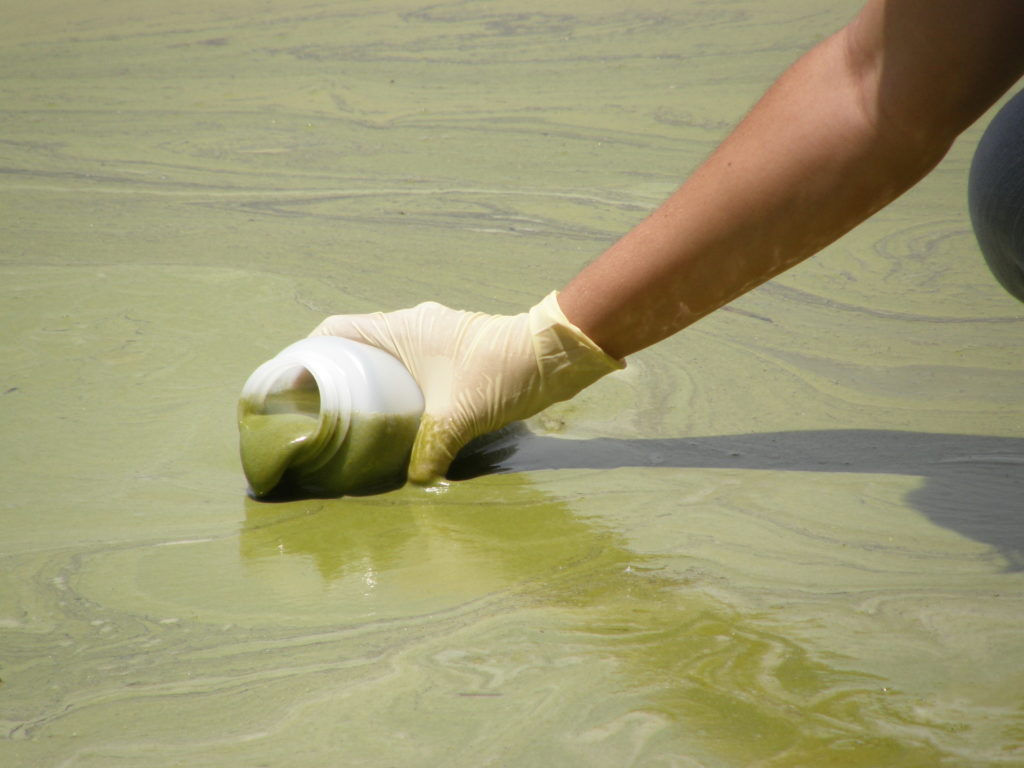
The above picture shows how dense algae blooms can become. The buildup of blue-green algae dramatically changes the health of different aquatic habitats. Image Source: http://enviroscienceinc.com/services/bioassay/harmful-algal-blooms/
Large-scale cyanobacteria blooms are harmful to plants and animals, but a toxin called microcystin has a direct effect on human health. If ingested, microsystin can cause nausea, vomiting, and long-term liver disease. If touched or inhaled, it can cause rash or hay fever symptoms.
The blooms are so bad, Governor Scott declared a state of emergency in June in order to devote more resources to mitigating the situation.
When people think of Florida, they think palm trees and beaches. But it’s basically a big swamp. Anything released into the water in any part of the state can affect ecosystems hundreds of miles away and we must take responsibility for our actions.
Featured Image Source: Sun Sentinel