Whale Sharks May Just Help Us Out Big Time
Featured Image Credit: www.telegraph.co.uk
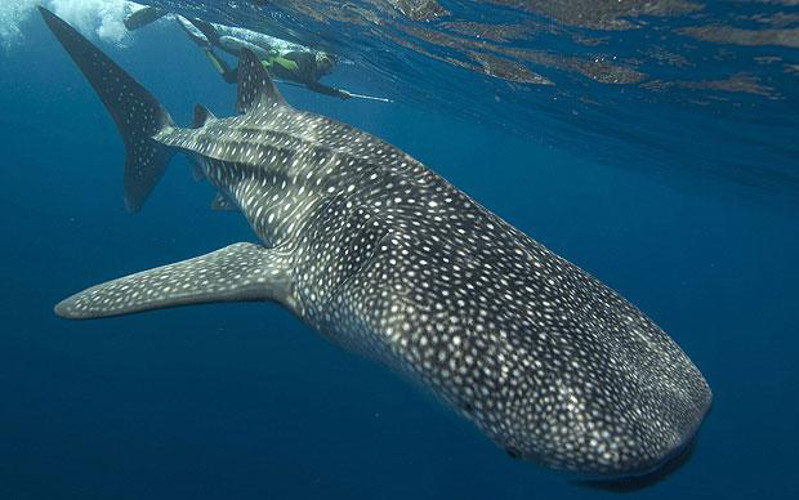
Whale sharks are the largest fish in the world, growing as long as 40 feet. They feed on plankton and other tiny organisms, but don’t have many natural predators themselves. So, they are indifferent to humans who pose little threat to them.
And, whale sharks make idyllic study subjects because they are so much larger than all other shark species. Medical researchers have noticed and taken note. The result: A mutually beneficial relationship.
Currently, the only facility in North America that have whale sharks is the Georgia Aquarium. Alistair Dove, director of research and conservation at the Georgia Aquarium and Tim Read, a professor of infectious diseases at Emory University School of Medicine, are collaborating to study the genome of whale sharks.

In sequencing the whale shark genome, the rescuers hope to learn a little more about the species, and hopefully, our own. Their ongoing research could create a better understanding of autoimmune diseases in humans like rheumatoid arthritis, multiple sclerosis and lupus.
Sharks develop antibodies to certain diseases in their blood and are the first group of vertebrates to do so. Looking at the DNA of sharks sheds light on our bodies’ processes of fighting of viruses or diseases. It can help us understand how our immune systems have these abilities.
“Ideally you want to target invading microorganisms and avoid self targets,” Read said. “We’re going to see how the whale sharks may have solved that problem.”
Whale sharks could really help us out. And, in the process, we can learn so much more about them.
“They’re extremely mysterious,” Read said. “We know so little about the ecology of whale sharks in the wild. And actually one of the aspects of this work I’m particularly interested in, as well as immunology, is the conservation genomics — using the genome sequencing to understand what is the population of the whale sharks and what are the differences between whale shark populations in different (parts) of the world.”
Read more from our source, here.