
Zika: It’s Here to Stay
By: Veronica Grigaltchik
As the Rio 2016 Olympics begin in Brazil this month, attention on the Zika virus continues to plague the event, not just people.
Some athletes have already pulled out of the games by weighing up the risks to themselves and their families. But just what is the reality of the Zika virus?
For those wanting information at a glance, the Center for Disease Control and Prevention (CDC) lists the top things to know about the Zika virus. As many already know this flavivirus is primarily transmitted through mosquito bites, although it has also been sexually transmitted between humans. Many who contract the virus have no idea that they have the disease, with some having mild symptoms that usually last only a week at most.
What is alarming, however, are the possible effects that it can have on fetuses. Infection during pregnancy can cause a serious birth defect called microcephaly, a condition in which babies are born with smaller heads than normal, and often smaller brains, resulting in incomplete development as well as other severe issues.

Artist: John Singer Sargent’s The Mosquito Net (1912)
Research is ongoing, but the World Health Organization (WHO) states that there is scientific consensus that Zika virus infection is a cause of both microcephaly and Guillain-Barré syndrome (GBS), a sickness in which the immune system damages nerve cells, causing muscle weakness, and even paralysis.
Concerns about Zika virus infection seem to have only recently arisen, but it is not entirely new to the medical community. Just like Ebola, Zika has an extensive history, being first identified in 1947 in monkeys in Uganda and later identified in humans in 1952. From the 1960s to 1980s, human infections were found across Africa and Asia.
Now, the Zika virus is rapidly spreading in the Americas.
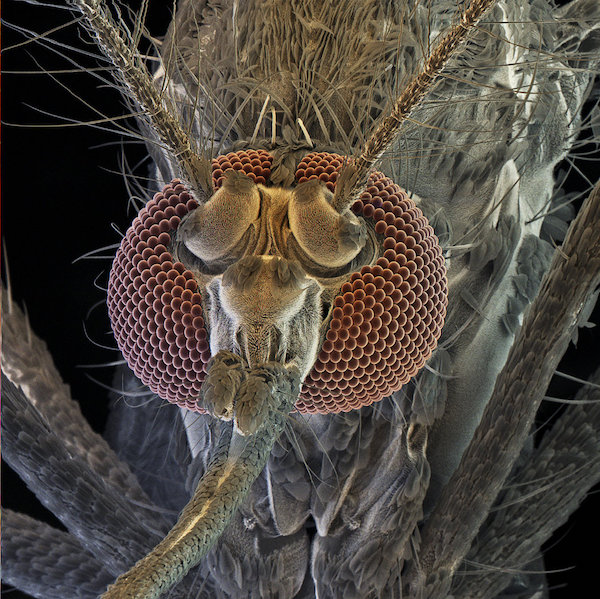
Photo Credit: David Scharf/Science Source
What makes the Zika virus so unstoppable is related to its natural host, the mosquito Aedes aegypti. It has evolved to live closely with humans, particularly by utilizing plastic containers, including in our trash, as egg-laying habitat. This mosquito is found almost everywhere, and has an extensive range in the United States.
Despite the recent focus on Brazil, more than 1,650 people have already been infected with the Zika virus in the United States. As of July 2016, there have been a total of 386 cases reported in Florida, including 55 pregnant women. Florida Governor Rick Scott announced that it is almost certain that local mosquitoes have contracted the virus.
With no vaccine yet available (although trials are underway), researchers are now looking at what immunity to the virus could mean for people living in infected regions. Particularly, some scientists believe that immunity could mean that the current Zika outbreak will end in a few years.
One thing that is certain is that the Zika virus is here for now, and will likely be for some time, even after the Olympics wrap up in Brazil.
Featured Image Credit: Ueslei Marcelino/Reuters

