
How A Little Bit of Zooplankton ‘Pee’ Changes Everything
Photo credit: Univ. of Washington
How much pee could change the sea if the critters in the sea did pee?
Good question! And the University of Washington has an answer for you.
Zooplankton, creatures in the sea that feed at the ocean’s surface at night and spend their days in the depths, are extremely small when compared to the volume of the world’s oceans. So how could such a small thing create such a big impact?
Well, during the day they slowly emit ammonia – their equivalent to pee. This output has been proven to play a role in ocean chemistry.
That’s pootin’ tootin’ cool.
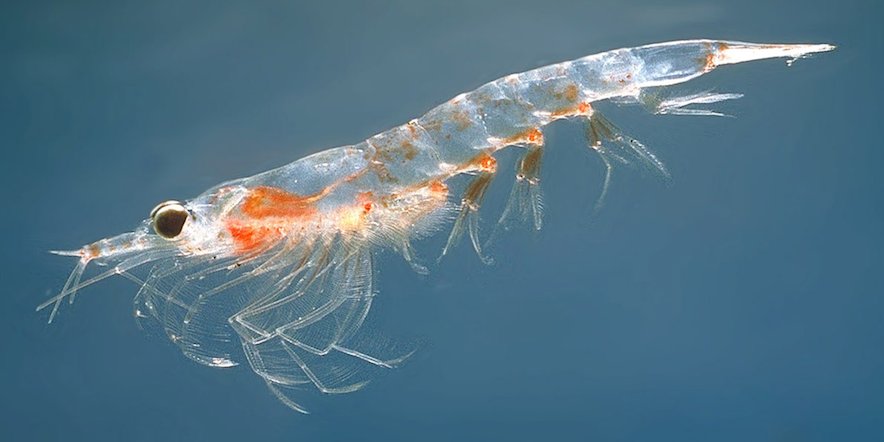
Photo credit: Wikimedia
“I’m very fascinated by these massive migrations,” says lead author Daniele Bianchi, a postdoctoral researcher in the UW School of Oceanography. “To me, it’s exciting to think about the effects of animal behavior on a large scale in the ocean.”
If you’re thinking the zooplankton, and others animals like krill and lanternfish, are too small, consider their abundance in the ocean.
After their nighttime feeding at the ocean’s surface, it takes them two hours to dive back down to their hiding spots. Their solid waste falls like pellets, but the liquids are emitted slowly as they descend.
Gravity, amirite?
We know the ocean is not our toilet or trashcan, but it is theirs.
Results show that in certain parts of the ocean, the ammonia released plays a big part of the oxygen-free conversion of ammonium and other molecules to nitrogen gas, a key chemical transition.
“We still think bacteria do most of the job, but the effect of animals is enough to alter the rates of these reactions and maybe help explain some of the measurements,” Bianchi says.
These low0oxygen areas are expecting to expand due to climate change.

