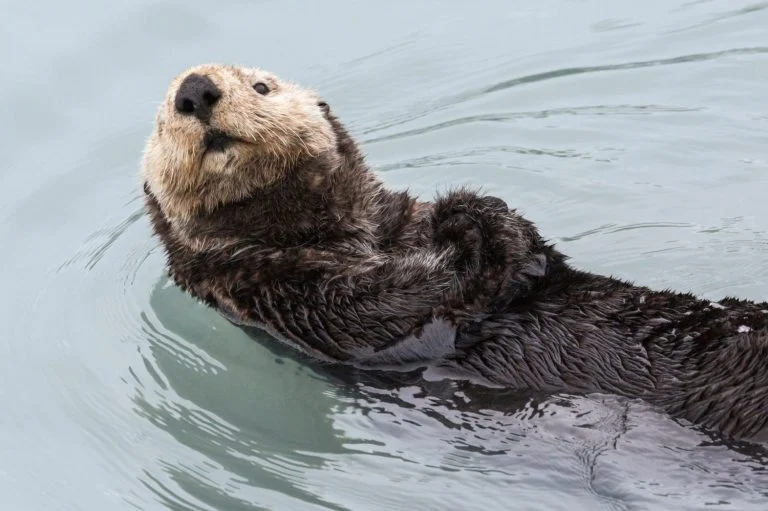
Sea Otters Have Pockets and They Actually Keep Snacks in Them
Sea otters already have a fairly enviable daily routine. They float on their backs, eat an extraordinary amount of seafood and occasionally wrap themselves in kelp when it is time for a nap.
As if that were not enough, they also have pockets.
Not metaphorical pockets. Sea otters have loose folds of skin beneath their forearms that function as built-in storage compartments, allowing them to tuck away food and other useful objects while diving.
For an animal that spends much of its day looking for something to eat, that extra storage comes in handy.
Sea otters commonly forage along the seafloor for clams, crabs, mussels, snails, sea urchins and other invertebrates. Rather than returning to the surface every time they find a single piece of food, an otter can stash part of its catch inside one of those skin folds and continue searching with its paws free.
Once it has collected enough, the otter returns to the surface, rolls onto its back and starts unloading lunch.
The result can look remarkably human. Food comes out of the pocket, the otter’s chest becomes a dining table and, if something on the menu is particularly difficult to open, a rock may suddenly appear to help with the job.
Sea otters are among the relatively small number of animals known to use tools. An otter trying to open a clam or mussel may balance a rock on its chest and repeatedly smash the shell against it until it cracks. In some cases, otters have been observed holding onto useful rocks rather than abandoning them after a single meal.
And yes, they can keep those in their pockets, too.
Researchers have found that individual sea otters can develop their own preferred diets and hunting techniques. One may become particularly good at catching crabs, while another specializes in clams or snails. Young otters learn many of their foraging skills from their mothers, meaning some of those preferences and techniques can be passed along.
The pockets help make that constant search for food more efficient, which is particularly important for an animal with an enormous appetite.
Unlike whales, seals and many other marine mammals, sea otters do not rely on a thick layer of blubber to stay warm. Instead, they have the densest fur of any animal on Earth, reaching as many as one million hairs per square inch in some areas. They also have extremely high metabolisms and may consume roughly 25 to 30 percent of their body weight in food every day.
For a 60-pound otter, that can mean putting away an impressive amount of seafood before bedtime.
A Surprisingly Well-Equipped Animal
The pocket is only one part of a body remarkably well adapted to a life spent almost entirely at sea.
Sea otters have sensitive whiskers that help them locate prey in dark or murky water. Their dexterous front paws allow them to manipulate food and tools, while their large webbed hind feet propel them through the water.
Even their famous grooming sessions serve an important purpose.
Because sea otters do not have blubber, keeping their fur in good condition is essential for survival. They spend hours grooming and fluffing their coats, trapping a layer of insulating air between the water and their skin. What looks like an otter obsessively fixing its hair is actually serious maintenance of its primary defense against the cold.
Their habit of wrapping themselves in kelp while resting has a practical explanation, too. The kelp can act as an anchor, helping an otter remain in place instead of drifting away while it sleeps.
Taken together, the behaviors make sea otters look almost suspiciously prepared for life.
They have a waterproof coat, built-in insulation, webbed feet, sensitive whiskers, the ability to use tools and a convenient place to carry everything.
That last adaptation might be the easiest to appreciate.
The next time a sea otter disappears beneath the surface and returns carrying an unreasonable amount of food, remember that there may be more where that came from.
Check the pockets.
Sources: Monterey Bay Aquarium