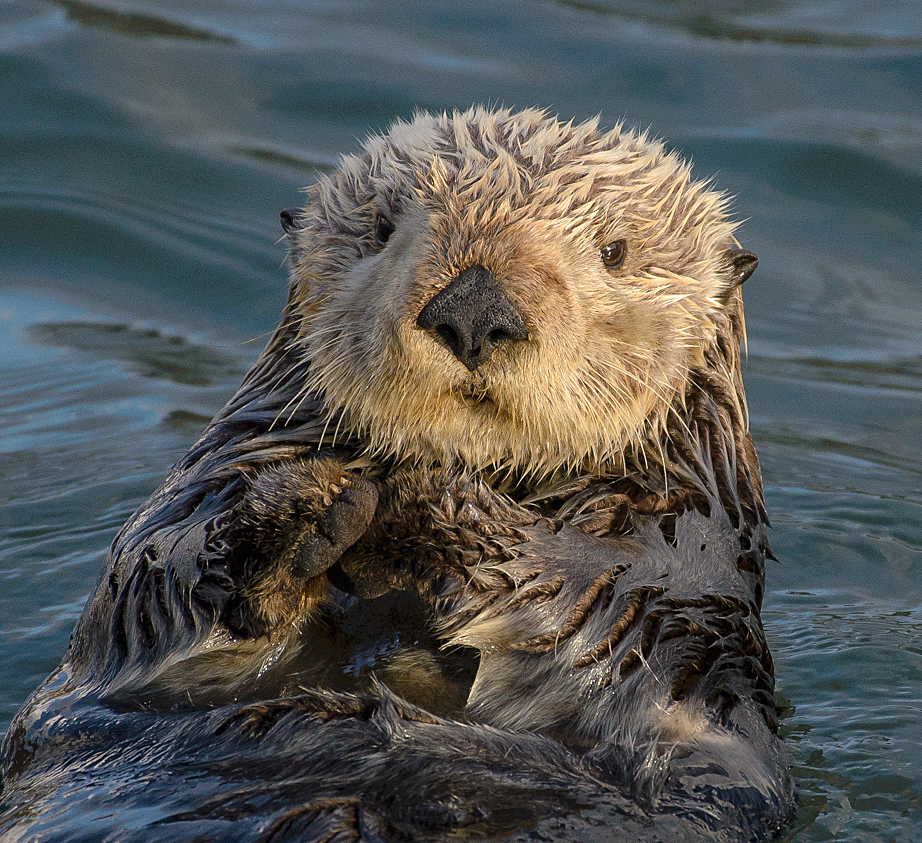
Sea Otters Use Tools to Crack Open Dinner and Some Even Carry Their Supplies With Them
If you handed a sea otter a clam, there’s a decent chance it would know exactly what to do with it.
Find something hard.
Start smashing.
Sea otters are among the relatively small group of animals known to use tools, and their approach is wonderfully straightforward. When an otter catches hard-shelled prey such as a clam, mussel or snail, getting to the meal inside can require more than teeth and determination.
That’s where rocks come in.
A sea otter may bring a rock to the surface along with its prey, roll onto its back and repeatedly strike the shell against the rock until dinner finally opens.
Sometimes the strategy works the other way around. Instead of holding the rock, an otter can smash prey against a hard surface.
In either case, what looks like an adorable animal banging things together is actually a sophisticated feeding behavior that allows sea otters to access foods other predators might struggle to open.
And they have another useful feature that makes the whole operation even better.
Sea otters have pockets.
Not pockets in the human sense, of course. Loose folds of skin beneath their forearms can function like storage compartments while an otter is underwater.
An otter can stash prey in those folds during a dive, leaving its paws free to continue searching the seafloor before returning to the surface to eat.
Essentially, sea otters come equipped with reusable grocery bags.
Not Every Otter Does It the Same Way
Tool use isn’t identical across every sea otter.
Different animals specialize in different foods, and the techniques they use can depend on what’s available where they live.
Some spend more time hunting crabs. Others target clams, snails, mussels or sea urchins. Northern sea otters can also eat fish.
Those differences matter because some prey requires considerably more work to open than others.
A soft meal doesn’t necessarily require a hammer.
A heavily armored shell might.
Researchers studying sea otters have found that tool use can help them access hard-shelled prey while reducing the risk of damaging their teeth. That’s important for an animal that has to eat an enormous amount of food throughout its life.
Sea otters have extremely high metabolisms and can consume roughly a quarter of their body weight each day.
That’s a lot of shells to open.
The behavior also provides a fascinating glimpse into how adaptable sea otters can be.
At Monterey Bay Aquarium, animal care teams even incorporate this natural behavior into enrichment. Otters may receive food frozen inside ice and then pound the blocks against rocks or the exhibit itself to get to the treats inside.
The activity isn’t simply something fun for visitors to watch. Enrichment is designed to encourage animals to perform behaviors that engage the same physical and mental skills they would use naturally.
For sea otters, smashing something open to find food fits perfectly.
Tool use also becomes especially important for young otters learning how to survive.
A sea otter pup has a lot to figure out before becoming independent. Young animals learn what to eat, where to find it, how to dive and how to handle different kinds of prey.
For an orphaned pup undergoing rehabilitation, those lessons can determine whether it will eventually be capable of surviving in the wild.
That’s one reason experienced surrogate otters have become so valuable in rehabilitation programs such as Monterey Bay Aquarium’s Sea Otter Program. Surrogates can help orphaned pups develop natural behaviors including foraging, grooming and handling prey before some of those animals are eventually returned to the ocean.
It’s another example of why sea otters are much more interesting than their reputation for being ridiculously cute.
They’re predators.
They’re ecosystem engineers.
They’re remarkably adaptable foragers.
And when dinner refuses to open, they’re perfectly capable of grabbing a rock and solving the problem themselves.
Having pockets certainly doesn’t hurt.
Sources: Monterey Bay Aquarium: