A Sea Turtle Somehow Ended Up 5,000 Miles From Home and Aquariums Are Helping Him Finish the Journey Back
Rhossi the sea turtle has already crossed the Atlantic Ocean once.
The first time, nobody bought him a ticket.
The young Kemp’s ridley sea turtle somehow traveled thousands of miles from the warmer waters of the Gulf of Mexico and western Atlantic before eventually washing ashore on a beach in Wales in December 2023.
By the time he was found, Rhossi was in serious trouble.
A dog walker discovered the tiny turtle on the beach near Rhos-on-Sea, which would eventually inspire his name. He weighed only about two pounds and was severely cold-stunned, a dangerous condition that occurs when sea turtles are exposed to water temperatures their bodies cannot tolerate.
For a Kemp’s ridley, ending up in Wales is about as far from home as things can get.
The species is most closely associated with the Gulf of Mexico and warmer waters of the western Atlantic. Ocean currents can occasionally carry young turtles far from their typical range, but surviving the colder waters of the North Atlantic presents an entirely different challenge.
Rhossi stopped swimming normally, feeding and functioning the way a healthy sea turtle should.
That’s when Anglesey Sea Zoo stepped in.
The Welsh aquarium took Rhossi into its care and began the slow process of warming and rehabilitating him. His recovery would eventually take more than two years.
During that time, the little turtle got considerably less little.
Rhossi grew from roughly two pounds when he was discovered to about 46 pounds as his health improved. His caretakers treated shell damage and other medical problems while preparing for something considerably more complicated than a typical wildlife release.
Rhossi needed to cross the Atlantic again.
This time, humans were going to make sure he arrived safely.
Getting Rhossi Back to the Gulf
Returning a protected sea turtle across international borders required coordination between aquariums, veterinarians, wildlife agencies and transportation teams on both sides of the Atlantic.
In August, Rhossi finally left Wales.
His trip began with a helicopter flight to London before he boarded a transatlantic flight to Houston, covering roughly 5,000 miles on his journey back toward the waters where Kemp’s ridley sea turtles belong.
Waiting for him in Texas was another team of animal experts.
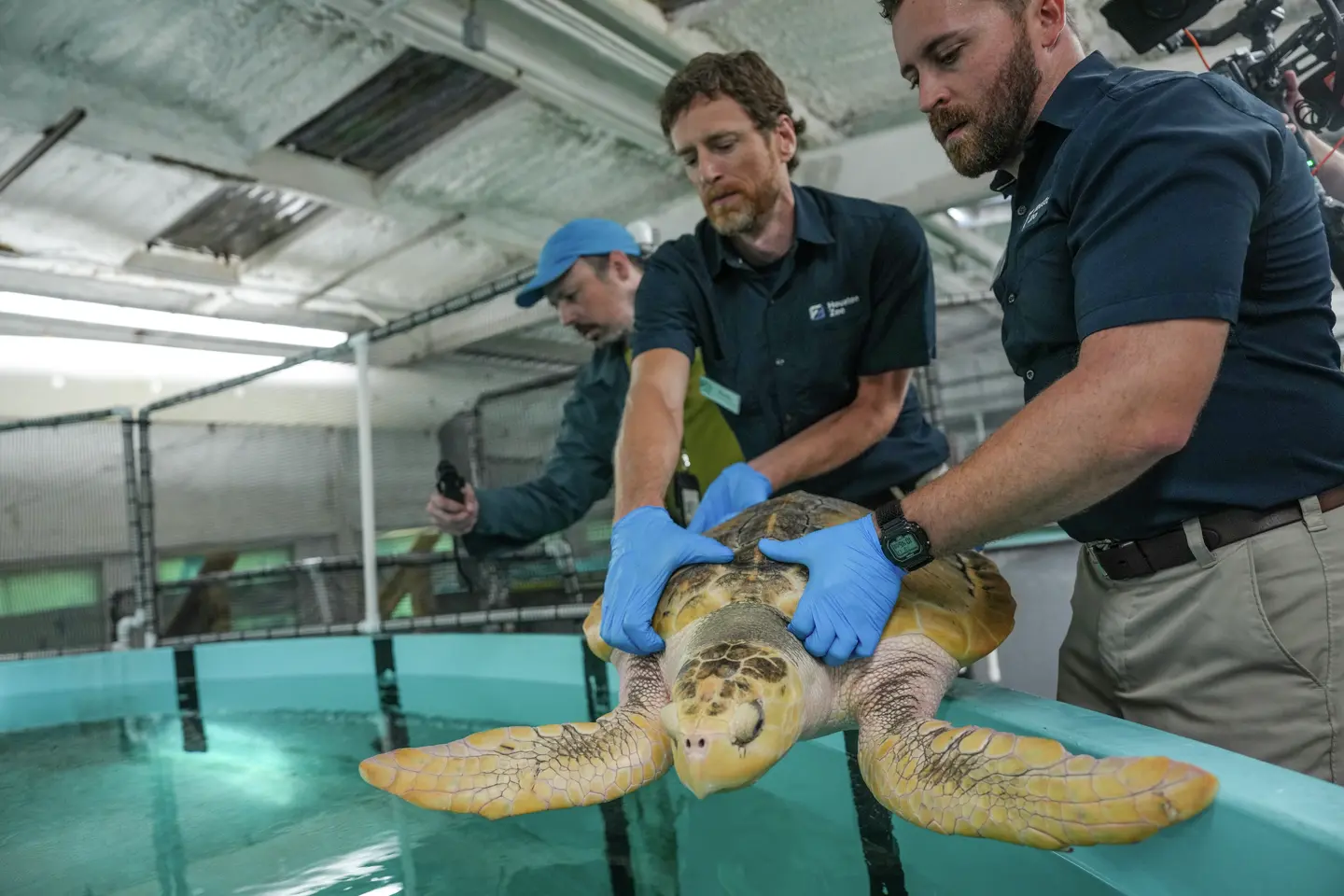
At the Houston Zoo, Rhossi underwent an extensive veterinary examination designed to determine whether he was ready for the final stage of his journey. Veterinarians examined his eyes, mouth, shell, flippers and organ function and used X-rays and a CT scan to take a closer look inside his body.
Most of the news was encouraging.
Rhossi was described by his veterinary team as healthy, active and vigorous. He was swimming normally, diving and surfacing to breathe.
But the scans revealed one lingering problem.
There were signs of pneumonia in his lungs.
Instead of rushing the turtle back into the Gulf, the team postponed his release and continued treatment.
For an animal that had already spent years working his way back from the brink, there was little reason to rush the final few miles.
Rhossi’s eventual return has involved an unusually large conservation team. Anglesey Sea Zoo and Houston Zoo have worked alongside the Texas State Aquarium, NOAA, the U.S. Fish and Wildlife Service and others to move, examine and prepare him for a possible release.
That collaboration matters even more because of what Rhossi is.
Kemp’s ridleys are the smallest sea turtles in the world and remain endangered. Their population suffered a dramatic collapse during the 20th century before decades of protection and conservation work began helping the species recover.
Every animal capable of returning to the breeding population matters.
Rhossi still has one final step ahead of him.
Veterinarians want the pneumonia resolved before deciding he is ready to survive independently in the wild. Until then, his care continues in Texas, much closer to home than he has been for years.
His story is also a pretty remarkable example of what wildlife rehabilitation can look like when there is no simple solution.
One aquarium kept a two-pound turtle alive after he washed up thousands of miles from where he belonged. Another veterinary team took over his medical care on the other side of the Atlantic. Wildlife agencies helped navigate the enormous logistical challenge of moving an endangered animal between countries.
All for one goal.
Get Rhossi back to the ocean.
After a 5,000-mile detour, he’s almost there.
Source: Houston Zoo newsroom