A Sea Turtle With a Brain Injury Just Returned to the Ocean After Doctors Tried an Unusual Treatment
Nine months ago, a small endangered sea turtle washed ashore on Cape Cod in serious trouble.
Last week, it crawled back into the Atlantic.
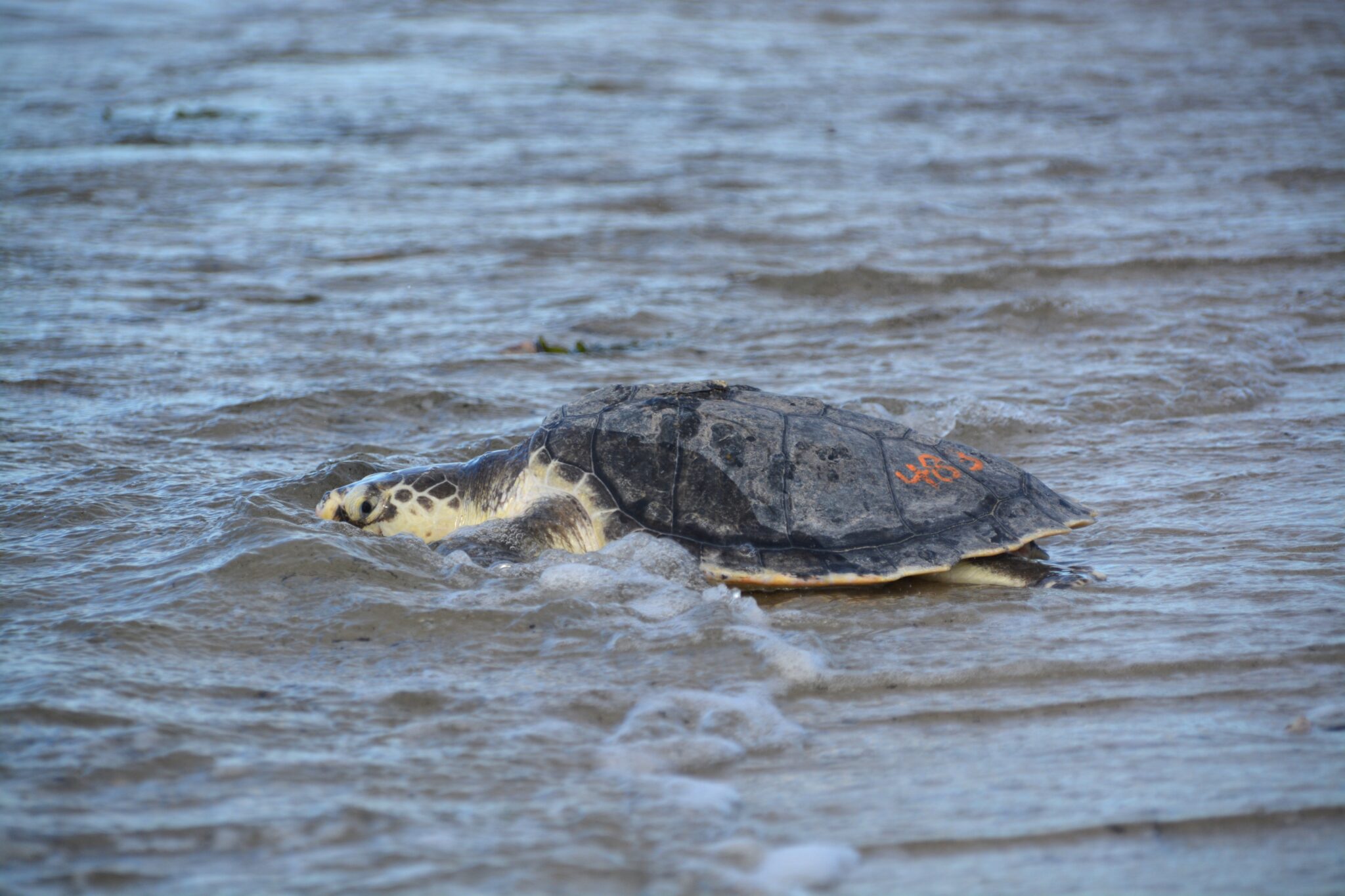
The Kemp’s ridley sea turtle, nicknamed “Young Frankenstein” by the New England Aquarium, was released into Nantucket Sound on Sept. 15 after an unusually complicated rehabilitation that eventually led veterinarians to try something never previously documented for this type of injury in a sea turtle.
They put the turtle in a hyperbaric oxygen chamber.
Young Frankenstein was one of nearly 500 live sea turtles treated by the New England Aquarium during the 2025 cold-stunning season. Most were endangered Kemp’s ridleys that became trapped in Cape Cod Bay as water temperatures dropped late last year.
Sea turtles are reptiles and depend heavily on their environment to regulate body temperature. When water temperatures fall too quickly, they can become cold-stunned, leaving them lethargic and sometimes unable to swim properly.
Currents and winds can eventually push those turtles onto Cape Cod beaches, where rescuers search the shoreline and transport survivors for veterinary care.
Young Frankenstein arrived with an especially difficult problem.
Veterinarians diagnosed the turtle with a hypoxic brain injury, which occurs when brain tissue doesn’t receive enough oxygen.
The aquarium’s team spent months trying to help.
Treatment included steroids, antibiotics, gastrointestinal medications and hundreds of hours of rehabilitation. But after seven months of care, veterinarians decided to try something different.
Young Frankenstein began making trips to the Advanced Veterinary Specialty Center of New England for hyperbaric oxygen therapy.
Inside a hyperbaric chamber, a patient breathes oxygen under increased atmospheric pressure. The technique increases the amount of oxygen available to tissues and is used in human and veterinary medicine for certain injuries and medical conditions.
For Young Frankenstein, treatments were scheduled twice a week.
The response came quickly.
According to Dr. Melissa Joblon, the New England Aquarium’s director of animal health, the turtle showed a dramatic improvement in its ability to navigate and forage after only two treatments.
After two weeks of hyperbaric therapy, veterinarians determined that Young Frankenstein was healthy enough to return to the wild.
According to the aquarium, it was the first documented use of hyperbaric oxygen therapy to treat hypoxic brain injury in a sea turtle.
One Release, Two Remarkable Recoveries
Young Frankenstein wasn’t alone on release day.
Another Kemp’s ridley named “Shelley Volante” had spent the same nine months fighting through a completely different set of medical problems.
Shelley arrived suffering from severe sepsis, a bone infection and inflammation involving muscle and fat.
Veterinarians used advanced imaging to better understand the turtle’s condition and eventually performed surgical joint debridement, a procedure used to remove damaged or infected tissue.
After months of aggressive treatment, Shelley recovered too.
On Sept. 15, a small crowd gathered at West Dennis Beach as both turtles were carried toward Nantucket Sound.
Then the patients became wild animals again.
Young Frankenstein and Shelley Volante entered the water and disappeared back into the ocean.
They were the final two patients remaining from the New England Aquarium’s 2025 cold-stunning season.
Their release closed an enormous chapter for the aquarium’s Sea Turtle Hospital.
From early November through late December last year, nearly 500 live turtles were treated after stranding on Cape Cod. Staff and volunteers with Mass Audubon’s Wellfleet Bay Wildlife Sanctuary rescued turtles from beaches, while veterinary teams worked to stabilize animals suffering from problems including pneumonia, dehydration and trauma.
Some patients can recover relatively quickly.
Others, like Young Frankenstein and Shelley, require months of specialized care.
That’s what makes the final few seconds of a release easy to underestimate.
By the time a sea turtle touches the ocean again, veterinarians, animal care teams, rescuers and volunteers may have already spent hundreds of hours getting it there.
Sometimes they also have to try something that’s never been done before.
For Young Frankenstein, that meant climbing into an oxygen chamber after seven months of rehabilitation hadn’t gotten the turtle where veterinarians wanted it to be.
A few weeks later, the chamber wasn’t necessary anymore.
Neither was the hospital.
After nine months away, the ocean was waiting.
Sources: New England Aquarium