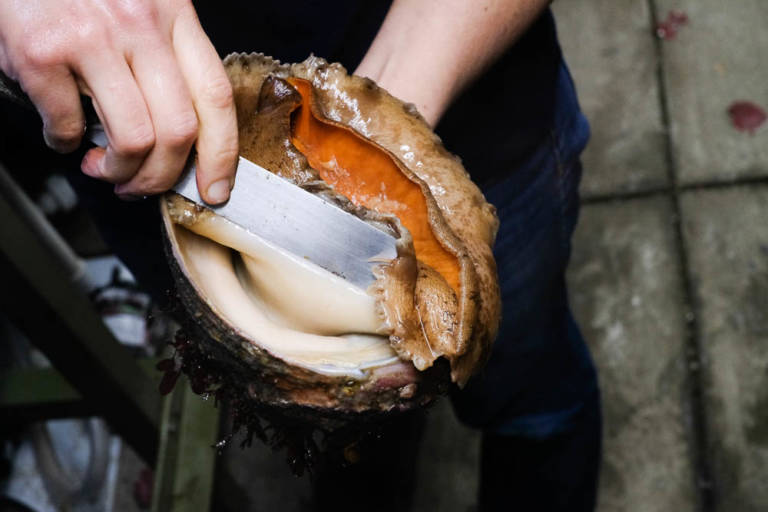
Researchers Are Making Radical Efforts To Save The White Abalone
Featured Image Credit: Maggie Carson Jurow/KQED
By Sarah Sharkey
White abalone are essential components of the ecosystem that they live in, in kelp forests off the coast of California. They used to be extremely common, with population numbers in the millions. In recent years, their numbers have declined and today they are considered functionally extinct in the wild. There are about 2,000 left in the wild but they have spread too far apart and none are within 6 feet of each other which is the farthest distance that released sperm and eggs are capable of meeting at.

Image Credit: NOAA
Many other conservation efforts have been attempted but failed. So researchers have resorted to a captive breeding program as a final effort to save this species and the habitat they live in. Without these white abalone, the sea urchin population explodes and eats the magnificent kelp forests of the eastern Pacific.
This culturing effort takes place at the University of California Davis Bodega Marine Laboratory. The white abalone only spawns once a year and the team has to work extremely hard to maximize this one day of the year. The researchers rear the abalone in nurseries and are planning their first release within the next year. The road to recovery is not over when those first captive-bred white abalones are released into the wild, in fact, it is just the beginning.
The species still has to face predators, warm water diseases and the unknown effects of climate change. Their biggest threat is, as usual, humans. Apparently, they are delicious and are highly prized in Asia markets, a single white abalone can sell for hundreds of dollars.
Hopefully, the hard work of these researchers will not go to waste and the recovery of the white abalone will go smoothly.
Learn more from our source.