
Tardigrades: The Tiny Organism That Will Survive Until The End Of The Earth
Featured Image Credit: Eye of Science/Science Source
By Kira Krall
There’s a creature smaller than the tip of a pencil that can survive 30 years without food or water, temperatures lower than -328 °F, and crushing water pressure six times the pressure of the deepest part of the ocean. One experiment sent the critters into space and found that not only did they survive, they grew and the females laid eggs. They use a fascinating biological process called cryptobiosis to shut down all of their body systems, and then resurrect themselves to a perfect living state. They’re the tiny, terrific tardigrades.

Tardigrades, also called water bears, make their day-to-day home in the small film of freshwater that coats mosses. Others burrow in sand, leaf litter, and other sediment like a microscopic mole. All 1,000 species feed on fluids of other animals with their piercing mouths. Image Credit: Fox / itsokaytobesmart
They were first discovered in the 1700s by scientists that found the tardigrades living in dry, seemingly lifeless gutter litter. Italian scientist Lazzaro Spallanzani added a few drops of water to the litter and found the reanimated water bears merrily swimming about. Since then, scientists have continued to test the limits of these tiny titans.
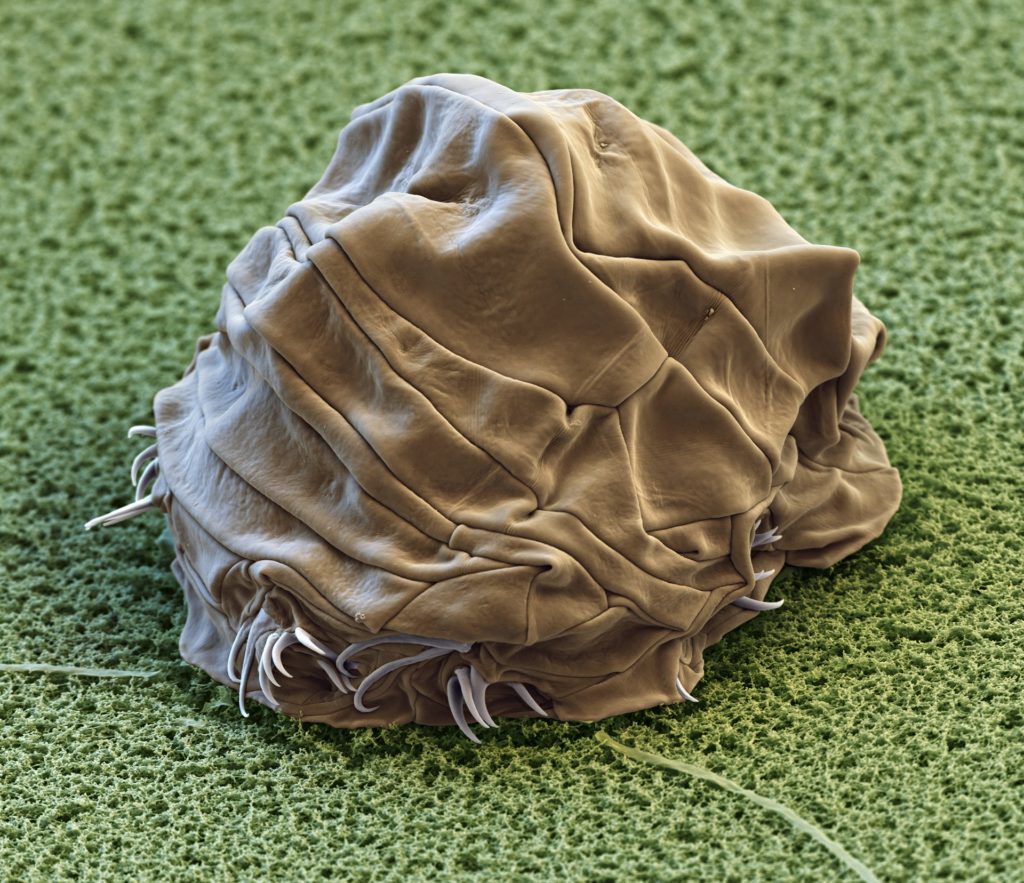
Most of the scientific research seeks to understand just how powerful their cryptobiosis is. The standard tardigrade response to an environmental stressor is to curl up into a ball and eject 97% of its water content. Image Credit: Eye of Science/Science Source
Now, tardigrades are playing a cosmic role in the scientific community. Teams from Harvard and Oxford are examining what exactly it would take to eliminate all life on any given planet. Asteroids, gamma radiation, and supernovas would be a pathetic attempt to wipe them out, even though they could fry most life on Earth. The one thing that would definitely kill the water bear? A boiling ocean.
3.5 Billion years from now, the sun will become 40% hotter during one of its last stages of life. That astounding temperature increase will melt any ice left on the planet, boil the entire ocean, and cause the atmosphere to be lost to the cosmos. Then, and only then, will the mighty tardigrade be defeated.

