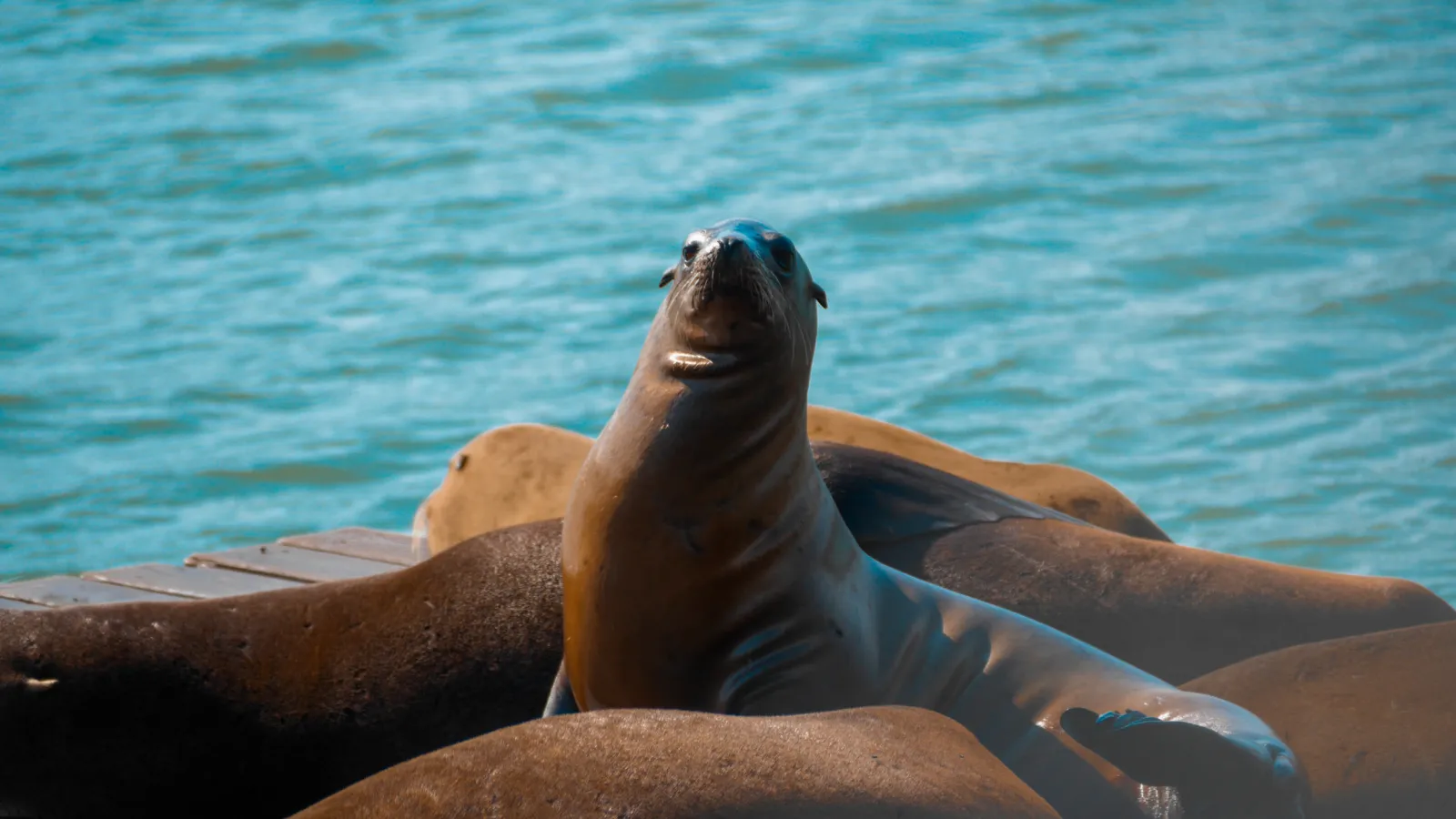
Sea Lions Are Much Smarter Than They Look and Scientists Keep Finding New Ways to Prove It
Watch a California sea lion for a few minutes and it probably won’t take long before the animal does something ridiculous.
They bark at seemingly nothing. They pile on top of one another. They steal the best sleeping spots. They occasionally appear to be arguing with whoever happens to be nearby.
Behind all of that chaos, however, is a remarkably capable brain.
Sea lions are highly intelligent marine mammals with impressive memories and sophisticated learning abilities. Decades of research involving animals in zoological settings have helped scientists discover just how much is happening behind those enormous whiskers.
Their ability to learn is especially apparent in the relationships they develop with the people who care for them. At accredited zoos and aquariums, training isn’t simply about teaching a sea lion to perform an impressive behavior for an audience. Many of the behaviors animals learn have a practical purpose, particularly when it comes to their health and everyday care.
There’s a Reason Sea Lions Are So Trainable
Anyone who has visited an accredited zoo or aquarium with sea lions has probably seen them respond to hand signals, move between different locations, present their flippers or open their mouths when asked.
Some of those behaviors are entertaining for visitors.
Others have a much more practical purpose.
Animal care teams use positive reinforcement to teach sea lions behaviors that allow them to voluntarily participate in their own healthcare. A sea lion can learn to present a flipper for examination, hold still while veterinarians inspect its body or open its mouth so its teeth can be checked.
That cooperation can allow routine examinations to happen without unnecessary restraint or anesthesia.
It works because sea lions are exceptionally capable learners.
California sea lions are social animals that naturally live in environments requiring them to constantly process information. They have to navigate the ocean, locate prey, recognize other animals and adapt to changing conditions.
Their senses are built for that lifestyle as well.
Those enormous whiskers aren’t just there to make them look distinguished.
Sea lion whiskers, called vibrissae, are highly sensitive sensory organs capable of detecting tiny movements in the water. Research on pinnipeds has shown that these specialized whiskers can detect hydrodynamic trails left behind by moving objects and animals, giving them another source of information while navigating and hunting underwater.
Their underwater hearing is excellent, and their streamlined bodies allow them to maneuver through the water with remarkable speed and precision.
Then there is their memory.
Research involving California sea lions has demonstrated that they can retain learned information over long periods of time. That combination of intelligence, curiosity, memory and physical ability helps explain why sea lions seem capable of learning such a wide range of behaviors.
It may also explain something anyone who spends enough time watching them eventually notices.
Sea lions have a lot of personality.
Science can’t exactly measure whether a sea lion is deliberately trying to be funny. What researchers can demonstrate is that these animals are constantly learning, remembering, solving problems and responding to the world around them.
So the next time you see a sea lion barking at its neighbor or perfectly following an animal care specialist’s hand signal, there is probably more happening than simple instinct.
Behind the whiskers is an animal capable of remembering lessons, learning new behaviors and adapting to the world around it.
Not bad for an animal that also spends a significant portion of its day yelling.