How is a Marine Protected Area Created?
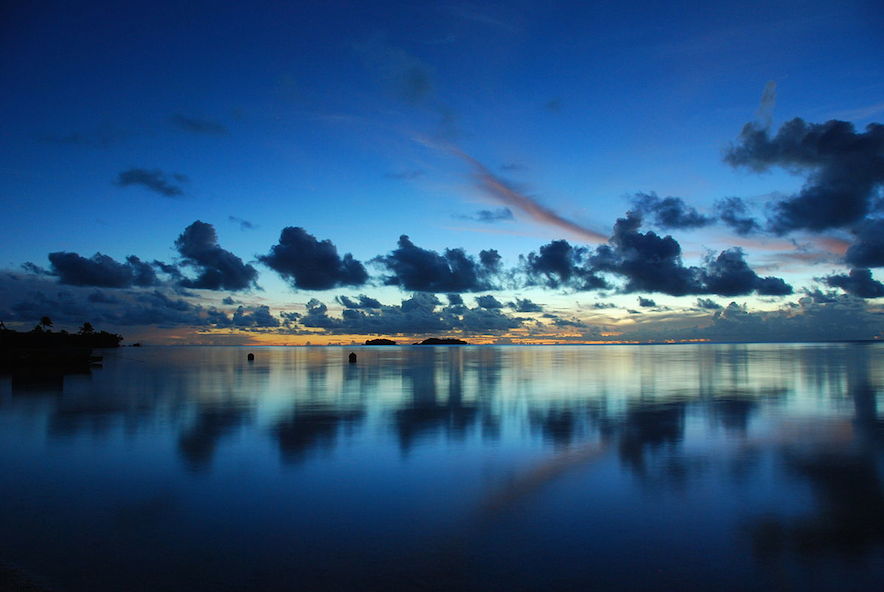
Image Credit: “Sunset from Akaiami” by Robert Young, via Wikimedia
Here’s an interesting tidbit of ocean news:
The world’s largest marine park is the Chagos Marine Protected Area, which is centered around an archipelago of 55 remote islands in the central Indian Ocean. It spans an astounding 650,000 square kilometers (397,667 square miles).
Want some great news? Another marine park will soon join its ranks. Prime Minister Henry Puma announced in 2012 an extensive plan to create the Cook Islands Marine Park, an area that will cover 1.1 million square kilometers (425,000 square miles) and span half of the islands’ economic zone.
This is no small undertaking. But what exactly goes into creating a marine protected area?
First, you need a dedicated team. To spearhead developments in the Cook Islands Marine Park, Kevin Iro, a former rugby star, joined forces with the prime minister and president to make positive changes to ensure there is a future in the oceans for the Cook Islanders.
So far, the government has only defined the outline of the park. Now, everyone must decide where business can occur within the park’s boundaries. Since tourism is a massive industry in the Cook Islands, making up 70 percent of their GDP, those invested in marine businesses want to make sure they are represented.
Iro and the marine park committee must travel to all remote islands within the proposed outline to collect information and perform public consultations over a timeframe of one year. According to Iro, if they have the people of the Cook Islands behind the impending marine park plans, the process will quicker and more smoothly.
During these individual consultations, the team explains where conservation efforts could occur and the islanders offer their opinion on where they would like to see such activity take place. It’s a give-and-take that would make your mother proud.
Along with person-by-person interviews, scientists work offshore to create an accurate map of each island’s coral reefs using a video camera and GPS equipment.
Since the ocean is an extension of each of the Cook Islands, the government’s conclusion on how to manage the marine park will have a real influence on how the islanders live their lives each day. If looked after properly, this huge park can supply all the food predators and prey needed for species to thrive. Those species will provide people with income from fishing and tourism; it’s a holistic approach to conservation.
The committee says that they hope that by creating a completely sustainable marine protected area on a massive scale, other pacific countries will follow suit and protect ocean resources for future generations.
For more information, check out this in-depth video on Iro and the team’s efforts to create the Cook Islands Marine Park:
Source: http://blog.conservation.org/2014/07/once-a-marine-protected-area-is-created-what-happens-next/