
VIDEO: NOAA Disentangles Distressed Humpback Whale
Video credit: YouTube.com
If whales could say thanks, this humpback would be sending gratitude NOAA’s way.
Last week the National Oceanic and Atmospheric Administration received word of a 25-foot humpback whale struggling off of the coast of Maui.
Instantly, NOAA’s Marine Mammal Health and Stranding Response team boarded their vessel and headed out to help the distressed animal.
Upon arriving at the whale’s location, the team realized how serious conditions were.
Heavy duty fishing line, used in longline fishing setups, was wrapped around parts of the tail eight times. The line was wound so tightly and the lines dragging behind were so heavy that the gear had cut into the whales flesh at the base of its tail.
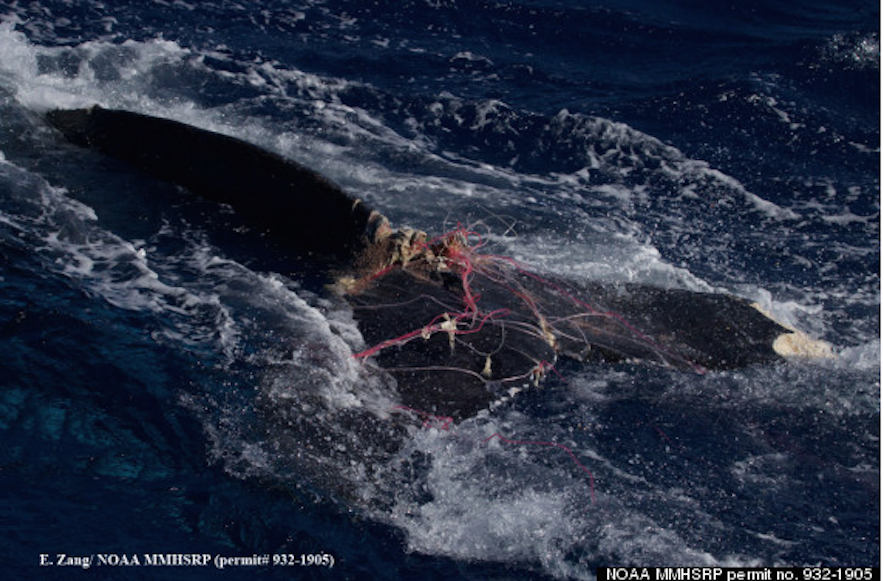
Apart from the fishing line injuries, the whale was suffering from malnourishment, parasites, and two large shark bites on the end of its right flipper.
Ed Lyman, the response team leader, told Huffington Post, “[The entanglement] was almost certainly the reason why the animal had suffered the shark bites in the first place.” He added, “Bottom line, it was the entanglement that was impacting the animal, and would almost certainly eventually kill it.”
The official NOAA report described how the rescue team was able to help free the whale. Crew members used poles with knives attached to the ends and cutting grapples to loosen and remove the fishing gear. They were able to remove 98 percent of the lines including the ones digging into the whales skin and estimate the straggling lines will shed on their own.

The warm waters surrounding the Hawaiian islands is mating grounds for humpback whales between November and May.
Although this was the first rescue of the season, unfortunately, these occurrences are pretty frequent, averaging twelve per season. NOAA and local boat operators work together to locate distressed whales and aid them in whatever way necessary.
They ask visitors to leave large rescues in the hands of experienced professionals and report any sighting of entangled animals to the Marine Mammal Hotline (888-256-9840) or the US Coast Guard.
Read more about the rescue and results in the Huffington Post.
