
The Bizarre Growth Pattern of the Long-Living Bowhead Whale
Featured Image Credit: Paul Nicklen / National Geographic Creative
By: Natasha Lehr
The bowhead whale is a species of wonder for a number of reasons. The whales are a solitary, slow-swimming, long-living species that inhabit the frigid Arctic waters.
It is believed that they may be the longest-lived mammal, with numerous individuals found to be over 100 years old. The oldest know bowman whale is a whopping 211 years old! To put it into perspective: Biologists studying bowhead longevity have found harpoon tips embedded in whales that dated back to the Victorian era.
The longevity of bowhead whales is thought to be attributed to a slow growth rate, which is due to a slow metabolism. The whales also face few predators in the frigid Arctic waters, outside of a pod of Orcas or occasionally humans. Commercial hunting of bowhead whales ended decades ago, but they are hunted on a subsistence level by Native peoples of North America.
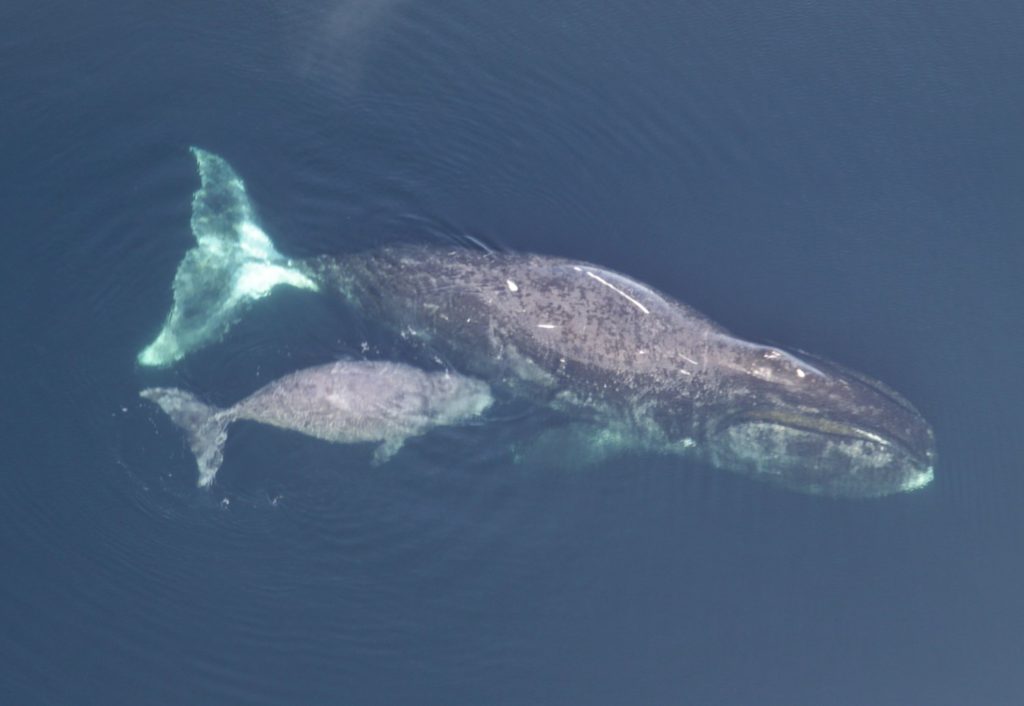
Photo Credit: Rasmus Due Nielsen
These large whales grow up to 60 feet in length, yet they feed on very small organisms. The species is a filter feeder that uses baleen to catch food. Baleen consists of keratin and forms in plates along the upper jaws of the whales.
An adult bowhead whale will have around 640 plates lined with baleen hairs to filter fish and plankton from the ocean’s waters. But, bowhead whales are not born with baleen, and therefore cannot filter feed upon birth.
This is not an initial problem for a bowhead calf because it feeds on the milk of its mother for a number of months. As a mother bowhead whale begins to wean the calf, the young bowhead whales begin a physical transformation.
A recent study has shown that the calf with cease growing in length, and its head and baleen begin to grow rapidly.
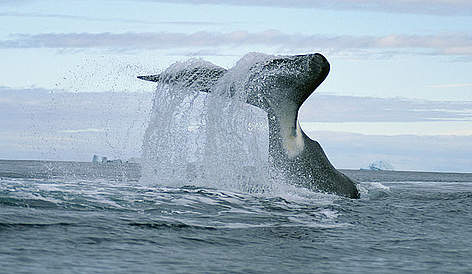
Photo Credit: WWF / Paul Nicklen, National Geographic Stock
Researchers measured age, body size, baleen area, and bone density to determine growth patterns of the young bowhead whales. The results furthered showed that the body of the young bowheads nearly ceases growing after weaning until about 5 years of age. So, while they live to be almost 100 or over, their growing nearly stops in the “early days” of their lives.
Through CT scanning, the study also showed that the bone density of young whales decreases during this unique growth period. It is thought that this loss is a primary result for the necessity to rapidly grow baleen.
As the whales reach the age of 5, their bodies then begin to grow more proportionately into adulthood. This odd growth pattern may be one of many reasons that bowhead whales are able to be the longest-living mammal on earth.
Now, if only we could grow baleen…
Source: Science Daily and Wikipedia

