
You Can’t Sit With Us: This Animal’s Clicks Form Social Cliques
Featured Image Credit: Keri Wilk
By: Natasha Lehr
Sperm whales are known for a unique variety of reasons: their large heads, ability to dive more than a mile deep while hunting for giant squid, and more likely Moby Dick.
Yet, recently they are a scientific topic of interest for their distinct communication abilities.
Sperm whales form groups with unique languages and “cultures.” This isn’t too surprising coming from a species with a larger brain than any other animal on earth, ever.
These groups are made up of family units that include daughters, mothers, grandmothers, and young males. Multiple groups will join together to form larger clans. In some regions, these clans may include thousands of members.
In their teens male sperm whales leave their natal group and roam the oceans from pole to pole. Males continue this lone bachelor life for decades, often times seeing only a few other sperm whales during their travels.
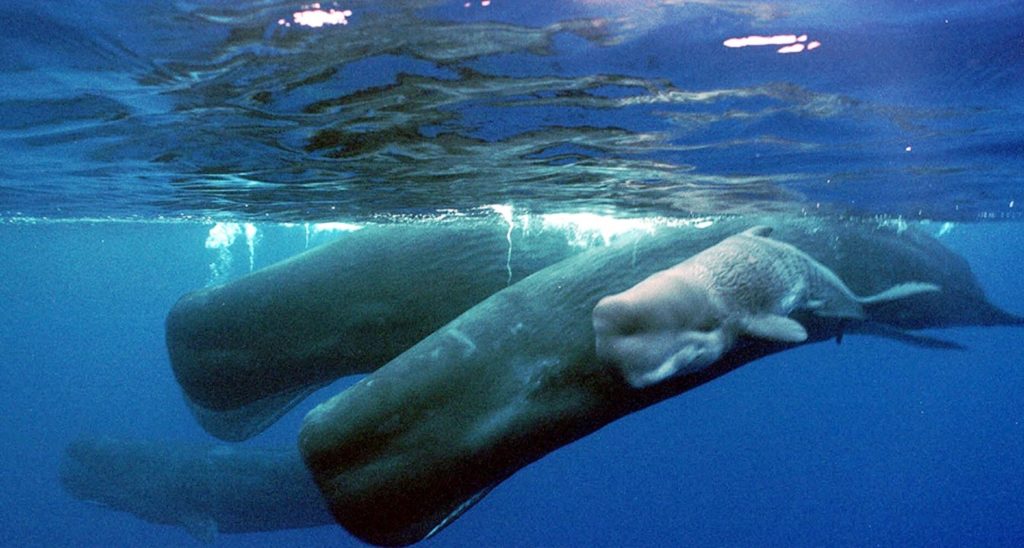
Photo Credit: Source
Sperm whales vocalize by emitting clicking sounds in different rhythms and tempos, similar to Morse code. Recordings of sperm whale vocalizations have allowed scientists to identify 80 unique “codas.”
These codas are made up of 3-20 clicks and allow sperm whales to communicate over long distances. There are 5 distinct known languages of sperm whales that inhabit the Pacific, 1 in the Atlantic, and 2 in the Caribbean.
Analysis of vocalizations of individual family groups and the larger clans has shown that groups that share a common language form these clans. Communicating on the same level as clan members benefits individuals during hunting or predation events, and allows for social bonding.
This may seem logical, but studies have found that clans using different dialects have been found to inhabit the same waters. This is where the comfort of “like-minded culture” comes in. Sperm whales choose to group with others that share their codas, therefore shaping the dynamic of their clan.
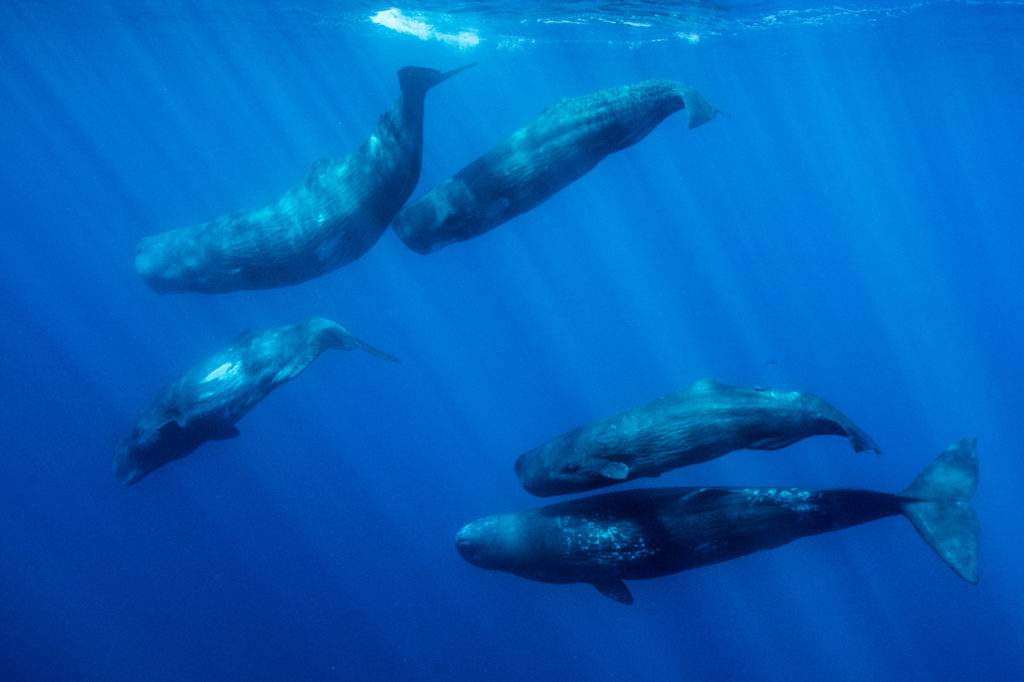
Photo Credit:Gorrge Karbus Photography
It is thought that a difference in clans was brought about by environmental changes. Whales in the Pacific roam vast distances that span from pole to pole.
When crossing oceans, it is unlikely two whales will cross paths more than once. Therefore, it is helpful to share the same language so that the few clan members in these regions can communicate about predators or fertile feeding grounds.
In contrast, whales in the Caribbean spend most of their time in close range to one another (400km). Studies of these whales has shown that the higher frequency at which Caribbean sperm whales encounter each other leads them to be more choosy in who they want to spend time with.
This is cool information, but why is it important? Communication through clicking is not an innate behavior. This means that calves are not born with the knowledge of a clan’s language.
Young whales learn communication techniques from elders within their group. With this, it is apparent that just as human languages can go extinct so can the codas of the sperm whales.
It is important that we learn about the diversity of clan languages and how they influence clan dynamics of the species.
More knowledge means better conservation and preservation ocean practices.
Sources: Ars Technica and Wikipedia


