
Humpback Mom And Calf Freed From Shark Net In Southeast Australia
Featured Image Credit: http://abc7news.com
By: Kira Krall
A mother humpback and her calf were saved from a shark net off the coast of Miami, Australia this past October. SeaWorld Gold Coast responded to calls it received about the entangled pair at 6:30 A.M. and arrived on the scene just an hour later. Thankfully the entanglement wasn’t too severe when the team arrived and the calf swam away with minimal injury. Click on this link to go to our source and watch a video of the rescue.
While shark nets are typically removed for the busiest months of whale migration, late-departing whales can intercept the nets deployed early in the shark net season while some nets aren’t removed at all. At the tail end of the 2016 season, another straggler calf was freed from a shark net while its mom looked on. Encounters like this have prompted Sea World Gold Coast to call for the complete removal of the ineffective nets from Southeast Australia’s waters.
The shark net debate has been a hot one since they were first placed in 1937. Governments claim that they keep large predatory sharks away from swimmers and they’re unfortunately not entirely wrong. Shark nets are a type of monofilament net that traps fish by the gills, giving them the name “gill nets.” Any creature caught in one will suffocate or drown if not freed in time. So while the public may perceive them as a protective barrier, they’re actually 610-foot long ocean graveyards.
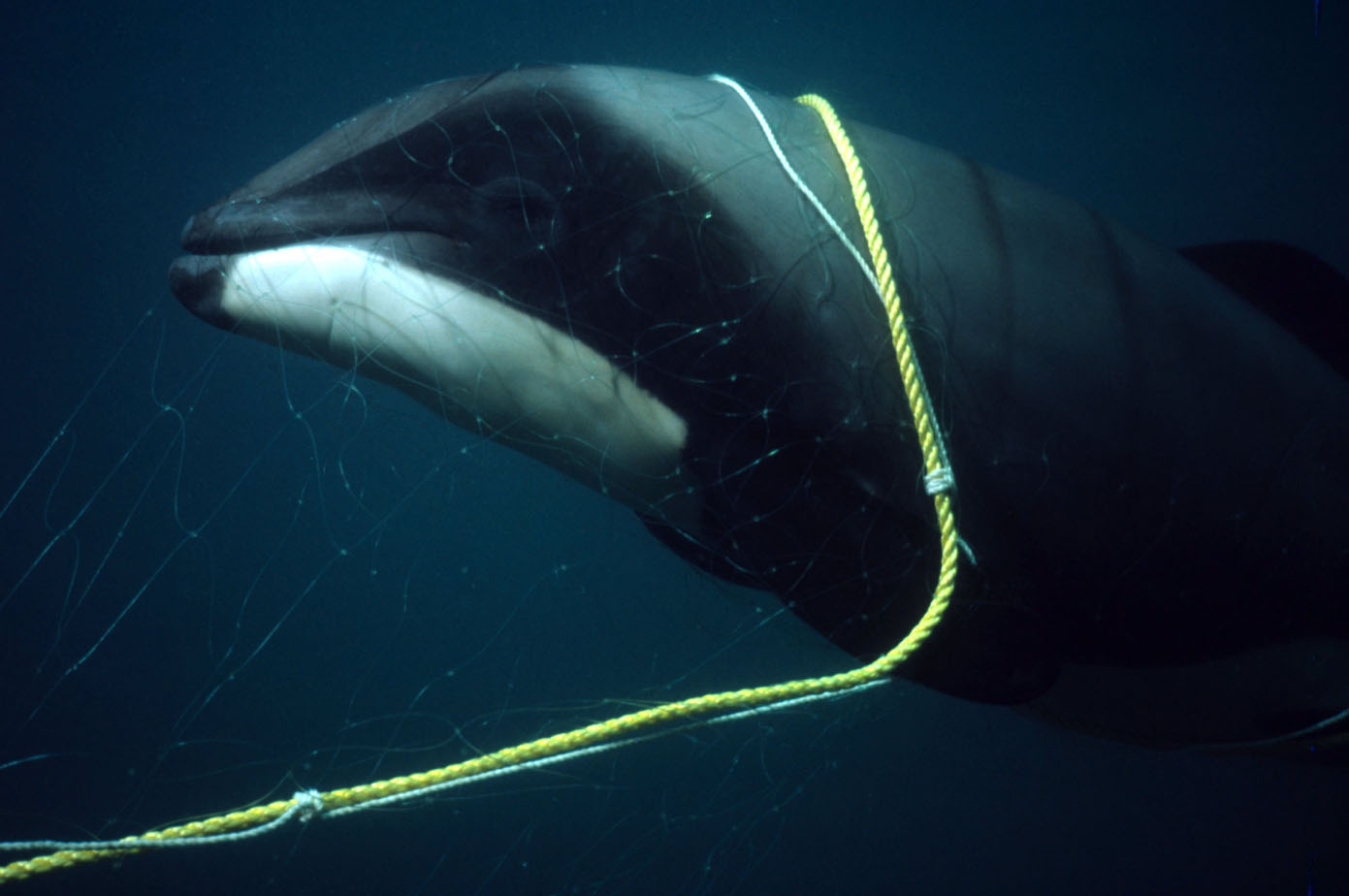
Image Credit: fishforward.eu
A hector’s dolphin caught and killed in a gillnet. These types of nets aren’t picky and will catch anything larger than its mesh size. The Guardian reported that 279 of 373 species caught in shark nets were not the targeted “dangerous” sharks.
Despite a lack of scientific evidence that shark nets are effective in protecting swimming beaches, New South Wales added to its existing 51 shark-netted beaches. Western Australia has had long battles with shark culling programs in response to sharks biting humans. Public protest and pressure from environmental groups have caused the government to use other non-lethal methods to defend against large sharks.
Shark Alert International will begin trial runs of its drone monitoring program this December. Armed with a military-grade camera and communication software, a Shark Alert Drone will scan the waters of Cockburn Sound and send an alert to swimmer’s smartwatches if they detect a large shark in the area.

