Hundreds of Baby Right Whales Are Washing Ashore in Argentina. Scientists Are Looking Hard at the Gulls.
Along the beaches of Argentina’s Chubut province this season, the bodies keep coming. Southern right whale calves, many only weeks old, have washed up around Península Valdés and the nearby city of Puerto Madryn, some of them within sight of the city’s central waterfront. Residents have reported hundreds. Scientists have not released an official count and say they won’t until the calving season ends in late November.
The team trying to explain the deaths has an unusual advantage: more than two decades of data on this exact population of whales.
“We’re looking into the whale calf deaths based on 23 years of monitoring that we have of this same population,” Marcela Uhart, a veterinarian with the UC Davis One Health Institute who heads the Southern Right Whale Health Monitoring Program, told the Associated Press.
A Nursery Under Attack
Península Valdés, a UNESCO World Heritage Site on Argentina’s Atlantic coast, is one of the most important nurseries for southern right whales on Earth. Each winter and spring, mothers arrive to give birth and nurse their calves in its sheltered gulfs, fasting the whole time.
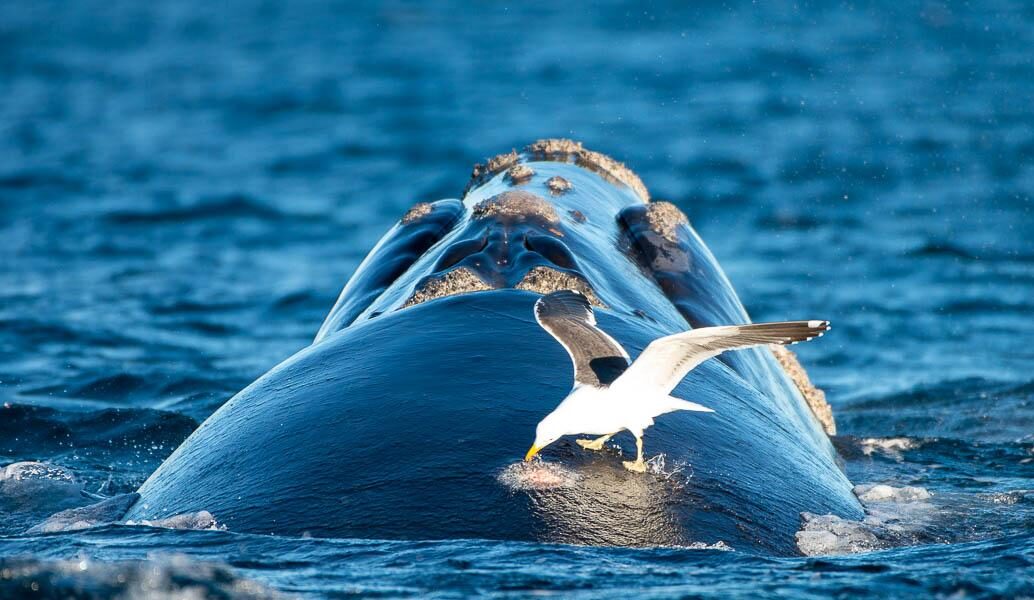
They share those waters with kelp gulls, and the gulls have learned to eat the whales. The birds land on a whale’s back as it surfaces and tear at its skin and blubber, leaving large, deep wounds. Researchers have documented the behavior at Península Valdés since the 1990s, and it has grown more common over time. Calves between two and six weeks old take the worst of it, and the harassment can go on for hours.
Adult whales have adapted. They surface with only their heads above water, arching their backs out of reach. Calves have not learned to do that.
The Leading Theory
Uhart’s team, made up of biologists, veterinarians and park rangers searching from shore, boats, planes and drones, has collected tissue from the dead calves for testing at a veterinary school in Tandil, Argentina. The leading hypothesis is that marine bacteria are entering the calves’ bodies through the gull wounds and causing fatal infections.
Bacteria have been found in the tissue samples. Researchers are still culturing them to identify the microbes and confirm whether infection is what killed the calves.
Warmer water may be making things worse. This year’s strong El Niño and longer-term ocean warming could be helping bacteria thrive or weakening the calves. Uhart described the possibility of “this perfect storm where this bacteria is powerful enough to overcome the immunity of the babies and cause their deaths.”
If people are part of the cause, she said, “then we need to change that.”
Not the First Crisis
Península Valdés has seen mass calf deaths before. Between 2003 and 2012, at least 605 right whales died along the Argentine coast, 538 of them newborn calves, in what scientists at the time called the largest mortality event ever recorded for the species. In 2012 alone, 116 whales died, 113 of them calves, roughly a third of all calves born at the peninsula that year. Researchers then tested hundreds of samples for disease, toxins and malnutrition without finding a single clear cause, and they flagged gull harassment as a likely source of chronic stress.
The deaths matter for the long-term health of the population. Southern right whales typically have their first calf around age 9, so a lost generation of females shows up years later as a drop in births.
A Comeback Worth Protecting
Southern right whales were hunted to the edge of extinction in the 19th and 20th centuries, and illegal whaling continued into the 1970s. They have been under international protection since 1935, and the South Atlantic population has slowly recovered, making it one of the more encouraging whale conservation stories of the past century.
That recovery still faces pressure from a shifting food supply, entanglement in fishing gear, oil spills and ship strikes. Their close relatives in the Northern Hemisphere show what’s at stake. The North Atlantic right whale, which shares the same slow breeding and the same vulnerability, is down to only a few hundred animals.
For now, the team in Chubut is focused on answering the immediate question: what is killing the calves, and whether anything can be done before next season.
Sources: Associated Press via OPB, IUCN Cetacean Specialist Group / Southern Right Whale Health Monitoring Program.