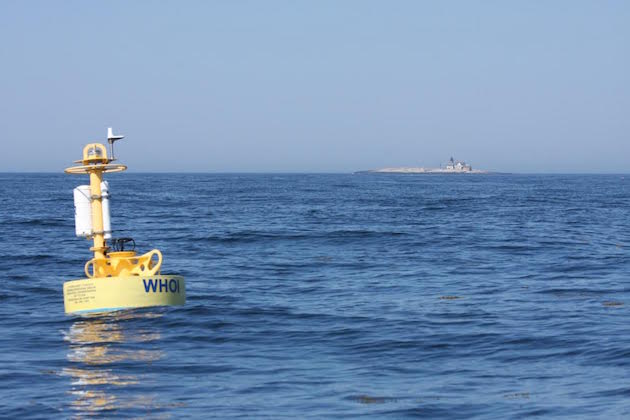
The Good Spy: This High-Tech Buoy Is Listening In
Image Credit: Wildlife Conservation Society
By: Jessica Kittel
Meet Melville, your friendly high-tech whale traffic reporter.
Just as its namesake told us the story of the great white whale, this high-tech buoy is here to tell us the stories of the whales found 22 miles off New York, in the New York Bight. The Bight is not only home to two very busy shipping lanes and lucrative fishing grounds, but also to seven different species of whales.
According to Christian Science Monitor, these whales include the blue whale (the largest animal in the whole wide world) and the humpback whale (famous for their acrobatic performances and songs).
It’s also home for the North Atlantic right whale (one of the rarest whales in the world, with less than 500 individuals remaining), the Fin whale, the sei whale, the minke whale, and the sperm whale (bringing the Moby-Dick reference full circle).
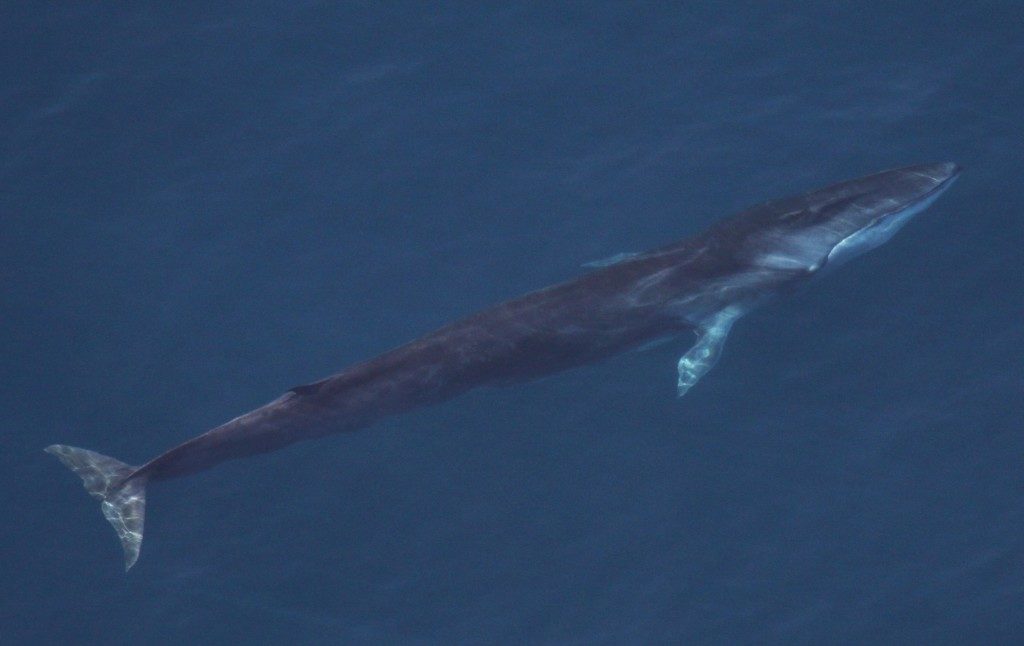
Endangered fin whale
Image Credit: Sea to Shore Alliance
Whales and boats aren’t often a winning combination. The Atlantic reports that if a whale is hit by a ship going over 10 knots (11.5 mph), it means almost certain death for that whale.
Scientists are hoping that Melville will be able to help reduce these lethal interactions by giving them a better understanding of how these marine mammals are using the area and. Data from this instrument should help compliment sighting information and could influence management decisions in the future.
Headlining this project is Dr. Howard Rosenbaum, director of the Wildlife Conservation Society’s Ocean Giants Program, and Dr. Mark Baumgartner from Woods Hole Oceanographic Institute. While there are similar devices around the world, this model is the first to convey the information in near real-time (within two hours).
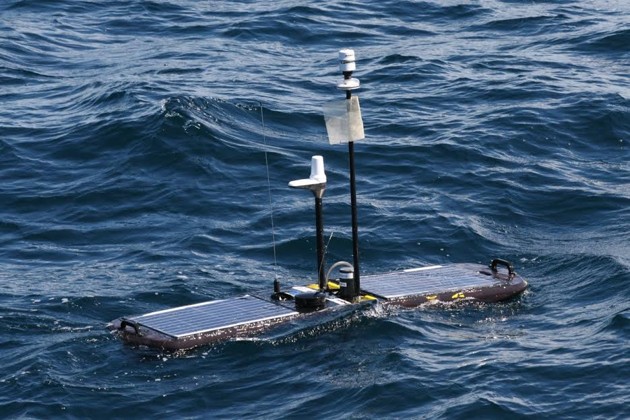
Image Credit: Woods Hole Oceanographic Institution
So here’s how this sucker works: At the surface is the buoy. At the top of this contraption is a mast that stands six feet above the water and houses an antenna. The antenna transmits the collected information through an iridium satellite system to Baumgartner’s lab in Woods Hole.
If the DMON decides that the whale call belonged to a whale that does not belong to one of the four aforementioned species, it archives the information. After a year the buoy will be retrieved, and this other data will then be reviewed.
As reported by Science Daily, the first detection was made on the fourth of July, only 12 days after the buoy was established. Vocalizations were positively identified as belonging to a fin whale. Since then multiple recordings and identifications have been processed.
The surface buoy is held in place by a stretchy hose that can extend to 2.5 times its relaxed length. This is critical because it allows the buoy to adjust to wave action. As a result, it reduces stress on the bottom device and creates a more acoustically quiet system.
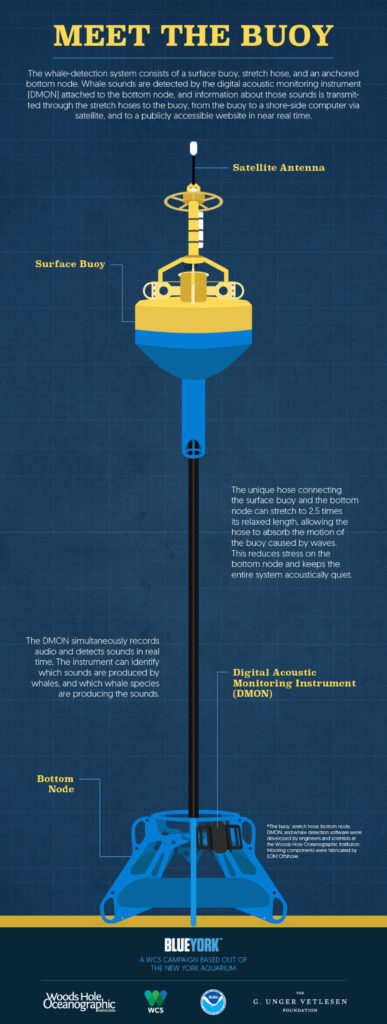
Image Credit: BlueYork, WCS, NOAA
One hundred and twenty five feet down rests the bottom node, a weighted platform that houses the technological goodies. The goody in question is the Digital Acoustic Monitoring Instrument (DMON). The DMON records audio (using an underwater microphone called a hydrophone), while simultaneously detecting whale sounds, all in near real time.
The unique software, designed by Baumgartner, receives the whale audio and processes it into pitch tracks (a bunch of squiggly, colorful lines that denote different pitches). The program compares the pitch tracks to known whale calls and makes an educated guess as to which species of whale that particular audio belonged to.
The software is actively looking for four specific whales: humpbacks, right, fin, and sei. These four species were chosen because of their threatened population status.
If the DMON decides that the call belonged to one of these four species then it sends the recording to the lab. The raw data is posted to a publicly accessible online website and is also analyzed by a scientist, who make the final identity confirmation about which species was detected.
More and more similar devices are put in place around the world. There’s no doubt that Melville and his cohorts will help raise awareness and give us a more holistic view on how whales utilize their marine environment and, in turn, how we can best protect them.
Read more from our sources: BlueYork, The Christian Science Monitor , The Atlantic, and Science Daily.