Two Marineland Animals Died After Their Rescue. The Evidence Keeps Pointing Back to Marineland.
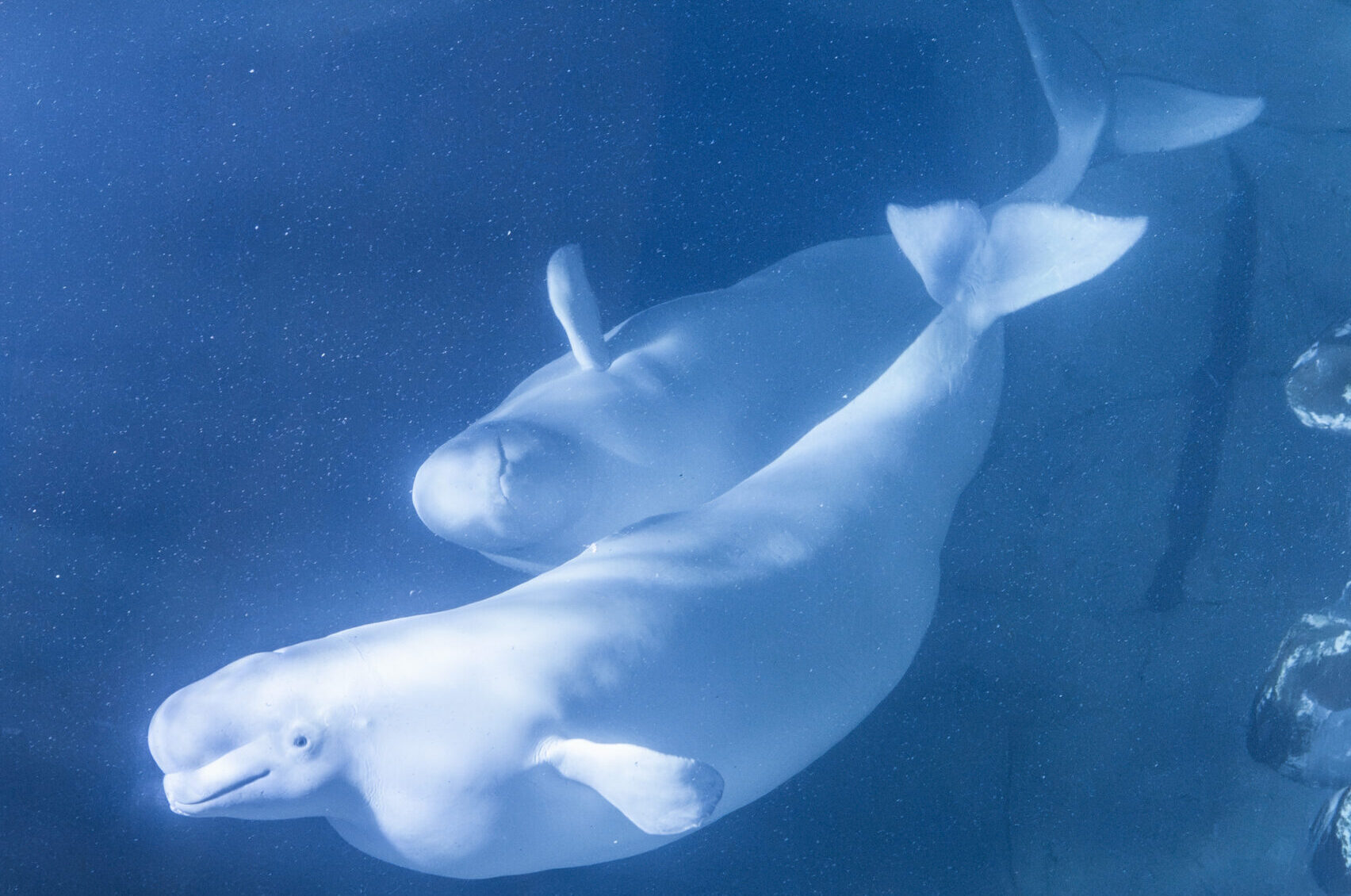
Jelly Bean was born at Marineland. For all 19 years of her life, the beluga knew one place: the concrete tanks of a marine park in Niagara Falls, Ont., that closed to the public in 2024 and spent the next two years telling the Canadian government it could no longer afford to care for its animals.
On Aug. 26, she was loaded onto a flight to Spain with another beluga and four dolphins, part of an international effort to move the last 30 belugas and four dolphins out of Marineland. She died at Oceanogràfic València on Sept. 18, three weeks after she arrived. Five days later, Echo, a blind female dolphin of about 30 who had made the same trip, died too.
On Oct. 14, the Spanish aquarium released the results of its examinations. Both animals, it said, “had been experiencing a list of health complications and organ abnormalities” that could have developed before they were transferred. In Jelly Bean’s case, the aquarium described a “complex clinical condition.”
The findings add to a growing body of evidence about the condition these animals were in when they left Canada. And nearly all of it points in the same direction.
Sick on arrival
Echo arrived in Valencia with what the aquarium called “serious vision problems,” including blindness, along with other health issues that required individualized care from the start. On Sept. 23 she developed trouble swallowing and breathing. Veterinarians moved her to a medical pool, but her condition deteriorated quickly and she died that night.
Jelly Bean showed signs of improvement in her first weeks, then began refusing food. Staff monitored her around the clock. She never fully stabilized and died suddenly overnight. The aquarium brought in pathologists from CEU Cardenal Herrera University to look specifically for latent disease, problems that had been building quietly before anyone in Spain laid eyes on her.
What they reported fits what veterinarians in Chicago had already found.
What Chicago found first
Shedd Aquarium took in 10 of Marineland’s belugas this summer. Several have died, and its necropsies have been the most detailed so far.
Two of them, Peekachu and Rain, had chronic inflammatory disease of the gastrointestinal tract, the kind veterinarians say develops over months or years. Shedd said it was likely present long before the whales reached Chicago. Inside Peekachu’s stomach, veterinarians found bird feathers, sticks and large porous rocks. Rain appeared to have swallowed flecks of paint. Shedd has said the material in Peekachu’s stomach could not have come from its facility, meaning she swallowed it before she left Canada.
A third Shedd whale, Osiris, had chronic liver disease, according to preliminary findings. Shedd said the Marineland animals arrived with “significant vulnerabilities.”
Paint chips, rocks and feathers do not end up in a whale’s stomach in a well-maintained habitat.
The warnings were already on paper
None of this should have come as a surprise to anyone who had been watching Marineland.
Twenty whales, including 19 belugas, died at the park between 2019 and the rescue, according to provincial data and official statements. In 2021, court filings revealed that Ontario’s Animal Welfare Services had issued two orders requiring Marineland to repair its water systems, and inspectors reported finding marine mammals in distress, which they tied to poor water quality. Marineland appealed the orders, then dropped the appeal weeks later. It denied that the animals were in distress and rejected any link to the deaths.
When the U.S. government began preparing American aquariums to take the whales this year, it did not describe them as healthy. “The whales are health-compromised,” the National Oceanic and Atmospheric Administration wrote in a June 25 letter, according to documents obtained by CBS News Chicago.
A park that ran out of road
Marineland’s owners spent much of 2025 trying to sell the animals off. The park finalized an agreement to send its belugas and dolphins to Chimelong Ocean Kingdom, a marine park in China. The Canadian government refused to permit the export. Fisheries Minister Joanne Thompson said the move was not in the whales’ “best interests.”
Marineland’s response was to ask Ottawa for $10 million to $20 million in emergency funding and to warn that without it, or without somewhere for the animals to go, the whales could be euthanized. NOAA’s letter noted that Marineland had indicated it would stop providing medical care and euthanize the animals if they could not be moved.
That was the choice facing the aquariums that stepped in: take the animals, with whatever medical problems they carried, or watch them be put down. “Every whale was given the chance at another facility,” said Dr. Karisa Tang, Shedd’s lead veterinarian.
Six aquariums accepted them: Shedd, Georgia Aquarium, Mystic Aquarium, SeaWorld San Antonio, SeaWorld San Diego and Oceanogràfic València. Over six weeks this summer, crews moved all 34 animals by truck and plane, grouped by their social bonds. When the last whale left on Aug. 31, Canada had no captive whales left.
Why the problems weren’t caught sooner
Critics of the transfers have asked why the illnesses weren’t caught before the animals were moved. Veterinarians from the receiving aquariums did examine the animals at Marineland earlier this year and found them in good health, according to Dr. Todd Robeck, vice president of conservation and animal health at SeaWorld.
But chronic disease in whales can be quiet. Gastrointestinal inflammation, liver disease and the slow damage done by swallowed debris don’t necessarily show up in a visual check or a single round of bloodwork. Oceanogràfic made the point after Jelly Bean’s death: only continuous evaluation, it said, reveals an animal’s true state of health. That kind of evaluation is exactly what the receiving aquariums have been doing since the whales arrived, and it is how these conditions are now coming to light.
Marineland had these animals in its care for their entire lives, and in Jelly Bean’s case, from birth. The disease found in their organs, the debris found in their stomachs, the distress inspectors documented in their water and the federal government’s own description of them as “health-compromised” all trace back to the same place.
The ones still fighting
Most of the rescued animals are still alive. Oceanogràfic says its remaining beluga, Cleopatra, and three dolphins are progressing well. Shedd says its surviving belugas are eating full diets and reaching new care milestones. Veterinarians at every receiving facility are watching for the same quiet problems that killed their companions.
Each necropsy adds to the picture of how these animals lived before anyone came to get them. And each one makes it harder to see the deaths since the rescue as anything other than the long tail of what happened at Marineland.
Sources: CBC News; CBS News; Smithsonian Magazine; Euro Weekly News; Blooloop; DePeces