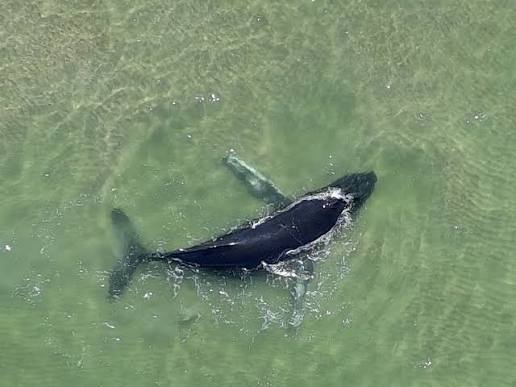
Two Young Humpback Whales Got Stuck on Sandbars and Rescuers Spent Hours Waiting for the Ocean to Set Them Free
Two young humpback whales found themselves in serious trouble off New York’s Fire Island this week after apparently swimming into shallow water while feeding and becoming trapped on sandbars as the tide dropped.
What followed was an hourslong rescue involving marine mammal experts, the U.S. Coast Guard, NOAA Fisheries and several state and local agencies. The goal wasn’t to immediately drag the enormous animals back into deeper water. Instead, responders had to keep the whales stable, protect them from additional danger and wait for the ocean itself to provide their best opportunity to escape.
The two juvenile humpbacks were discovered Wednesday morning in shallow water off Fire Island National Seashore, between Saltaire and Ocean Bay Park. Both appeared to have become stuck during low tide, possibly after following food into an area where shifting sandbars made returning to deeper water difficult.
A recent nor’easter may have contributed to changes in the underwater landscape, according to rescuers, creating sandbars that were difficult for the young whales to navigate.
One of the whales became stranded at approximately 8:30 a.m. and would remain there for much of the day. The second was stuck for a shorter period beginning around 10 a.m.
For responders arriving on scene, simply confirming the animals were alive was the first priority.
Coast Guard personnel watched for blows from the whales’ blowholes before moving into position around them. Once it became clear that the animals were alive, teams began providing supportive care while marine mammal specialists evaluated what to do next.
That meant keeping the whales wet and cool while they waited.
Crews sprayed water over the animals to prevent their exposed skin from drying out in the sun. Boats were also used to keep other vessels away from the area, giving rescuers room to work and preventing curious boaters from adding stress to an already difficult situation.
Fortunately, the whales were not completely high and dry. Some water remained around portions of their bodies, which helped responders keep them cool as the hours passed.
Sometimes the Best Rescue Is Waiting for the Tide
A stranded whale creates an immediate urge to push, pull or otherwise move the animal back toward deeper water, but interventions involving large whales can be dangerous for both the animal and the people trying to help.
Even a juvenile humpback weighs many tons. Its enormous body is designed to be supported by water, and attempting to physically move an animal that size can create additional injuries. A frightened whale can also move its tail with tremendous force, making close contact dangerous for rescuers.
In this case, the incoming tide offered the safest potential solution.
Responders from the Atlantic Marine Conservation Society, NOAA Fisheries, U.S. Coast Guard, Suffolk County Marine Patrol, New York State Department of Environmental Conservation and other agencies monitored the whales while water slowly returned around them.
The first whale managed to free itself around noon.
The second had a longer wait.
For approximately seven hours, that young humpback remained stranded while rescuers continued monitoring its condition and keeping it wet. As the afternoon tide came in, the water around the whale finally became deep enough to give it another chance.
Then it began moving.
Rescuers watched as the humpback worked its way away from the sandbar and toward deeper water. By approximately 3:30 p.m., NOAA confirmed that both stranded whales were once again swimming freely.
For the people who had spent the day watching over them, it was exactly the outcome they had hoped for.
The rescue also offered an unusual glimpse at a growing presence along
Source: ABC7 NY