
You’ll Never Guess Why Whale Earwax Is So Important
Featured Image: Wolcott Henry, National Geographic Creative
By: Amanda Kelley
Researchers at Baylor University have found that a whale’s earwax contains valuable information that could tell us about how life has been changing for whales in the Arctic seas over the last century.
The earplugs of wax grow in annual layers, much like tree rings or fish otoliths (fish ear bones). So, these layers reveal the number of years a whale has lived.

This earplug sample is about 25 centimeters long
Image: Source
But the earplug can tell us even more than a whale’s age.
The earplug is also a physical record of oceanic carbon dioxide concentrations, whale feeding habits, migration habits, reproductive events, and even the buildup and decline of pesticides in recent decades.
How do you get all that information from a gross chunk of earwax?
First you start by extracting the earplug from a beached whale, a process that lead researcher Stephen Trumble describes as “a crazy amount of work,” often involving heavy-duty construction equipment to maneuver the enormous mammal.
Then, assuming that an earplug was found – because not all whales produce them – a lengthy process of chemical preparation and analysis begins.
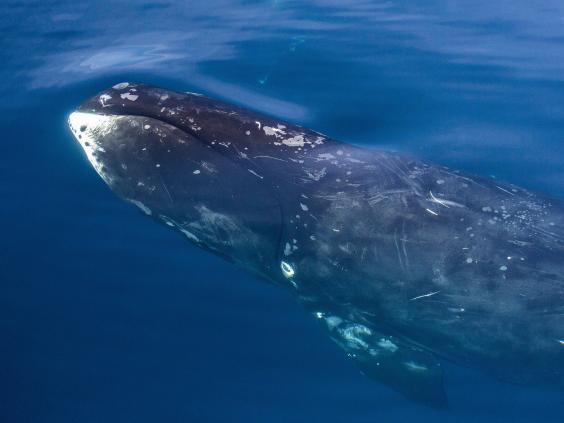
Trumble’s group is working with earplugs from bowhead whales
It takes about a year to fully analyze the data from an ear plug, but it is a small price to pay for several decade’s worth of information. This information comes in the form of various chemical compounds that are stored in the layers of earwax.
For example, a color change in the layers from one earplug was due to the different prey the whale ate in the two seas it migrated between every year. Pregnancy hormones in the earplug layers revealed how many times a female whale was pregnant, and stress hormones could be correlated to stressful events or phenomenon.
The wax also provides environmental data about the waters that the whale was living in. Carbon dioxide deposits in the earplug allow us a look at historic levels of CO2, especially in older whales.
This biological data is critical to understanding human impacts on ocean health, as even pesticides can be traced within the layers of earplugs. The information could influence future policies regarding pollutant emissions and runoff.
Who knew something so gross could come in handy?

