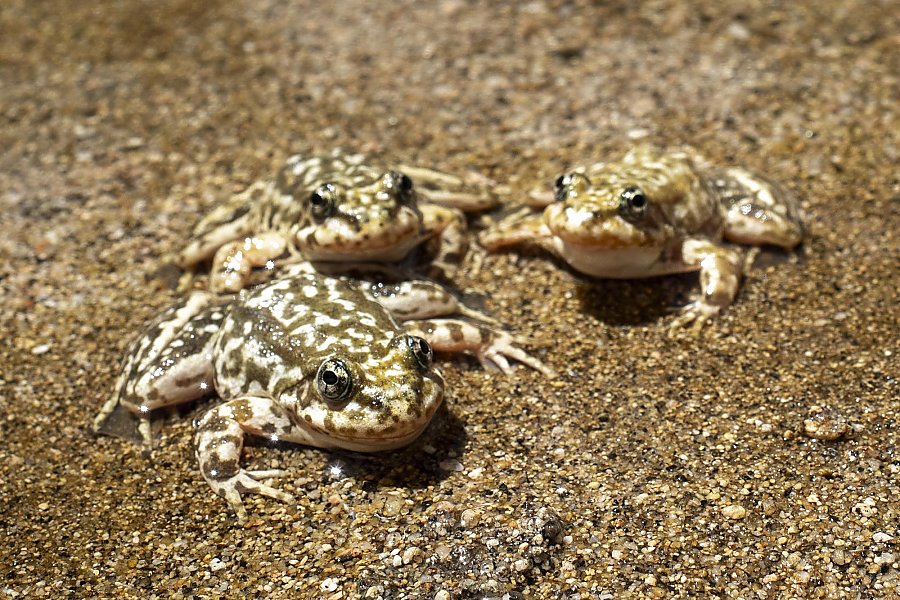
An Aquarium Just Helped Send 653 Critically Endangered Frogs Back Into the Wild
Hundreds of tiny frogs raised under human care are now hopping through the mountains of Southern California, part of a long-running effort to bring one of the region’s most endangered amphibians back from the brink.
The Aquarium of the Pacific announced this week that approximately 653 critically endangered southern mountain yellow-legged frogs were recently released into their native habitat in California’s San Gabriel Mountains.
Of those animals, 394 were raised at the Aquarium of the Pacific in Long Beach, making it the largest release the aquarium has participated in since joining the recovery effort.
It also pushed the aquarium across a significant milestone. More than 1,000 southern mountain yellow-legged frogs raised through its program have now been returned to the wild.
The release was carried out alongside the Los Angeles Zoo and U.S. Geological Survey, part of a collaborative conservation effort aimed at rebuilding populations of a species that has disappeared from much of its historical range.
Southern mountain yellow-legged frogs were once common in mountain streams across Southern California. Over the past several decades, however, their numbers collapsed as the animals faced a combination of habitat changes, introduced predators, disease and other pressures.
Today, the species is federally listed as endangered and survives in only a fraction of the places it once occupied.
That’s where an aquarium more than 40 miles from the mountains comes in.
The Aquarium of the Pacific participates in a process known as headstarting. Instead of leaving vulnerable young animals to face their most dangerous stages of life entirely on their own, conservationists temporarily raise them in a controlled environment.
At the aquarium, the frogs receive specialized care while they grow larger and stronger. Once they reach a point where scientists believe they have a better chance of surviving independently, they are transported back to suitable habitat and released.
The animals are not being raised to spend their lives in an aquarium. The entire point is to send them home.
More Than What Happens Inside an Aquarium
The latest release is a particularly visible example of a side of modern aquariums that visitors do not always see.
A family walking through an aquarium may come for sharks, sea otters or colorful reef fish. Behind the scenes, however, many accredited aquariums also operate breeding, rehabilitation, research and species recovery programs that can take place hundreds or even thousands of miles from the facility itself.
In this case, the work leads from Long Beach to mountain streams.
Aquarium staff have worked with the frogs for years, developing techniques to raise them successfully while preserving the behaviors they will need once released. The animals must ultimately be prepared for a world without keepers delivering food or controlling their surroundings.
The August release returned the frogs to habitat in the San Gabriel Mountains, where researchers can continue monitoring the broader population and evaluate how animals raised through headstarting programs fare after release.
The numbers alone show how much the effort has grown.
Nearly 400 frogs from the Aquarium of the Pacific went home during this release. Combined with animals raised and released in previous years, the aquarium has now contributed more than 1,000 frogs to the recovery effort.
That does not mean the species is suddenly out of danger. Recovering an endangered animal rarely happens through one release, one breeding season or one organization. It can require years of repeating the same process, monitoring what works and adjusting when it doesn’t.
But 653 frogs entering the wild is still 653 more chances.
And for 394 of them, the journey back to a California mountain stream started inside an aquarium in Long Beach.
It’s a useful reminder that conservation work at aquariums doesn’t always involve an animal most visitors will ever see.
Sometimes it means raising a tiny endangered frog for one specific reason.
So that eventually, you don’t have to take care of it anymore.
Sources:Aquarium of the Pacific