North Carolina Aquariums Are Celebrating 50 Years and Their Legacy Goes Far Beyond the Animals on Display
In 1976, three small marine resource centers opened along the North Carolina coast with a relatively simple mission: help people better understand the waters and wildlife surrounding them.
Fifty years later, they’ve become something much bigger.
The North Carolina Aquariums at Roanoke Island, Pine Knoll Shores and Fort Fisher are celebrating their 50th anniversary in 2026, marking half a century of connecting millions of visitors with marine life.
But some of their most important work has happened away from the exhibit windows.
Over those five decades, the aquariums have grown into active participants in wildlife rescue, rehabilitation, conservation and research across North Carolina.
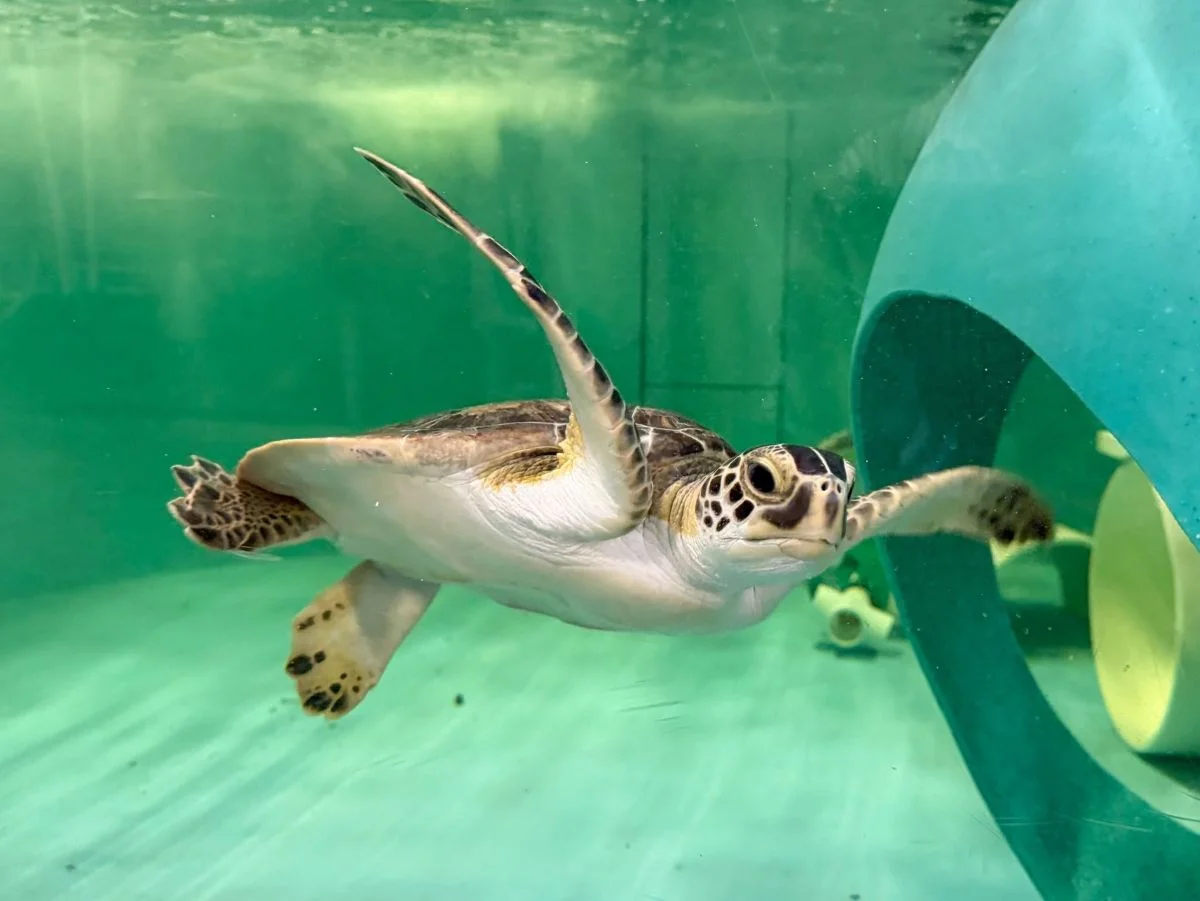
Sea turtles have become one of the clearest examples.
When an injured or sick sea turtle strands along North Carolina’s coast, getting the animal off the beach is only the beginning. Some require months of veterinary treatment and rehabilitation before they’re strong enough to return to the Atlantic.
At the North Carolina Aquarium on Roanoke Island, those animals have a facility built specifically for that job.
The Sea Turtle Assistance and Rehabilitation Center, better known as the STAR Center, opened in 2014 to provide dedicated space for injured and sick sea turtles to recover.
Inside, aquarium staff can care for animals suffering from problems ranging from boat-strike injuries and fishing interactions to illness and cold stunning.
The goal, whenever possible, is simple.
Get them back home.
Fifty Years of Showing Up for Wildlife
Sea turtle rehabilitation is only one part of the story.
The aquariums’ conservation work has expanded significantly since those original marine resource centers opened in 1976.
That work includes responding to stranded marine mammals, helping protect threatened species, supporting research and giving non-releasable animals a permanent home when returning to the wild is no longer possible.
It also means working with an enormous network of people outside the aquarium walls.
Wildlife rehabilitation rarely happens because of one organization.
A stranded animal might first be discovered by someone walking along the beach. State or federal wildlife officials may coordinate the response. Veterinarians and aquarium teams can provide medical care. Researchers may collect information from the case. Volunteers can spend months assisting with recovery.
If everything goes right, all of that work eventually leads back to the water.
That final moment, when a rehabilitated sea turtle disappears beneath the waves, might last only a few seconds.
Getting there can take months.
It’s the kind of work visitors in 1976 probably couldn’t have imagined when North Carolina’s original marine resource centers first opened their doors.
Those facilities were small.
According to North Carolina Aquariums, the original operating budget for all three centers combined was just $225,000. Today, the aquarium system and Jennette’s Pier collectively welcome more than a million visitors annually.
The facilities have changed dramatically too.
There are massive habitats, veterinary spaces, educational programs and specialized conservation facilities that didn’t exist when the first guests arrived.
But the basic idea behind them hasn’t changed all that much.
Show people what’s living in the ocean.
Help them understand it.
And when those animals need help, be ready to do something about it.
That’s part of what makes anniversaries like this worth celebrating.
The history of an aquarium isn’t only measured by how many people walked through the front door.
It’s also measured by the animals that eventually went back out.
Fifty years after North Carolina’s first marine resource centers opened, the aquariums are still introducing people to the wildlife living just beyond the state’s beaches.
These days, they’re also helping make sure some of that wildlife gets another chance to return there.
Sources: Coastal Review , North Carolina Aquariums