
Octopus On A Diet? Aquarium Develops New Method Of Feeding Their Queen Cephalopod
Featured Image Credit: S. Cheng
By Kira Krall
The Sea Life Mall of America aquarium houses a great Pacific Octopus, the largest octopus in the oceans. With an appetite to match, aquarists were concerned she may be tucking in to her meals a little too eagerly. To determine just how lean she needed to go, the aquarists first had to figure out how much she weighed. Getting a hyper-intelligent cephalopod out of the tank and onto a scale was going to be very tricky.

The ideal octopus tank replicates the animal’s habitat by combining open water with rocky features. This allows the octopus to swim freely or to explore the crevices found in its tank. The rocks can make it difficult to remove an animal from a tank. Image Credit: New England Aquarium
Octopuses are the masters of oceanic hide and seek. Their chromatophores, or color-changing cells that sit just below their skin, can mimic patterns, colors, even textures. The incredibly flexible body of an octopus lets it squeeze itself into any impossibly tiny space larger than their eyeballs. Not only would locating the octopus be difficult, but extracting her from the tank would be another tale that compromise her happiness and safety.
So, the staff went with a new angle: they trained their lady octopus to get inside a basket that was placed in her aquarium. Using operant conditioning, the staff rewarded their octopus when she got into the basket. Now she does it just about every time! This method provides a safe and effective way of retrieving the octopus from whatever nook or cranny she may have been hiding in.
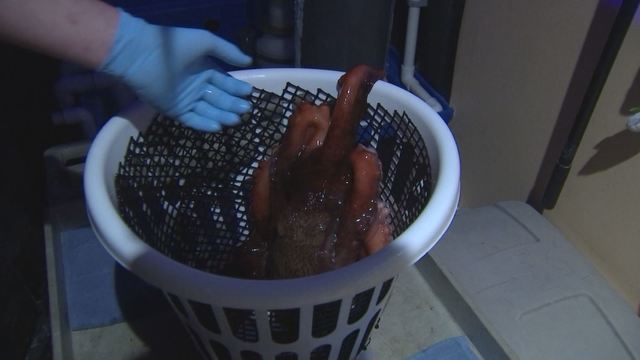
Her basket is a homemade contraption that consists of a laundry basket and some mesh. This provides the octopus with a safe, sturdy ride to the surface! Image Credit: SEA LIFE Aquarium
The staff will bring their octopus out to weigh her and give her a medical once-over once a month. However much food they give her will be a consistent percentage of her weight. The aquarium has used this weight-based method with their bamboo sharks, with great success. The largest great Pacific octopuses have been documented taking down sharks in the wild, but our lady cephalopod will likely be fed crustaceans, bivalves, and small fishes.

